
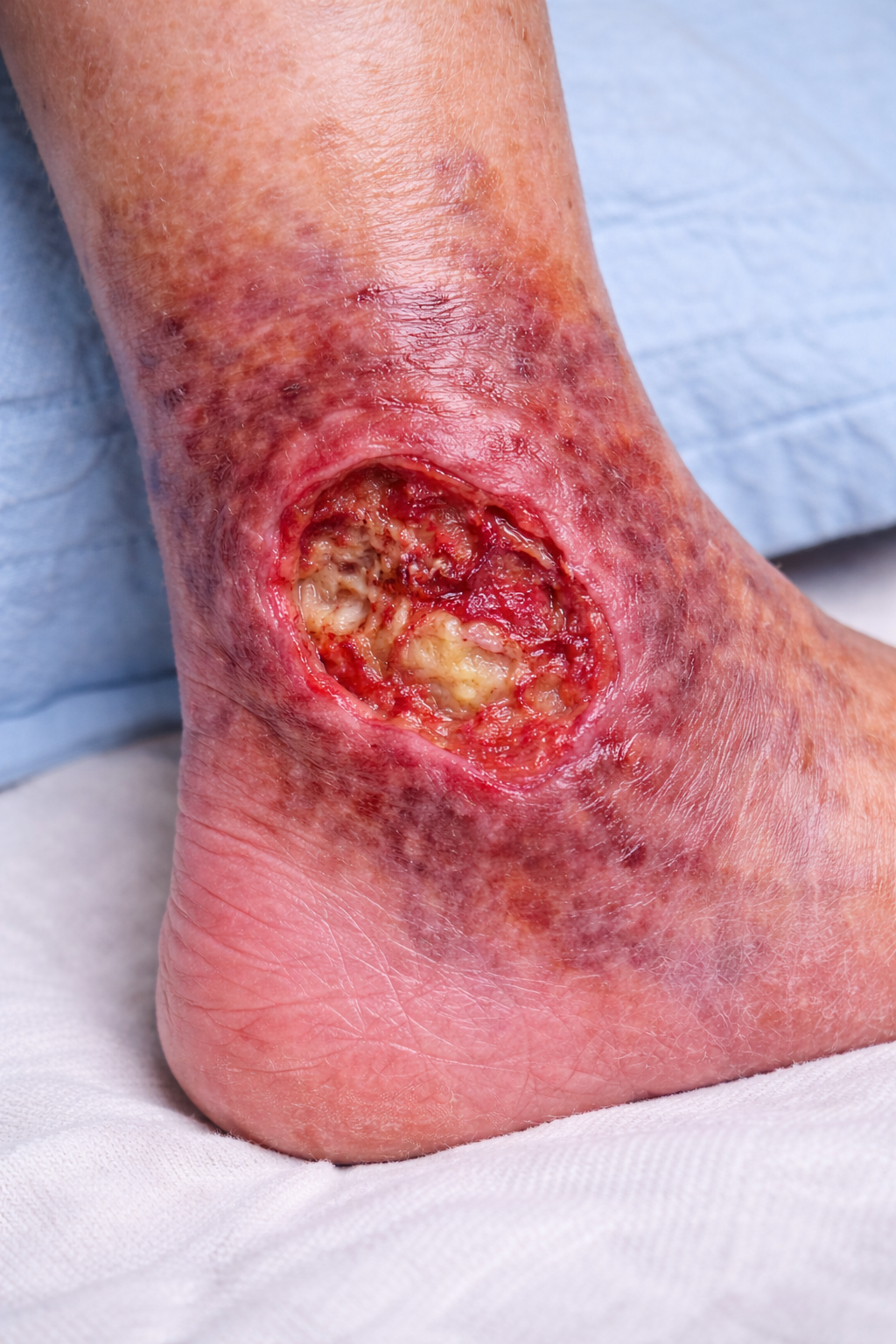
A Venous Ulcer is not just a wound that takes a long time to heal it’s a clear signal that the veins in your legs are under strain. These ulcers most often appear near the ankles, linger for weeks or months, and can easily return if the underlying venous problem is not addressed.
According to the Wound Guide, venous ulcers are among the most common chronic lower-extremity wounds, yet they are also one of the most treatable when managed correctly. This article explains Venous Ulcer causes, symptoms, treatment, and prevention using evidence-based principles outlined in the Wound Guide all in clear, human-friendly language.
What Is a Venous Ulcer?
A Venous Ulcer is an open wound that develops due to poor blood flow in the veins, a condition known as chronic venous insufficiency (CVI). When veins fail to return blood efficiently to the heart, pressure builds up in the lower legs. Over time, this pressure damages the skin and underlying tissue, leading to ulcer formation.
The Wound Guide notes that venous ulcers typically form in areas where venous pressure is highest, particularly:
- The inner ankle (most common)
- Lower calf
- Area just above the ankle bone
How Venous Ulcers Develop
Healthy leg veins rely on one way valves to push blood upward against gravity. When these valves weaken or become damaged, blood flows backward and pools in the legs.
According to the Wound Guide, prolonged venous hypertension leads to:
- Chronic swelling
- Inflammation
- Reduced oxygen delivery to the skin
- Skin breakdown
Even a small scratch or minor trauma can then evolve into a Venous Ulcer.
Who Is Most at Risk for a Venous Ulcer?
The Wound Guide identifies several risk factors that increase the likelihood of developing a venous ulcer.
Common Risk Factors Include:
- Varicose veins
- History of deep vein thrombosis (DVT)
- Obesity
- Prolonged standing or sitting
- Limited mobility
- Pregnancy
- Advanced age
- Family history of venous disease
Once a person develops one Venous Ulcer, the risk of recurrence is high without long-term preventive care.
Early Warning Signs of a Venous Ulcer
Venous ulcers rarely appear suddenly. The Wound Guide emphasizes recognizing early skin changes to prevent open wounds.
Early Symptoms:
- Persistent leg or ankle swelling
- Heaviness or aching in the legs
- Brown or purplish skin discoloration
- Itching, dryness, or flaking skin
- Tight, shiny skin
Signs of an Active Venous Ulcer:
- Shallow wound with irregular edges
- Red or yellow wound bed
- Moderate to heavy drainage
- Pain that improves with leg elevation
How Venous Ulcers Are Diagnosed
Proper diagnosis is essential, as venous ulcers require a different approach than arterial or diabetic wounds.
Following Wound Guide recommendations, clinicians assess:
- Medical and vascular history
- Location and appearance of the ulcer
- Degree of swelling
- Blood flow using Doppler ultrasound
- Ankle-Brachial Index (ABI) to rule out arterial disease
Accurate diagnosis ensures compression therapy is used safely.
Venous Ulcer Characteristics (Wound Guide Perspective)
While venous ulcers are not staged like pressure injuries, the Wound Guide describes common clinical features:
Pre-Ulcer Skin Changes:
- Chronic edema
- Hyperpigmentation
- Lipodermatosclerosis (hardened skin)
- Venous eczema
Active Venous Ulcer:
- Shallow depth
- Irregular borders
- Moist wound bed
- Surrounding inflamed skin
Healing Phase:
- Decreased drainage
- Healthy granulation tissue
- Gradual wound contraction
Evidence Based Treatment for Venous Ulcer (Wound Guide Approach)
Treating a Venous Ulcer requires addressing both the wound itself and the underlying venous insufficiency.
1. Compression Therapy (Gold Standard)
The Wound Guide identifies compression therapy as the most effective treatment for venous ulcers.
Compression options include:
- Multi-layer compression bandages
- Compression stockings
- Adjustable compression wraps
Compression reduces swelling, improves venous return, and significantly speeds healing.
2. Wound Care and Dressings
Proper wound care creates an optimal healing environment.
Based on Wound Guide principles, dressings are selected according to drainage and tissue condition:
- Foam dressings for moderate to heavy exudate
- Hydrocolloids for moisture balance
- Antimicrobial dressings when infection risk is present
Routine wound cleansing with saline is recommended.
- Leg Elevation and Mobility
The Wound Guide stresses the importance of movement and elevation:
- Elevate legs above heart level multiple times daily
- Avoid long periods of sitting or standing
- Walk regularly to activate the calf muscle pump
These habits reduce venous pressure and improve circulation.
4. Infection Management
Venous ulcers are vulnerable to infection.
Warning signs include:
- Increased pain
- Redness or warmth
- Foul odor
- Purulent drainage
- Fever
Infected Venous Ulcers may require topical or systemic antibiotics, as guided by clinical assessment.
5. Advanced Therapies for Non-Healing Venous Ulcers
For ulcers that fail to progress, the Wound Guide supports advanced interventions such as:
- Negative pressure wound therapy (NPWT)
- Skin grafts or bioengineered skin substitutes
- Venous ablation or corrective vein procedures
Correcting venous reflux reduces recurrence rates.
Healing Time for a Venous Ulcer
Healing timelines vary and depend on:
- Ulcer size and duration
- Consistency of compression use
- Nutritional status
- Presence of infection
Typical healing expectations noted in the Wound Guide:
- Small ulcers: 6–12 weeks
- Chronic ulcers: Several months
Without compression, healing is often delayed or unsuccessful.
Preventing Venous Ulcer Recurrence (Wound Guide Recommendations)
Once healed, prevention becomes a lifelong priority.
Daily Prevention Strategies:
- Wear compression stockings daily
- Elevate legs during rest
- Stay physically active
- Maintain a healthy body weight
- Moisturize dry or fragile skin
Lifestyle Modifications:
- Avoid crossing legs while sitting
- Take walking breaks during long sitting periods
- Manage chronic conditions like hypertension or diabetes
- Stop smoking
Consistent prevention is key to avoiding repeat Venous Ulcers.
Living With a Venous Ulcer
The Wound Guide acknowledges that venous ulcers can impact quality of life causing pain, limited mobility, and emotional stress. Healing often requires patience, education, and consistent follow up.
With the right support and evidence-based care, most people can regain comfort and function.
When to Seek Medical Attention
Consult a healthcare provider if:
- The ulcer does not improve within 2–4 weeks
- Pain or swelling worsens
- Signs of infection appear
- The wound increases in size or depth
Early intervention improves outcomes and reduces complications.
Final Thoughts
A Venous Ulcer is a chronic wound but it is highly manageable with the right approach. By following evidence-based principles outlined in the Wound Guide, including compression therapy, proper wound care, and long-term prevention strategies, healing is achievable and recurrence can often be avoided.
Understanding your condition, staying consistent with care, and addressing venous health can help restore mobility, comfort, and confidence.
Leave a Reply