
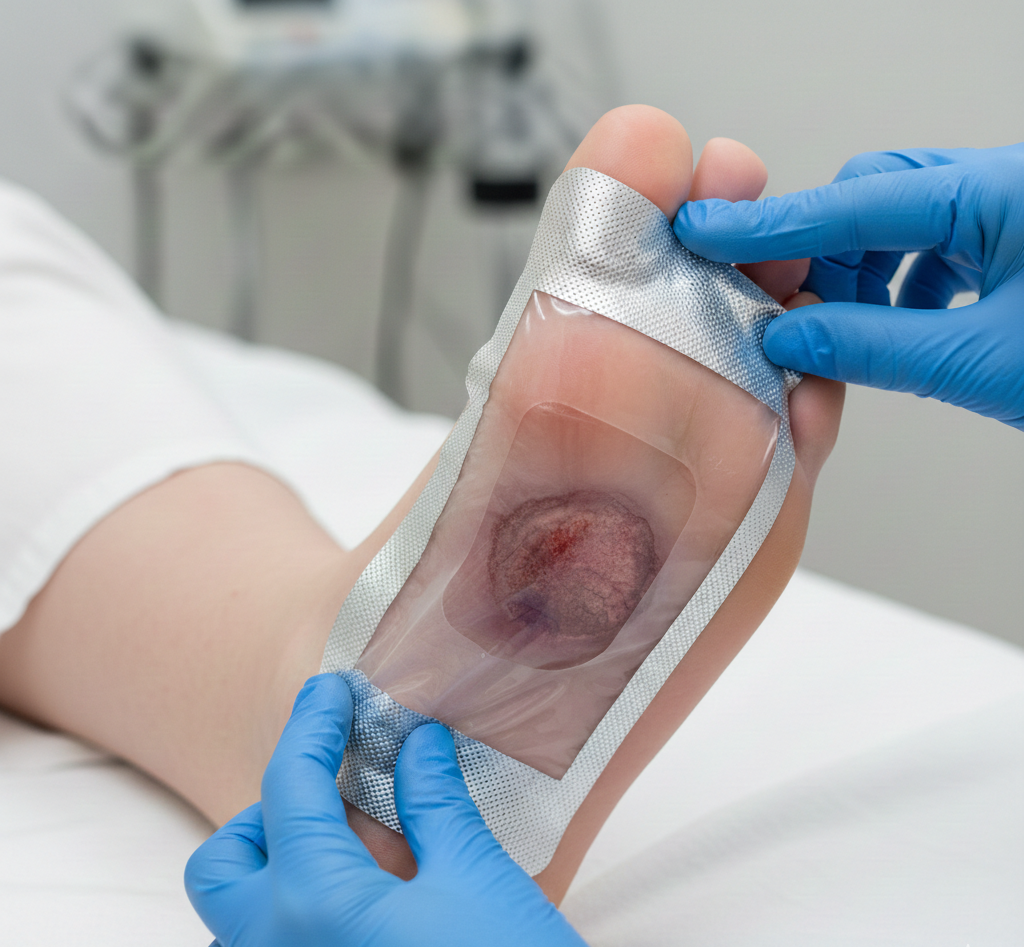
Diabetic Wound Dressing functions as an essential therapeutic instrument to treat diabetes complications in wounds among diabetic patients. These specific wounds take extended time for healing so patients need proper care to stop infections and prevent complications from developing. Diabetic foot ulcers, along with other diabetic wounds become severe health threats if medical treatment is not received properly.
What Are Diabetic Wounds?
Diabetic wounds are wounds from diabetes that remain chronic because poor blood circulation combines with nerve damage (neuropathy) together with an impaired immune response. The majority of diabetic wounds appear on the feet together with lower legs, known as diabetic foot ulcers.
Know More: Stages of Diabetic Foot Ulcers: How to Identify and Treat Them Early
Why Do Diabetic Wounds Require Special Care?
High blood sugar levels create these problematic effects:
- The first one is slow healing because blood vessel damage reduces tissue oxygen supply.
- Poor circulation elevates the risks of bacterial infections in patients.
- Many patients experience neuropathy which acts as a barrier to sensation thus they cannot detect painful injuries in their body.
Step-by-Step Guide to Diabetic Wound Dressing
1) Gather the Necessary Supplies
The following materials need preparation before starting Diabetic Wound Dressing:
- Sterile gloves
- Mild wound cleanser (saline solution or prescribed antiseptic)
- Sterile gauze pads
- Antiseptic ointment (if prescribed)
- Appropriate wound dressing (foam, hydrocolloid, or alginate)
- Medical tape or bandages
- Waste disposal bag
2) Clean the Wound Properly
- Sterile gloves must be worn while washing hands according to proper methods.
- Avoid disturbing the healing tissue when you remove the present dressing.
- Rinse the wound with sterile saline solution or a mild cleanser.
- Thereafter dry the affected area using sterile gauze but avoid rubbing motions.
3) Apply Antiseptic & Select the Right Dressing
For wound care choose a dressing based on the specific type of wound.
- The application of foam dressings enables absorption of fluid while simultaneously protecting against infections.
- A moist healing environment is supported through the use of Hydrocolloid Dressings.
- The substance known as Alginate Dressings works well for managing wounds that produce abundant fluid.
4) Secure the Dressing
- Cover the wound completely with the chosen diabetic wound dressing.
- To prevent restricted blood flow wrap the dressing with medical tape and bandages.
- Keep the dressing snug but not too tight.
Monitoring & Preventing Infections
Watch for infection signs:
- Increased redness or swelling
- Pus or foul-smelling discharge
- Warmth around the wound
- Increased pain
Prevention Tips
- People should maintain proper control of their blood sugar.
- Prophylaxis demands staying away from walking without shoes because it helps reduce possible injuries.
- Regular dressing changes need to follow the doctor-prescribed schedule.
FAQ
Q1: What is the proper frequency for replacing Diabetic Wound Dressing?
Ans: Changes must be performed based on wounds types and dressings selected for treatment. The majority of dressing materials must be exchanged after 1-3 days however those wounds which drain a lot frequently need daily changes.
Q2: Hydrogen peroxide serves as an inappropriate option for wound cleaning purposes.
Ans: The application of hydrogen peroxide will cause harm to healthy tissue while also extending the healing process. The proper solution for wound cleaning should be either sterile saline or a cleanser recommended by a doctor.
Q3: What works best as dressing for treating diabetic foot ulcers?
Ans: Both foam and hydrocolloid dressing products are frequently preferred. Medical personnel determine which wound dressing to use according to the wound condition and its moisture content.
Q4: When my wound refuses to heal I should consult a health professional.
Ans: A healthcare professional needs to be consulted if your wound fails to improve after two weeks of treatment. The wounds require professional medical care for advanced treatment.
People with diabetes need guidance about preventing the formation of new diabetic wounds.
a) Maintain good foot hygiene
b) Control blood sugar levels
c) Wear protective footwear
d) Inspection of foot surfaces must be performed on a regular basis to detect cuts or blisters.
Conclusion
The appropriate care of diabetic wounds through dressing methods helps stop infections while simultaneously enhancing the healing process. People who have diabetes can effectively manage their wounds along with avoiding serious complications through proper cleaning and dressing methods and monitoring procedures.
Health recovery depends heavily on proper foot care in addition to controlled blood sugar levels and immediate attention when needed. Prompt medical consultation is needed if a wound reveals infection or takes more than two weeks to heal properly.
Leave a Reply