
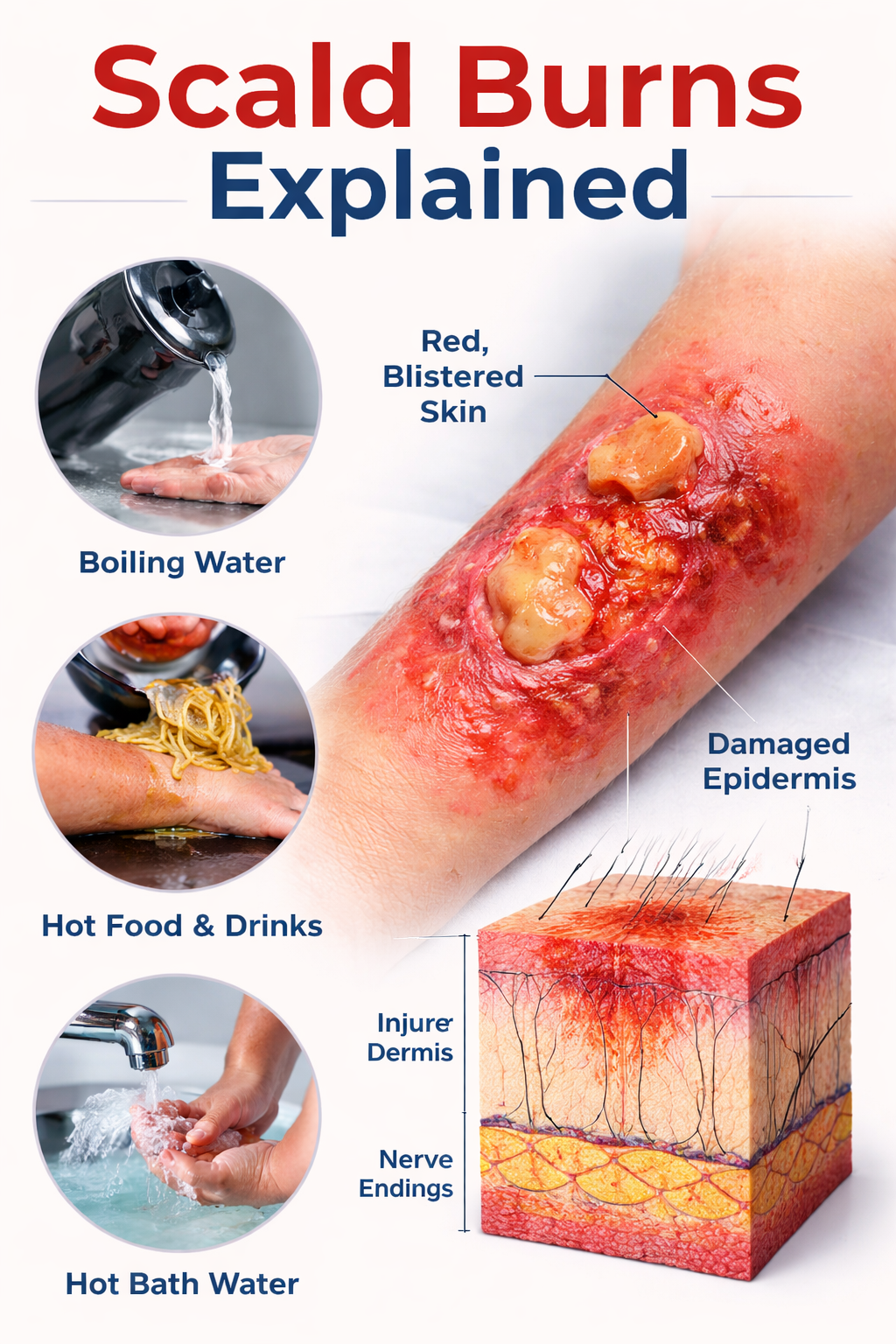
Scald Burns are among the most common and most underestimated burn injuries. A split second with boiling water, hot tea, soup, or steam can lead to painful skin damage that affects daily life, comfort, and healing. While many scald burns appear mild at first, the Wound Guide emphasizes that improper care or delayed treatment can worsen the injury and increase the risk of infection and scarring.
This article walks you through everything you need to know about Scald Burns what they are, how they happen, how they are treated, and how to prevent them using clear, practical language grounded in wound-care best practices.
What Are Scald Burns?
Scald Burns are thermal injuries caused by hot liquids or steam coming into contact with the skin. Unlike flame burns, scald burns spread quickly over the skin’s surface and can penetrate deeply depending on temperature, exposure time, and skin thickness.
According to the Wound Guide, scald burns most commonly affect:
- Hands and arms
- Face and neck
- Chest and abdomen
- Thighs and feet
Children, older adults, and individuals with limited mobility are at the highest risk.
Common Causes of Scald Burns
Scald burns happen fast often during everyday activities.
Most Common Sources Include:
- Boiling water
- Hot tea or coffee
- Cooking oil splashes
- Hot soups or sauces
- Steam from kettles or pressure cookers
- Bath or shower water that’s too hot
The Wound Guide notes that severity depends not just on heat level, but on how long the skin is exposed.
Why Scald Burns Can Be More Serious Than They Look
One of the biggest dangers of Scald Burns is how deceptive they can be. The skin may appear red or blistered, but damage can continue beneath the surface for hours.
According to the Wound Guide, untreated scald burns can lead to:
- Deeper tissue damage
- Delayed wound healing
- Infection
- Scarring or contractures
- Long-term sensitivity or discoloration
Early and correct care is essential.
Degrees of Scald Burns (Wound Guide Classification)
The Wound Guide classifies scald burns based on how deeply the skin is damaged.
First-Degree Scald Burns (Superficial)
- Redness
- Mild swelling
- Pain or tenderness
- No blisters
These burns affect only the outer layer of skin and usually heal within a week.
Second-Degree Scald Burns (Partial Thickness)
- Blistering
- Moist, red wound surface
- Significant pain
- Swelling
Healing may take several weeks and often requires proper wound care.
Third-Degree Scald Burns (Full Thickness)
- White, leathery, or charred skin
- Minimal pain due to nerve damage
- Severe tissue destruction
The Wound Guide considers these burns a medical emergency.
Immediate First Aid for Scald Burns (Wound Guide Recommendations)
What you do in the first few minutes after a scald burn can dramatically impact healing.
Step-by-Step First Aid:
- Remove the heat source immediately
- Cool the burn with cool (not cold) running water for 20 minutes
- Remove tight clothing or jewelry near the burn
- Cover with a clean, non-stick dressing
- Do not apply ice, butter, or home remedies
The Wound Guide strongly discourages popping blisters or using greasy substances.
Symptoms That Indicate Medical Attention Is Needed
Seek professional care if:
- The burn is larger than the palm of the hand
- Blisters are extensive or deep
- The burn affects the face, hands, feet, or joints
- Signs of infection appear
- Pain worsens instead of improving
Prompt care can prevent complications from Scald Burns.
How Scald Burns Are Assessed
Healthcare providers evaluate scald burns based on:
- Burn depth
- Burn size (percentage of body surface)
- Location
- Patient age and medical history
The Wound Guide stresses accurate assessment to determine whether home care or advanced treatment is needed.
Treatment Options for Scald Burns (Wound Guide Approach)
1. Wound Cleansing and Protection
Initial treatment focuses on:
- Gentle cleansing with saline
- Removing debris
- Maintaining a clean wound environment
Keeping the wound protected reduces infection risk.
2. Dressings for Scald Burns
The Wound Guide recommends dressings that support moist wound healing.
Common options include:
- Non-adherent dressings
- Foam dressings for exudate control
- Hydrogel dressings for hydration
- Antimicrobial dressings if infection risk exists
3. Pain Management
Pain from Scald Burns can be significant.
Management may include:
- Over-the-counter pain relievers
- Topical anesthetics (when appropriate)
- Proper dressing techniques to reduce friction
4. Infection Prevention
Burns compromise the skin’s protective barrier.
Watch for:
- Increasing redness
- Swelling
- Pus or odor
- Fever
The Wound Guide emphasizes early infection control to avoid delayed healing.
5. Advanced Care for Severe Scald Burns
For deeper injuries:
- Debridement of dead tissue
- Skin grafts
- Specialized burn care
- Physical therapy to prevent stiffness
Severe scald burns often require multidisciplinary care.
Healing Time for Scald Burns
Healing depends on burn depth, size, and care quality.
Typical timelines:
- First-degree: 5–7 days
- Second-degree: 2–4 weeks
- Third-degree: Months, often with surgical intervention
The Wound Guide highlights that improper care can significantly extend healing time.
Preventing Scald Burns at Home
Most Scald Burns are preventable with simple precautions.
Safety Tips:
- Set water heater temperatures below 120°F (49°C)
- Turn pot handles inward when cooking
- Test bath water before entering
- Keep hot liquids away from children
- Use caution with steam appliances
Prevention is especially important for households with children or older adults.
Scald Burns in Children and Older Adults
The Wound Guide identifies these groups as particularly vulnerable due to:
- Thinner skin
- Slower healing
- Higher infection risk
Extra supervision and safety measures are essential.
Emotional and Physical Recovery After Scald Burns
Beyond physical healing, Scald Burns can affect emotional well-being.
Patients may experience:
- Anxiety
- Fear of reinjury
- Frustration with slow healing
- Body image concerns
Education, reassurance, and proper wound care support recovery.
When to Seek Ongoing Wound Care Support
Professional wound care is recommended if:
- Healing stalls after two weeks
- Pain remains severe
- The wound worsens
- Scarring limits movement
The Wound Guide supports early referral to wound specialists when progress slows.
Final Thoughts
Scald Burns may seem like everyday accidents, but they require proper care to heal safely and completely. By following evidence-based recommendations from the Wound Guide including immediate cooling, appropriate dressings, infection prevention, and ongoing assessment most scald burns can heal with minimal complications.
Early action, informed care, and prevention awareness make all the difference.
Leave a Reply