
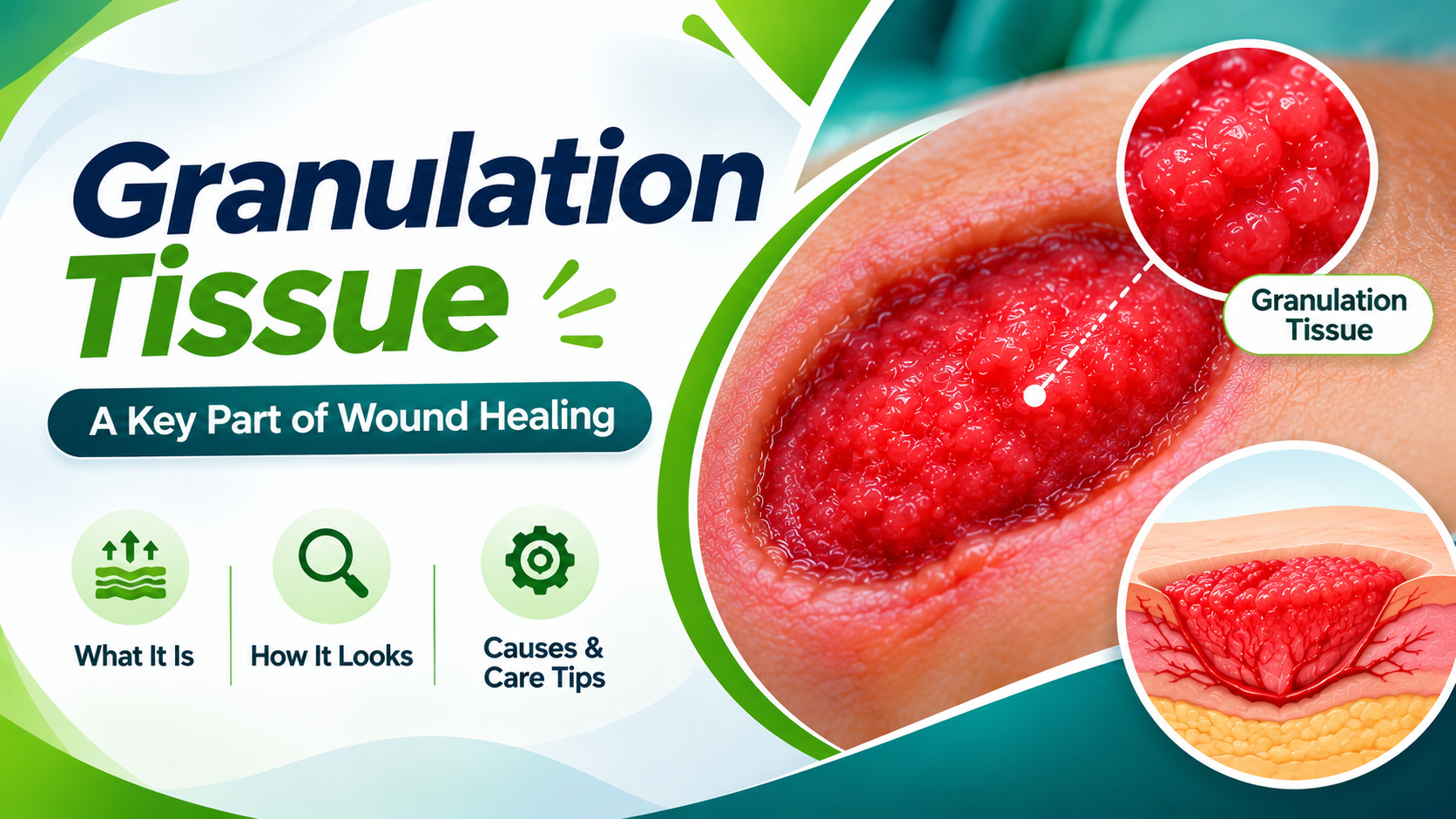
Granulation tissue is an important part of the body’s natural wound healing process. It is new connective tissue that develops inside an open wound, helping fill the damaged area and creating a foundation for new skin. Its appearance can provide useful clues about how a wound is progressing.
Healthy granulation tissue is generally pink to red, moist and slightly bumpy. However, changes in its colour, texture, growth or tendency to bleed may indicate a healing problem that needs medical attention. Understanding the different stages of wound healing can help you recognise what is happening as your wound recovers.
In this guide, we explain what granulation tissue is, why it forms, what healthy tissue looks like, how to care for it and when to seek professional advice.
What Is Granulation Tissue?
Granulation tissue is newly formed connective tissue that develops in an open wound during the proliferative phase of healing. It contains tiny new blood vessels, fibroblasts, immune cells and a supporting structure made of proteins such as collagen.
This tissue gradually fills the wound from its base and helps create an environment where new skin cells can grow.
The name comes from its slightly grainy or bumpy appearance. It is usually pink or red because of the numerous small blood vessels supplying oxygen and nutrients to the healing area.
Granulation tissue is commonly seen in wounds that heal naturally from the bottom upwards, including:
- Surgical wounds that have been left open.
- Pressure ulcers.
- Diabetic foot ulcers.
- Traumatic injuries.
- Chronic or non-healing wounds.
- Certain burns and skin injuries.
Its presence is generally a positive sign, although the overall appearance and progress of the wound must also be assessed.
How Does Granulation Tissue Form?
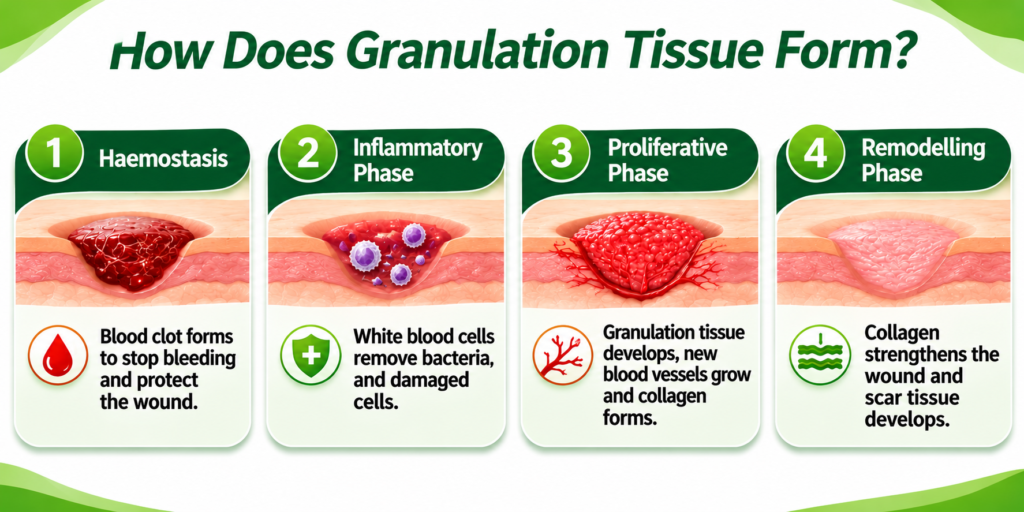
Granulation tissue develops as part of the body’s natural repair process. Wound healing usually involves four overlapping stages.
1. Haemostasis
This is the first response after an injury. Blood vessels constrict, and platelets work with clotting proteins to form a blood clot. The clot helps control bleeding and temporarily protects the damaged area.
2. Inflammatory Phase
The immune system sends white blood cells to the injured area. These cells help remove bacteria, damaged cells and unwanted debris. Mild redness, swelling and tenderness can occur during this stage.
3. Proliferative Phase
This is the stage in which granulation tissue develops.
Fibroblasts produce collagen and other supporting materials, while new blood vessels grow into the wound. This process is called angiogenesis.
The newly formed tissue fills the wound space, supports wound contraction and provides a surface for new skin cells to grow.
4. Remodelling Phase
As healing progresses, collagen is reorganised and strengthened. The wound gradually becomes more stable, and scar tissue develops.
These stages overlap, and the time required for each stage varies depending on wound size, depth, location and the person’s overall health.
Why Is Granulation Tissue Important?
Granulation tissue plays several important roles in wound healing. Without proper formation of this tissue, an open wound may struggle to close.
Its main functions include:
- Fills the wound: New tissue grows from the wound base and fills the damaged space.
- Supports new skin growth: It provides a surface over which epithelial cells can migrate.
- Supplies oxygen and nutrients: Newly formed blood vessels help nourish the healing area.
- Supports wound contraction: Specialised cells called myofibroblasts help pull wound edges closer together.
- Supports tissue repair: Collagen and other components provide a framework for rebuilding damaged tissue.
Healthy granulation tissue is therefore an important part of wound recovery.
What Does Healthy Granulation Tissue Look Like?
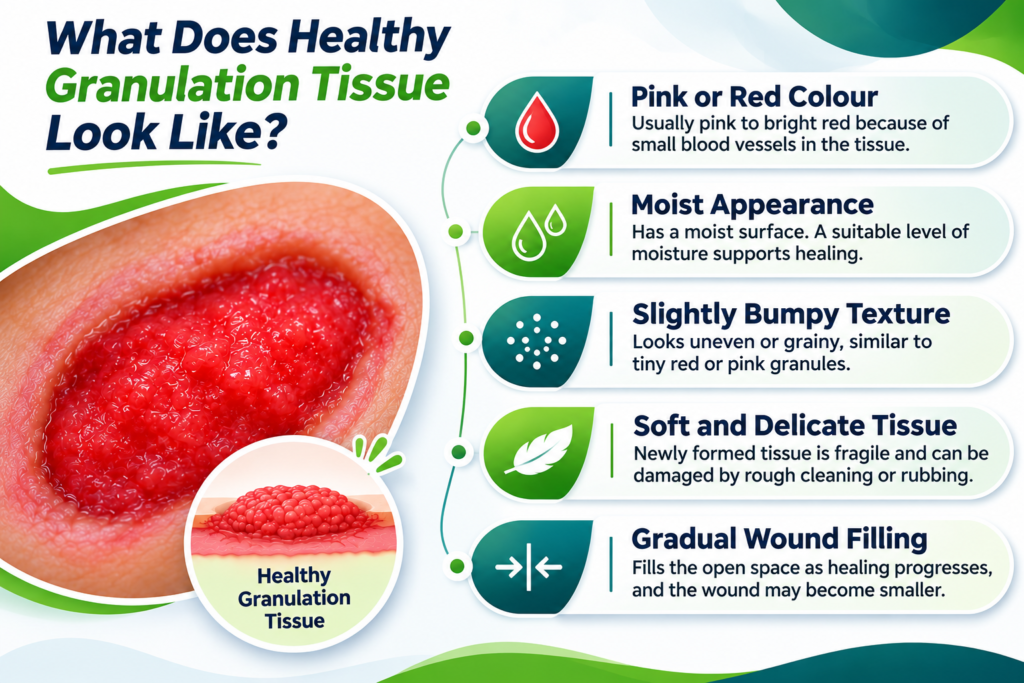
Recognising healthy granulation tissue can help you understand how a wound is progressing. However, appearance alone cannot confirm that a wound is healing properly.
Common characteristics include:
1. Pink or Red Colour
Healthy granulation tissue is usually pink to bright red because of the small blood vessels growing within it.
2. Moist Appearance
It generally has a moist surface. A suitable level of moisture supports healing, but excessive fluid can damage the surrounding skin.
3. Slightly Bumpy Texture
The wound surface may look uneven or grainy, similar to tiny red or pink granules.
4. Soft and Delicate Tissue
Newly formed tissue is fragile and can be damaged by rough cleaning, rubbing or forceful dressing removal.
5. Gradual Wound Filling
As healing progresses, granulation tissue fills the open space and the wound may gradually become smaller.
These features are commonly associated with healthy wound healing, but a healthcare professional should assess wounds that are not progressing as expected.
Healthy vs Unhealthy Granulation Tissue
Not all changes in wound tissue indicate normal healing. Some appearances may suggest infection, excessive tissue growth or delayed wound recovery.
| Feature | Healthy tissue | Concerning tissue |
|---|---|---|
| Colour | Pink or bright red | Dark, dull or unusual discoloration |
| Texture | Moist and slightly bumpy | Friable, fragile or excessively raised |
| Bleeding | Usually does not bleed easily | May bleed with minimal contact |
| Pain | Usually not increasingly painful | New or increasing pain |
| Progress | Gradually fills the wound | Persistent growth or delayed healing |
Dark or easily bleeding tissue does not automatically mean infection, but it should be professionally assessed, especially when other symptoms are present.
Other warning signs include:
- Increasing redness around the wound.
- Warmth or swelling.
- Thick or pus-like discharge.
- Unpleasant or worsening odour.
- Wound edges becoming larger or breaking down.
- Fever or feeling generally unwell.
If these symptoms develop, seek medical advice promptly.
What Causes Excessive Granulation Tissue?
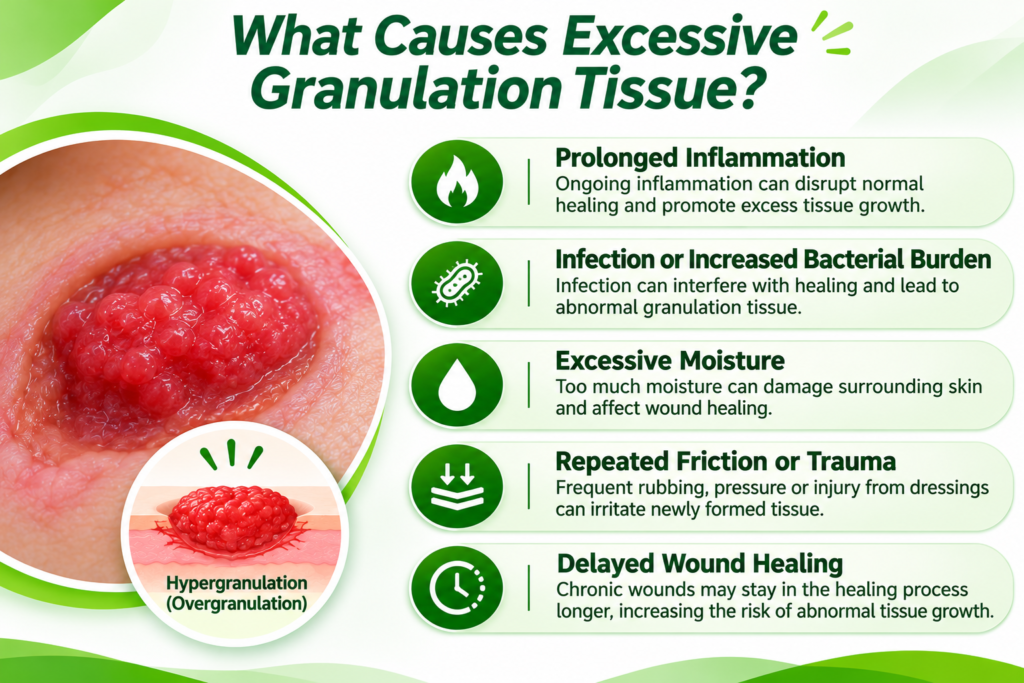
Sometimes, granulation tissue grows beyond the normal wound surface. This condition is called hypergranulation or overgranulation.
Instead of remaining level with the surrounding skin, the tissue becomes raised and may prevent new skin cells from moving across the wound.
Common contributing factors include:
1. Prolonged Inflammation
Ongoing inflammation can interfere with the normal balance of wound repair and encourage excessive tissue growth.
2. Infection or Increased Bacterial Burden
Infection can disrupt the healing process and contribute to abnormal granulation tissue.
3. Excessive Moisture
Too much moisture around a wound can damage surrounding skin and interfere with wound healing.
4. Repeated Friction or Trauma
Frequent rubbing, pressure or injury from dressings can irritate newly formed tissue.
5. Delayed Wound Healing
Chronic wounds may remain in the healing process for longer than expected, increasing the risk of abnormal tissue development.
Hypergranulation should be assessed by a qualified healthcare professional. Treatment depends on its cause and the condition of the wound.
How to Care for Granulation Tissue
Newly formed granulation tissue is delicate. Appropriate wound care helps protect it while supporting the development of new skin.
1. Keep the Wound Clean
Follow the cleaning instructions provided by your healthcare professional. Use the recommended wound-cleansing solution and avoid harsh chemicals unless specifically prescribed.
2. Choose an Appropriate Dressing
Dressings should protect the wound, maintain a suitable moisture balance and manage drainage. The right option depends on the wound’s depth, location and amount of fluid.
Learn about different types of wound dressings and their uses to understand why dressing selection matters.
3. Avoid Unnecessary Disturbance
Do not rub, scrape or pick at granulation tissue. Rough handling can damage new blood vessels and cause bleeding.
4. Manage Excess Wound Fluid
Excessive drainage can affect the surrounding skin. A suitable dressing and regular wound assessment can help manage moisture.
5. Maintain Good Nutrition
The body needs adequate protein, vitamins, minerals and calories to repair damaged tissue. Include a balanced diet and discuss nutritional concerns with a healthcare professional.
6. Manage Underlying Health Conditions
Conditions such as diabetes and poor circulation can slow wound recovery. Follow your treatment plan and attend recommended medical appointments.
For people with diabetes, proper diabetic foot ulcer treatment and wound care is particularly important.
7. Follow Professional Dressing Instructions
Change dressings at the recommended intervals. Do not apply unprescribed creams, powders or home remedies directly to the wound.
When Should You See a Doctor?
Some wounds need professional assessment to prevent complications and support proper healing.
Consult a healthcare professional if:
- The wound is not becoming smaller over time.
- Granulation tissue becomes unusually dark or bleeds easily.
- The wound develops increasing pain, swelling or redness.
- You notice pus-like discharge or an unpleasant smell.
- Excessive tissue grows above the wound surface.
- The wound repeatedly opens or breaks down.
- You have diabetes, poor circulation or a weakened immune system.
Seek urgent medical care if you develop fever, rapidly spreading redness, severe pain or feel seriously unwell.
A healthcare professional may examine the wound, assess its depth and tissue condition, check for infection and recommend an appropriate treatment plan.
Frequently Asked Questions
Granulation tissue is usually a normal and healthy part of the wound-healing process. It helps fill the wound with new connective tissue and blood vessels. Healthy granulation tissue is typically pink or red, moist and slightly bumpy. However, tissue that bleeds easily, grows excessively, becomes increasingly painful or is accompanied by pus, spreading redness, warmth or fever should be assessed by a healthcare professional.
Granulation tissue is new connective tissue and tiny blood vessels that develop inside a wound during the healing process. It creates a foundation for new skin to grow and helps fill the wound from the bottom upwards. Healthy granulation tissue generally appears pink or red with a moist, uneven surface. Its presence is often a positive sign that the wound is progressing towards healing.
No. Healthy granulation tissue should not normally be removed because it plays an important role in wound healing. Removing it unnecessarily can damage newly formed tissue, cause bleeding and delay recovery. However, if excess tissue develops above the wound edges, a condition known as overgranulation, a healthcare professional may recommend appropriate treatment. Never try to cut, scrape or remove granulation tissue yourself.
The time required for granulation tissue to develop and fill a wound varies depending on its size, depth, location and overall condition. Small, uncomplicated wounds may develop healthy granulation tissue within days, while deeper or chronic wounds can take several weeks or longer. Factors such as infection, diabetes, poor circulation, pressure and inadequate nutrition may slow the process. Regular wound assessment helps monitor healing progress.
Healthy granulation tissue usually does not require direct treatment or removal. Instead, wound care focuses on protecting the tissue and creating suitable conditions for healing. This may include:
- Cleaning the wound according to professional guidance.
- Using an appropriate dressing to maintain a balanced moisture level.
- Protecting the surrounding skin from excess moisture.
- Managing wound drainage and pressure.
- Addressing infection or underlying health conditions when present.
- Following a suitable dressing-change schedule.
If granulation tissue grows excessively, bleeds easily or prevents the wound from closing, a healthcare professional may recommend specific treatment based on the wound assessment.
Conclusion
Granulation tissue is an essential part of the natural wound-healing process. It helps fill wounds, supports new skin growth and provides a foundation for tissue repair. Recognising healthy granulation tissue and identifying signs of overgranulation or delayed healing can help support better wound care.
Healthy healing starts with the right care. Visit WoundGuide to explore expert wound-care guidance and learn how to protect your wounds and support recovery.
Leave a Reply