
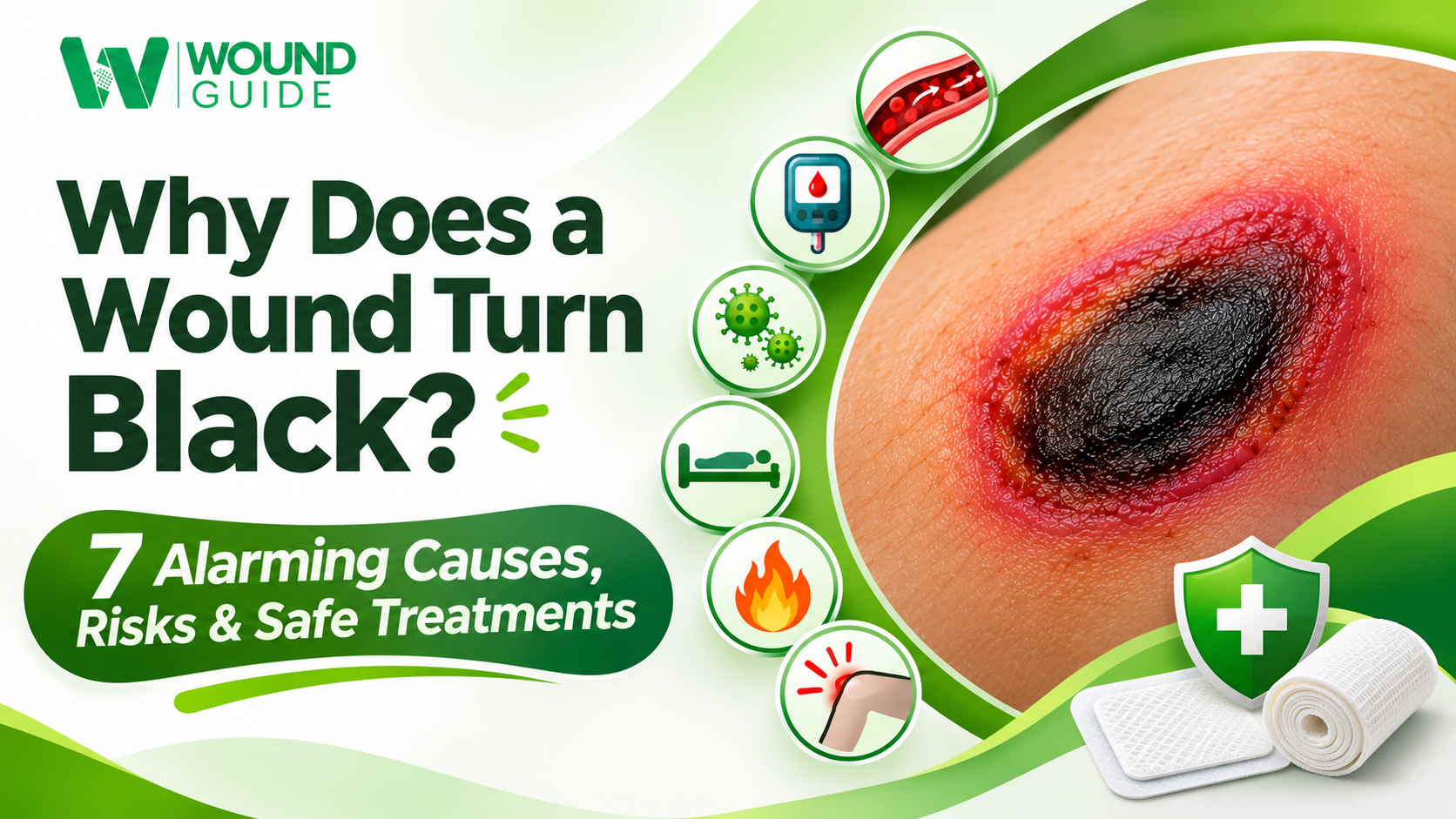
A wound turning black can be concerning, especially when the dark area becomes larger, feels hard, or does not improve. Why Does a Wound Turn Black? In many cases, black tissue may indicate eschar or necrotic tissue, which develops when skin and underlying tissue become damaged or die. This can happen because of poor blood circulation, pressure injuries, infection, burns, diabetes, or severe trauma. Understanding the different stages of wound healing can help you recognise normal healing changes and identify when something may be wrong. Although some dry black tissue may remain stable, a black wound should be assessed by a healthcare professional to identify the cause and decide on appropriate treatment.
Why Does a Wound Turn Black? This is an important question because black or dark wound tissue can sometimes indicate tissue damage, reduced blood supply, or an underlying infection.
What Does It Mean When a Wound Turns Black?
Understanding why a wound turns black starts with identifying whether the dark area is dried blood, eschar, or necrotic tissue.
Eschar can feel firm, leathery, or hard and may remain attached to the wound surface. It can develop after burns, pressure injuries, infections, trauma, or reduced blood supply.
However, not every dark mark around a wound means the tissue has died. Bruising, dried blood, pigmentation changes, and scab formation can also make an injured area look dark.
The appearance, texture, location, surrounding skin, and other symptoms help a healthcare professional determine what is happening.
Why Does a Wound Turn Black? 7 Common Causes
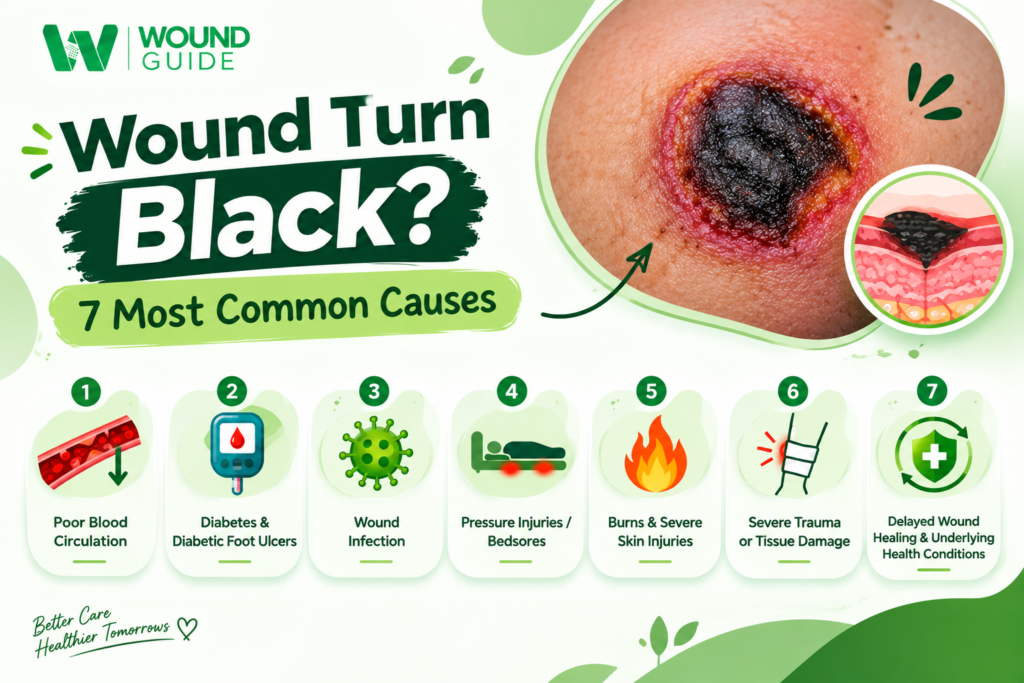
Several conditions can contribute to black tissue formation. Understanding these causes can help you recognise when professional wound care is needed.
1. Poor Blood Circulation
Healthy blood flow delivers oxygen and nutrients to skin and other tissues. When circulation becomes severely reduced, the affected area may not receive enough oxygen to remain healthy.
This can lead to tissue damage and, in severe cases, necrosis. Circulation problems are particularly concerning in the feet, toes, and lower legs.
Warning signs may include:
- Dark or black areas on the skin.
- Cold feet or toes.
- Pain while walking or resting.
- Slow-healing wounds.
- Reduced sensation or unusual skin colour.
People with peripheral artery disease or other vascular conditions may have a higher risk of circulation-related wounds.
2. Diabetes and Diabetic Foot Ulcers
Diabetes can affect wound healing through several mechanisms. Persistently high blood glucose may interfere with immune function and tissue repair. Diabetes can also cause nerve damage, making it harder to notice injuries, pressure, or developing wounds.
Poor circulation may further increase the risk of tissue damage. A small foot wound can become serious if it remains unnoticed or continues to experience pressure.
Possible warning signs include:
- A foot wound that does not heal.
- Black or dark tissue around an ulcer.
- Swelling or unusual discharge.
- Reduced sensation in the feet.
- Increasing redness or pain.
People with diabetes should seek prompt professional assessment for new black areas or open wounds on their feet. Read our guide to diabetic foot ulcer treatment and wound care for more information.
3. Wound Infection
Some infections can damage surrounding tissue and contribute to necrosis. A severe or rapidly progressing infection may cause skin to become dark, purple, grey, or black.
Infected wounds may also show:
- Increasing pain or tenderness.
- Redness and swelling.
- Warmth around the wound.
- Pus or unusual drainage.
- Unpleasant smell.
- Fever or chills.
A rapidly spreading dark area, severe pain, blisters, or feeling extremely unwell requires urgent medical attention. Serious soft-tissue infections can progress quickly and should never be managed with home remedies alone.
4. Pressure Injuries or Bedsores
Prolonged pressure on one area of the body can restrict blood flow and damage the skin and underlying tissues. This commonly affects people who spend long periods in bed or use a wheelchair.
Pressure injuries often develop around the heels, ankles, hips, tailbone, and other bony areas.
In more severe injuries, damaged tissue may appear dark brown or black. A dry, stable layer of eschar may cover the wound.
People with limited mobility, reduced sensation, or poor circulation need regular skin checks and appropriate pressure relief.
5. Burns and Severe Skin Injuries
Deep burns can destroy skin and underlying tissues. Depending on the severity, the affected area may appear dark brown, black, dry, or leathery.
Severe injuries caused by accidents, chemicals, heat, or electrical exposure may also damage blood vessels and surrounding tissue.
A blackened area following a serious burn should be assessed by a medical professional. Do not peel, cut, or remove damaged skin yourself.
6. Severe Trauma or Tissue Damage
Crush injuries, deep cuts, and other serious accidents can damage blood vessels and reduce the blood supply to surrounding tissues.
When tissue does not receive enough oxygen, it may become damaged or die. The affected area can develop dark discoloration.
Seek medical attention after significant trauma, particularly if the affected skin becomes increasingly dark, swollen, cold, painful, or numb.
7. Delayed Wound Healing and Underlying Health Conditions
Some wounds take longer to heal because of multiple contributing factors. Poor nutrition, smoking, reduced immunity, chronic illness, and circulation problems can interfere with normal tissue repair.
When damaged tissue does not recover properly, dead tissue may accumulate and form a dark covering.
A wound that repeatedly fails to improve needs professional evaluation to identify the underlying problem.
Signs That a Black Wound Needs Medical Attention
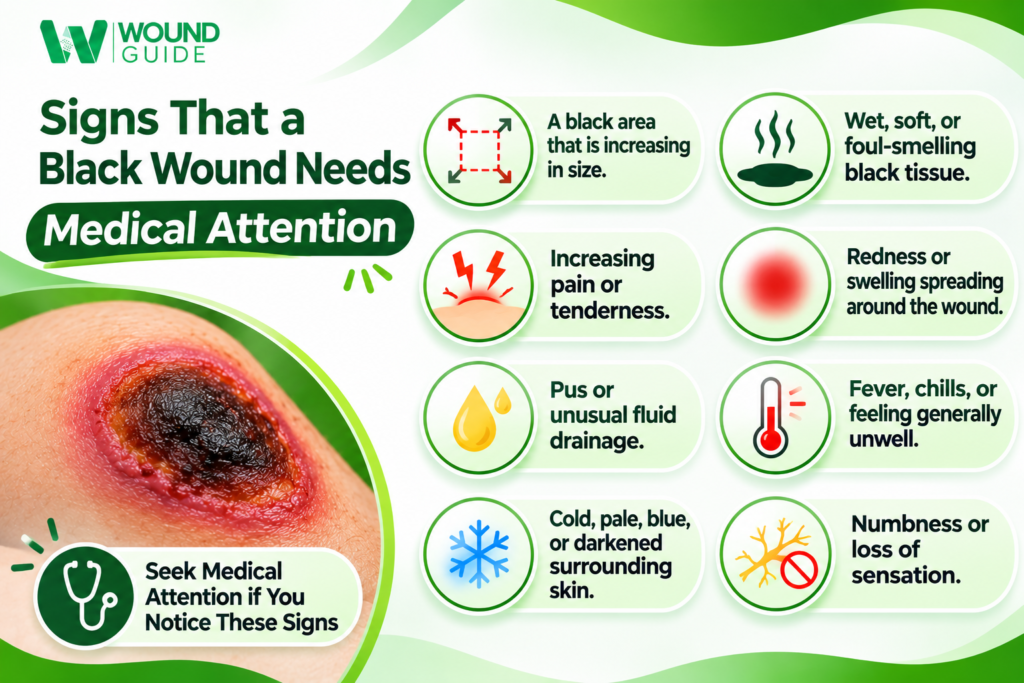
Not every dark wound has the same cause or level of severity. However, certain changes should not be ignored.
- A black area that is increasing in size.
- Wet, soft, or foul-smelling black tissue.
- Increasing pain or tenderness.
- Redness or swelling spreading around the wound.
- Pus or unusual fluid drainage.
- Cold, pale, blue, or darkened surrounding skin.
- Fever, chills, or feeling generally unwell.
- Numbness or loss of sensation.
Important: Sudden black or purple skin changes with severe pain, rapidly spreading swelling, fever, confusion, or feeling seriously unwell require emergency medical assessment.
Is Black Tissue in a Wound Always Dangerous?
Black tissue should always be taken seriously, but its appearance alone does not determine the severity.
Some wounds develop dry, firmly attached eschar. In selected situations, particularly when stable dry eschar covers a heel with poor circulation, a clinician may decide to leave it intact and monitor it rather than remove it immediately.
Other wounds may contain unstable, wet, loose, or infected necrotic tissue that requires professional treatment.
The decision depends on circulation, infection, wound location, tissue condition, and the patient’s overall health. Never assume that black tissue is harmless or attempt to remove it yourself.
How Is a Black Wound Diagnosed?
A healthcare professional may perform several assessments to understand why the wound has turned black.
- Physical examination: The clinician checks the wound’s location, size, depth, colour, smell, drainage, and surrounding skin.
- Circulation assessment: Blood flow may be evaluated by checking pulses, skin temperature, and other circulation tests.
- Blood glucose testing: If diabetes is suspected or already present, blood glucose levels may be reviewed.
- Infection assessment: If infection is suspected, the clinician may recommend wound samples or blood tests.
- Imaging: In selected cases, imaging may help identify deeper tissue damage, an underlying collection, or bone involvement.
Not everyone needs every test. The assessment depends on the wound and the patient’s symptoms.
What Does Black Tissue Mean?
Black tissue may sometimes indicate dead or damaged tissue, but it does not always mean the wound has gangrene. Gangrene is a serious condition that can develop when blood supply is reduced or tissue becomes infected. According to MedlinePlus: Gangrene, affected skin may turn blue or black and may be accompanied by foul-smelling discharge or loss of sensation. If a wound turns black, becomes increasingly painful, develops a bad smell, or shows spreading changes, seek prompt medical assessment.
How to Treat a Wound That Has Turned Black
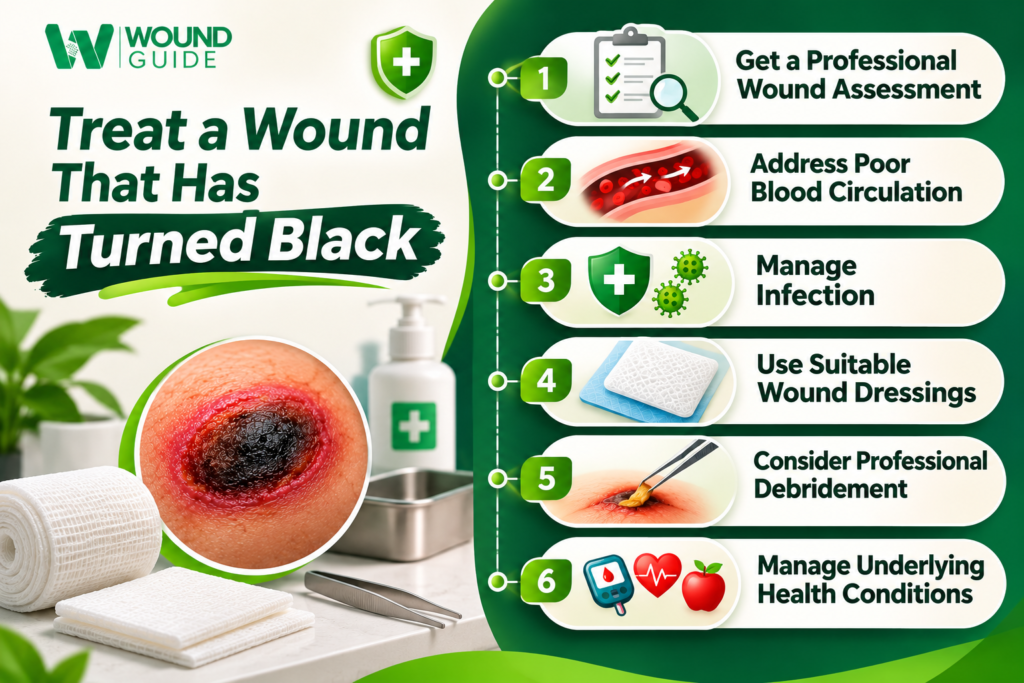
Treatment depends on the underlying cause, wound depth, blood supply, and whether infection is present. There is no single treatment suitable for every black wound.
1. Get a Professional Wound Assessment
The first step is to have the wound examined by a qualified healthcare professional. This is particularly important for black wounds involving the feet, heels, or surgical areas.
Early assessment helps identify whether the problem is related to infection, pressure, poor circulation, burns, or another condition.
2. Address Poor Blood Circulation
If reduced blood flow is contributing to tissue damage, the clinician may recommend vascular assessment and appropriate treatment.
Improving circulation may be essential before certain wound treatments can be considered.
3. Manage Infection
If an infection is diagnosed, treatment may include professional wound cleaning, drainage of an infected collection, or prescribed antibiotics.
Antibiotics are not necessary for every black wound. They should only be used when a qualified clinician recommends them.
4. Use Suitable Wound Dressings
The correct dressing helps protect the wound and manage drainage. Its selection depends on the wound’s condition, location, and surrounding skin.
Learn about different types of wound dressings and their uses to understand why dressing selection matters.
5. Consider Professional Debridement
Debridement is the removal of dead or damaged tissue by an appropriate clinical method. Depending on the wound, a specialist may consider sharp, enzymatic, autolytic, or other approaches.
However, debridement is not appropriate for every black wound. For example, stable dry heel eschar may need to remain intact in certain patients with poor circulation.
Never cut, scrape, peel, or pull black tissue away at home.
6. Manage Underlying Health Conditions
Diabetes, vascular disease, nutritional problems, and other chronic conditions may need attention alongside local wound treatment.
A healthcare professional can recommend an individual care plan based on the patient’s health and wound condition.
7 Safe Tips to Protect a Wound and Support Healing
Good wound care can reduce avoidable irritation and support recovery.
- Keep the wound clean: Follow the cleaning instructions provided by your healthcare professional.
- Use the recommended dressing: Change it according to professional advice.
- Avoid pressure: Protect the affected area from repeated friction and pressure.
- Do not remove black tissue: Never cut or pull away eschar yourself.
- Eat balanced meals: Include adequate protein and a variety of nutritious foods.
- Manage blood glucose: People with diabetes should follow their prescribed diabetes care plan.
- Attend follow-up appointments: Report changes in wound colour, pain, smell, or drainage.
When Should You See a Doctor?
Arrange prompt medical assessment if a wound develops black tissue, especially if it is on the foot, heel, or lower leg.
Seek emergency care if you notice rapidly spreading black or purple skin, severe or worsening pain, fever with serious wound symptoms, confusion, or signs of a severe infection.
Do not wait for the wound to become larger or deeper before getting help.
Frequently Asked Questions
A wound may turn black because of eschar, necrotic tissue, dried blood, or bruising. A healthcare professional can assess the appearance and identify the actual cause.
Some wounds may improve with appropriate professional care, but the outcome depends on the cause, depth, blood supply, and presence of infection. Black tissue should not be ignored.
No. Do not cut, scrape, or pull black tissue away yourself. Removing stable eschar without proper assessment can damage tissue and create complications.
Yes. Diabetes can contribute to nerve damage, poor circulation, and delayed healing. These problems can increase the risk of serious foot wounds and tissue damage.
No. A scab usually forms from dried blood and wound fluid during healing. Necrotic tissue is dead or damaged tissue and may appear black, brown, or grey. A clinical assessment may be needed to distinguish them.
Conclusion: Understand the Cause of a Black Wound and Seek Timely Care
Why Does a Wound Turn Black? A wound may turn black due to poor blood circulation, diabetes, infection, pressure injuries, burns, severe trauma, or delayed healing. In some cases, the dark tissue may be eschar or necrotic tissue, which requires proper medical assessment.
Although not every black wound indicates the same level of severity, it should never be ignored. Watch for warning signs such as increasing wound size, foul smell, worsening pain, swelling, unusual discharge, fever, or changes in surrounding skin colour.
Never try to cut, peel, or remove black tissue yourself. The right treatment depends on the underlying cause, blood supply, wound condition, and overall health. Early professional assessment can help identify the problem and guide appropriate wound care.
Need Help Understanding Your Wound?
Not sure why your wound has turned black or whether it needs medical attention? Don’t ignore the warning signs.
Visit WoundGuide to explore reliable wound care information, understand common wound problems, and learn when professional medical support may be needed.
Take the next step towards better wound care with WoundGuide.
Leave a Reply