
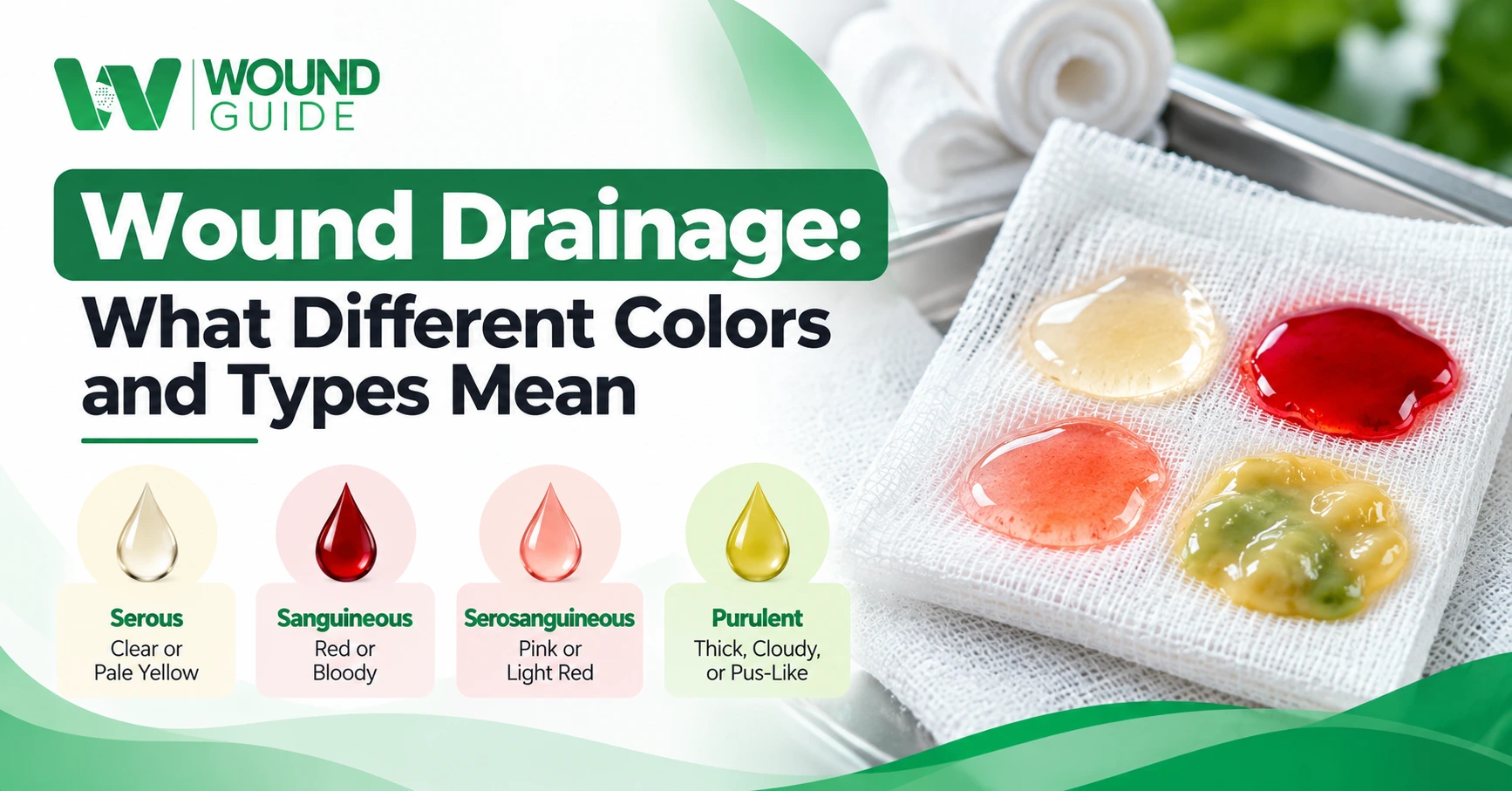
Wound drainage is a common part of the healing process, but changes in its color, thickness, smell, or amount can sometimes indicate a problem. A small amount of clear or pale pink fluid may be expected in many healing wounds, while thick, cloudy discharge or increasing drainage may require medical assessment. Understanding wound drainage can help you recognise normal healing changes, identify possible warning signs, and know when to contact a healthcare professional. However, the appearance of fluid alone cannot confirm whether a wound is infected. Other symptoms, the type of injury, and how the wound is healing also matter.
In this guide, we explain the different types of wound drainage, what common colors may mean, how to care for a draining wound, and when to seek medical help.
What Is Wound Drainage?
Wound drainage, also called wound exudate, is fluid that comes out of an injury, ulcer, surgical incision, or other break in the skin. It may contain water, proteins, immune cells, and other substances involved in the body’s response to injury.
A certain amount of fluid can help maintain a suitable environment for healing. However, excessive drainage may make the surrounding skin wet and fragile, delay healing, or signal an underlying problem.
Wound drainage can vary according to several factors, including:
- The size and depth of the wound
- The stage of the healing process
- The presence of inflammation or infection
- Blood circulation in the affected area
- Health conditions such as diabetes
- The type of dressing used and how often it is changed
For this reason, it is important to observe not only the color of the fluid but also its consistency, quantity, smell, and any changes in the surrounding skin.
Why Does a Wound Produce Fluid?
When the skin is injured, the body starts a series of processes to control bleeding, protect the damaged area, remove unwanted material, and rebuild tissue.
During the early stages of healing, fluid and immune cells move into the injured area. This response helps support the body’s repair process. Some fluid may escape through the wound and collect on the dressing.
As healing progresses, drainage often decreases. However, the amount and duration can differ between wounds. A small, shallow cut may produce very little fluid, while a deeper wound or certain chronic ulcers may drain for longer.
The key point: wound fluid is not automatically a sign of infection. Its pattern over time, together with other symptoms, provides more useful information than color alone.
Types of Wound Drainage
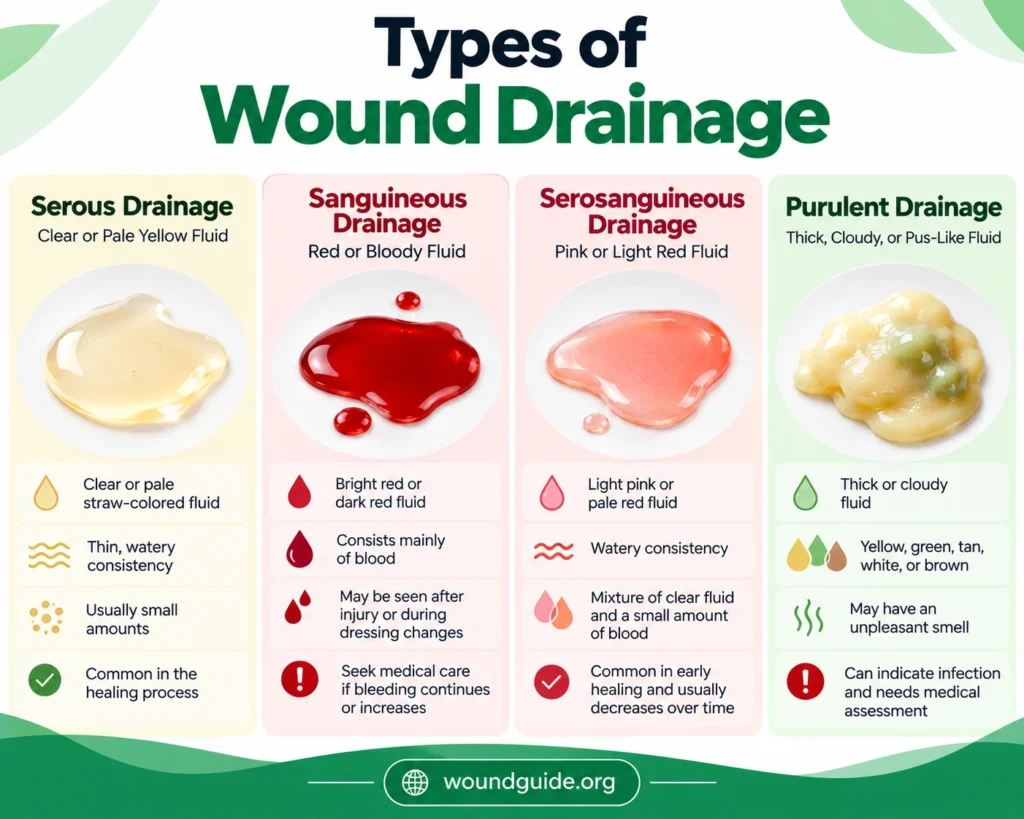
Healthcare professionals describe wound drainage using terms that reflect its appearance and composition. The main types include serous, sanguineous, serosanguineous, and purulent drainage.
1. Serous Drainage: Clear or Pale Yellow Fluid
Serous drainage is usually clear, watery, or light yellow. It may look similar to thin fluid and is commonly seen in small amounts during the healing process.
This fluid is largely made up of plasma and can appear as the body responds to injury. A small amount of serous drainage is often expected in a healing wound.
What to look for:
- Clear or pale straw-colored fluid
- Thin, watery consistency
- Small amounts on the dressing
- No new unpleasant smell or worsening symptoms
Serous drainage is generally less concerning when it is limited and gradually decreases. However, a sudden increase, persistent heavy drainage, or fluid accompanied by worsening pain, redness, warmth, or swelling should be assessed.
2. Sanguineous Drainage: Red or Bloody Fluid
Sanguineous drainage consists mainly of blood. It is typically bright red when fresh, although older blood may appear darker.
A small amount of blood may be seen immediately after an injury or during certain dressing changes. However, persistent bleeding, bleeding that restarts repeatedly, or a dressing that becomes soaked with blood should not be ignored.
What to look for:
- Bright red or dark red fluid
- Visible blood on the dressing
- Bleeding that continues or increases
- New bleeding after the wound had appeared stable
If a wound is actively bleeding, apply firm, continuous pressure with clean gauze or a clean cloth. Seek urgent medical care if bleeding is heavy, the wound is deep, or bleeding does not stop after around 10 minutes of uninterrupted pressure. Call emergency services for severe bleeding or signs of shock.
3. Serosanguineous Drainage: Pink or Light Red Fluid
Serosanguineous drainage is a mixture of clear serous fluid and a small amount of blood. It commonly appears pale pink, watery pink, or light red.
This type of drainage may occur in the early stages of healing or after some surgical procedures. Small amounts can be expected, depending on the wound and the treatment being provided.
What to look for:
- Light pink or pale red fluid
- A watery consistency
- A small amount of blood mixed with clear fluid
- A gradual reduction in drainage over time
The important factor is the trend. If the fluid becomes increasingly bloody, the amount rises, or the wound opens, contact a healthcare professional. After surgery, follow your surgeon’s specific instructions about which changes to report.
4. Purulent Drainage: Thick, Cloudy, or Pus-Like Fluid
Purulent drainage is thick, opaque fluid that may look creamy, milky, or pus-like. It can be white, yellow, green, tan, or brown.
This type of drainage is concerning because it can indicate infection, especially when accompanied by increasing pain, redness, swelling, warmth, or a foul smell. New pus-like drainage should be assessed promptly by a healthcare professional.
What to look for:
- Thick or cloudy fluid
- Yellow, green, tan, white, or brown discharge
- A new or unpleasant smell
- Increasing pain, redness, warmth, or swelling
- A wound that is not healing or appears to be getting worse
Do not try to diagnose the cause by color alone. Some wounds may have discoloration for other reasons, and an infection can sometimes occur without obvious pus. A clinician can assess the wound and decide whether testing or treatment is needed.
What Different Wound Drainage Colors Mean
Color can provide clues, but it cannot reliably identify the cause of drainage by itself. Consider the color alongside the fluid’s thickness, quantity, smell, and changes in symptoms.
| Drainage appearance | What it may indicate | What to do |
| Clear or pale yellow | Serous fluid that may occur during healing | Monitor the amount and healing progress |
| Light pink | Serosanguineous fluid containing a small amount of blood | Monitor; seek advice if it increases |
| Bright red | Fresh blood | Apply pressure if bleeding; seek help if persistent or heavy |
| Thick yellow or cream-colored | Possible pus or infection | Contact a healthcare professional promptly |
| Green or tan, especially if thick | Possible purulent drainage or infection | Arrange medical assessment |
| Brown or dark fluid | May be older blood, dried drainage, or another wound-related change | Seek assessment if new, increasing, foul-smelling, or accompanied by other symptoms |
| Cloudy fluid with a bad smell | Possible infection or another wound complication | Seek prompt medical advice |
Is Yellow Wound Drainage Always a Sign of Infection?
No. Thin, clear, pale yellow fluid can be normal serous drainage. Thick, opaque yellow discharge is more concerning, particularly if it has an unpleasant smell or is accompanied by worsening symptoms.
The difference between thin, watery fluid and thick, pus-like discharge is often more useful than the color alone.
What Does Green Wound Drainage Mean?
Green drainage can be associated with infection, but the appearance alone cannot identify the bacteria responsible or confirm a diagnosis. If green discharge is new, thick, increasing, or accompanied by pain, redness, swelling, or fever, seek medical assessment.
What Does Brown Wound Drainage Mean?
Brown fluid may sometimes contain older blood or dried material. However, new or increasing brown drainage, particularly when thick or foul-smelling, should be checked by a healthcare professional.
Do not scrape away material or insert anything into the wound to investigate it.
How Much Wound Drainage Is Normal?
There is no single amount of drainage that is normal for every wound. The amount depends on the wound’s size, depth, location, stage of healing, and treatment.
Healthcare professionals may describe drainage as scant, small, moderate, or heavy. They may also record how much of the dressing is covered by fluid. This helps them compare the wound over time.
Scant or Minimal Drainage
A small amount of fluid may leave a slight mark on the dressing without soaking it. This can occur in many healing wounds.
If the amount remains small or decreases, and the wound is otherwise improving, it may be part of normal healing. Continue following the wound-care instructions you have been given.
Moderate Drainage
Moderate drainage may leave a noticeable wet area on the dressing. It can occur with some wounds, including deeper injuries and certain ulcers.
If moderate drainage persists, increases, or repeatedly wets the surrounding skin, seek advice about whether the wound needs reassessment or a different dressing.
Heavy or Excessive Drainage
Heavy drainage may soak through dressings, leak onto clothing, or require frequent dressing changes. It can occur for several reasons, including inflammation, infection, or underlying conditions affecting the wound.
Persistent heavy drainage deserves medical assessment, especially if the wound is not getting smaller or the skin around it is becoming white, soft, or irritated from moisture.
Important: Do not judge wound healing by the amount of fluid alone. A wound that appears to drain very little may still have a serious problem, while some wounds naturally produce more fluid than others.
Signs That Wound Drainage Needs Medical Attention
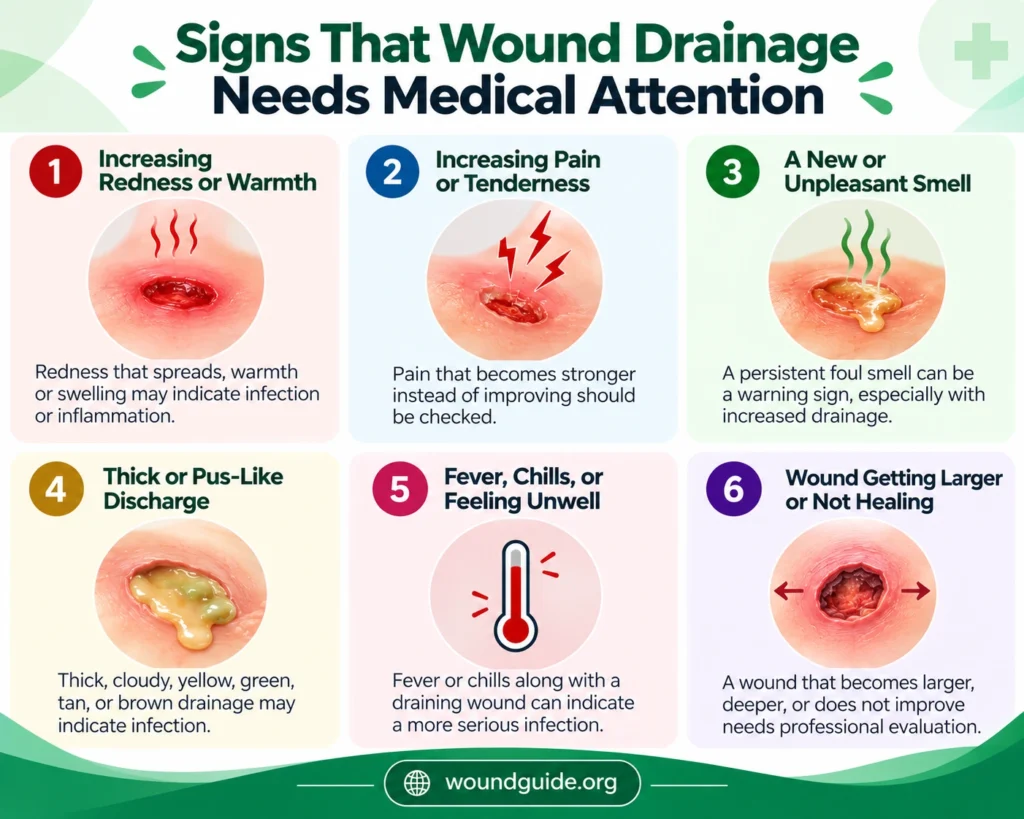
Changes in wound drainage become more concerning when they occur alongside other symptoms. Seek medical advice if you notice any of the following:
1. Increasing Redness or Warmth
Mild redness immediately around a fresh injury can occur during healing. However, redness that spreads, increasing warmth, or worsening swelling may indicate infection or inflammation that needs assessment.
2. Increasing Pain or Tenderness
Some discomfort may be expected after an injury or procedure. Pain that becomes stronger instead of improving, particularly with changes in drainage, should be checked.
3. A New or Unpleasant Smell
A persistent foul smell can be a warning sign, especially when the drainage is thick or increasing. Dressings and wound products can sometimes have an odour of their own, so the smell should be considered together with other changes.
4. Thick or Pus-Like Discharge
New thick, cloudy, yellow, green, tan, or brown drainage may indicate infection. Contact a healthcare professional rather than trying to treat suspected infection on your own.
5. Fever, Chills, or Feeling Unwell
Fever or chills alongside a draining wound can indicate a more serious infection. Seek urgent medical advice, especially if symptoms are worsening.
6. A Wound That Is Getting Larger or Not Healing
A wound that becomes deeper, opens up, develops dark tissue, or fails to improve needs professional evaluation. People with diabetes, poor circulation, or reduced immunity may need earlier assessment because their wounds can be more difficult to heal.
When Is It an Emergency?
Seek emergency medical care if you experience rapidly spreading redness with severe illness, confusion, faintness, difficulty breathing, or uncontrolled bleeding. These can indicate a serious complication.
How to Care for a Wound With Drainage
Appropriate wound care helps protect the injured area, manage moisture, and reduce the risk of complications. The right approach depends on the wound and any treatment prescribed by a clinician.
Step 1: Wash Your Hands
Wash your hands with soap and water before and after touching the wound or changing a dressing. Use clean supplies and avoid touching the part of the dressing that will contact the wound.
Step 2: Clean the Wound as Directed
For many minor wounds, gentle rinsing with clean running water is appropriate. Some wounds may require sterile saline or a specific cleaning method recommended by a healthcare professional.
Avoid scrubbing the wound or probing it with fingers, cotton buds, or other objects. Do not use alcohol, hydrogen peroxide, or harsh antiseptics unless your clinician specifically instructs you to do so, as these can damage healing tissue. For more wound care guidance and information on proper wound cleaning.
Step 3: Use an Appropriate Dressing
Choose a clean dressing suited to the wound and the amount of drainage. A dressing should help manage fluid without allowing excessive moisture to collect around the wound.
A healthcare professional may recommend a more absorbent dressing for wounds that produce more fluid. Do not pack a deep wound or insert dressing material into it unless you have been instructed how to do so.
Step 4: Change the Dressing When Needed
Follow the schedule recommended by your healthcare professional or the dressing manufacturer’s instructions. Change a dressing if it becomes wet, dirty, loose, or saturated, according to the care plan.
If a dressing sticks to the wound, do not pull it off forcefully. Follow the recommended removal instructions or ask a clinician for help.
Step 5: Protect the Surrounding Skin
Excess fluid can make the skin around a wound soft, white, wrinkled, or fragile. This is known as maceration. The affected skin may break down more easily and make wound care more difficult.
A suitable dressing and professional advice about protecting the surrounding skin can help manage this problem. Avoid applying creams or barrier products directly to the wound unless recommended.
Step 6: Monitor Changes
At each dressing change, note:
- The color and thickness of the fluid
- Whether the amount is increasing or decreasing
- Any new or unpleasant smell
- Changes in pain, swelling, redness, or warmth
- Whether the wound appears smaller, larger, or deeper
A simple record can help you explain changes to a healthcare professional. If you take photographs to monitor progress, use consistent lighting and avoid sharing images containing identifying information unnecessarily.
What Causes Excessive Wound Drainage?
Copy caption
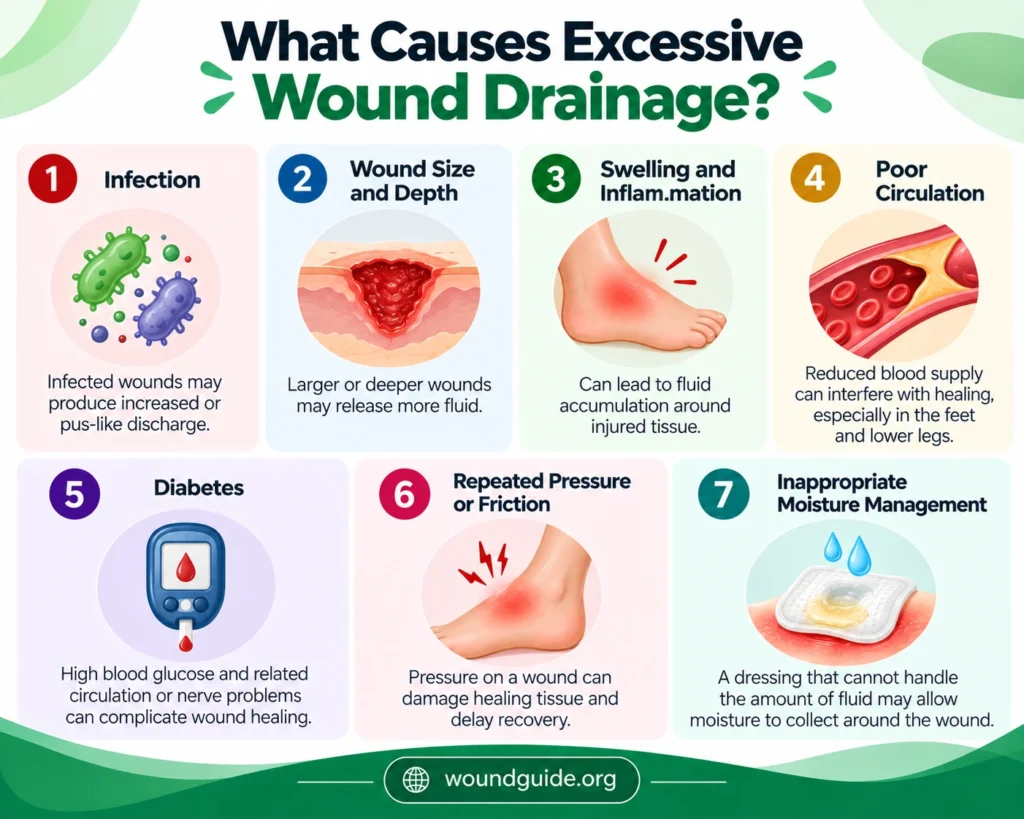
Several factors can increase drainage or make it last longer than expected. These include:
- Infection: Infected wounds may produce increased or pus-like discharge.
- Wound size and depth: Larger or deeper wounds may release more fluid.
- Swelling and inflammation: These can contribute to fluid accumulation around injured tissue.
- Poor circulation: Reduced blood supply can interfere with healing, particularly in the feet and lower legs.
- Diabetes: High blood glucose and related circulation or nerve problems can complicate wound healing.
- Repeated pressure or friction: Pressure on a wound can damage healing tissue and delay recovery.
- Inappropriate moisture management: A dressing that cannot handle the amount of fluid may allow moisture to collect around the wound.
The cause cannot always be identified from the drainage itself. A clinician may need to assess the wound, your medical history, circulation, and other symptoms to recommend appropriate care.
When Should You Contact a Wound Care Specialist?
Consider professional wound assessment if the drainage is persistent, repeatedly soaks through the dressing, changes unexpectedly, or occurs with worsening pain, redness, swelling, or an unpleasant smell.
You should seek prompt advice for a draining wound if you have diabetes, poor circulation, reduced immunity, or a recent surgical incision. Do not wait for severe symptoms if the wound is deteriorating.
A wound care professional can assess the wound’s size, depth, tissue condition, surrounding skin, and drainage. Depending on the findings, care may involve a different dressing, treatment of an underlying condition, further tests, or medical treatment for infection.
Not every draining wound requires antibiotics. A clinician should determine whether infection is present and which treatment, if any, is appropriate. Do not use leftover antibiotics or start prescription treatment without medical advice.
Frequently Asked Questions About Wound Drainage
Yes, a small amount of clear or pale yellow fluid, or light pink fluid, can occur during healing. However, the amount should be considered alongside the wound’s progress and other symptoms. Increasing drainage, thick pus-like fluid, or worsening pain requires medical assessment.
Normal drainage is often clear, watery, or pale yellow. Light pink drainage can also occur when a small amount of blood mixes with clear fluid. No color alone can confirm that a wound is healthy or infected.
No. Thin, pale yellow fluid may be normal serous drainage. Thick, opaque yellow discharge is more concerning, particularly if it has a bad smell or occurs with redness, warmth, swelling, or increasing pain.
Repeatedly wet dressings may indicate that the wound is producing more fluid than the dressing can absorb. The wound may need reassessment and a different dressing strategy. Seek advice if the drainage is heavy, increasing, or accompanied by other warning signs
Contact a healthcare professional if drainage becomes thick, increases unexpectedly, smells unpleasant, or occurs with worsening pain, redness, or swelling. Seek urgent care for fever with significant wound symptoms, a wound that opens after surgery, or signs of serious illness. Heavy or uncontrolled bleeding requires emergency attention.
Conclusion
Wound drainage can provide useful information about how an injury is healing. Clear or pale yellow fluid and small amounts of pink fluid may be expected in some wounds, while thick, cloudy, or pus-like discharge can indicate a complication.
However, color alone cannot diagnose a wound infection. Pay attention to the amount, consistency, smell, changes over time, and symptoms around the wound. Keep the wound clean, use an appropriate dressing, and seek professional advice when drainage increases or healing appears to worsen.
If you are unsure whether your wound drainage is normal, professional assessment can help identify the cause and guide appropriate care.
Need Help With a Draining Wound?
At WoundGuide, our goal is to help people understand wound care and recognise when professional assessment may be needed.
Concerned about wound drainage, delayed healing, or possible infection? Visit Wound Guide to explore wound care guidance and consultation options. If you have severe symptoms or signs of a serious infection, seek urgent medical care rather than waiting for an online response.
Leave a Reply