
kin maceration around wounds is one of the most common yet overlooked problems in wound care. The skin turns white, soft and soggy because it stays wet for too long. Left alone, it can slow healing, enlarge the wound and invite infection. For everyday wound-care steps, see our guide to daily wound care and infection prevention.
This guide explains what skin maceration around wounds is, why it happens, how to spot it early and how to prevent it. It also covers when you should call a healthcare professional.
What Is Skin Maceration Around Wounds?
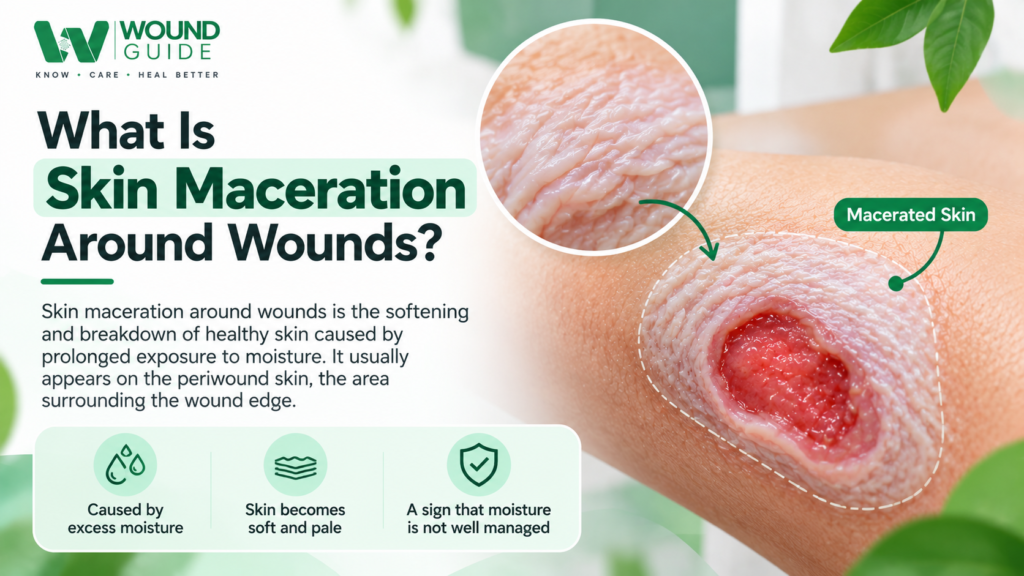
Skin maceration around wounds is the softening and breakdown of healthy skin caused by prolonged exposure to moisture. It usually appears on the periwound skin, the area surrounding the wound edge.
Healthy skin is a strong barrier. Its outer layer holds just enough water to stay flexible.
When skin sits in fluid for hours or days, that layer takes on too much water. It swells, turns pale and loses strength. This is what clinicians call maceration.
Skin maceration around wounds is not a disease on its own. It is a warning sign that moisture is not being managed well.
How Skin Maceration Around Wounds Develops
To understand skin maceration around wounds, it helps to know how skin handles water.
The outermost layer, the stratum corneum, normally holds about 15 to 30 percent water. Wound fluid, sweat, urine or leaking dressings can push that figure far higher.
Here is the usual sequence:
- Excess fluid stays in contact with the skin.
- The skin cells absorb water and swell.
- The outer layer turns white, wrinkled and fragile.
- Friction, adhesives or pressure then tear the weakened skin.
- The wound edge breaks down and the wound grows.
Wound fluid, called exudate, also matters. In chronic wounds it contains enzymes that can digest healthy tissue. When it spreads onto nearby skin, skin maceration around wounds gets worse faster.
7 Common Causes of Skin Maceration Around Wounds
Many everyday factors can lead to skin maceration around wounds. Knowing them helps you fix the real problem rather than just treating the surface.
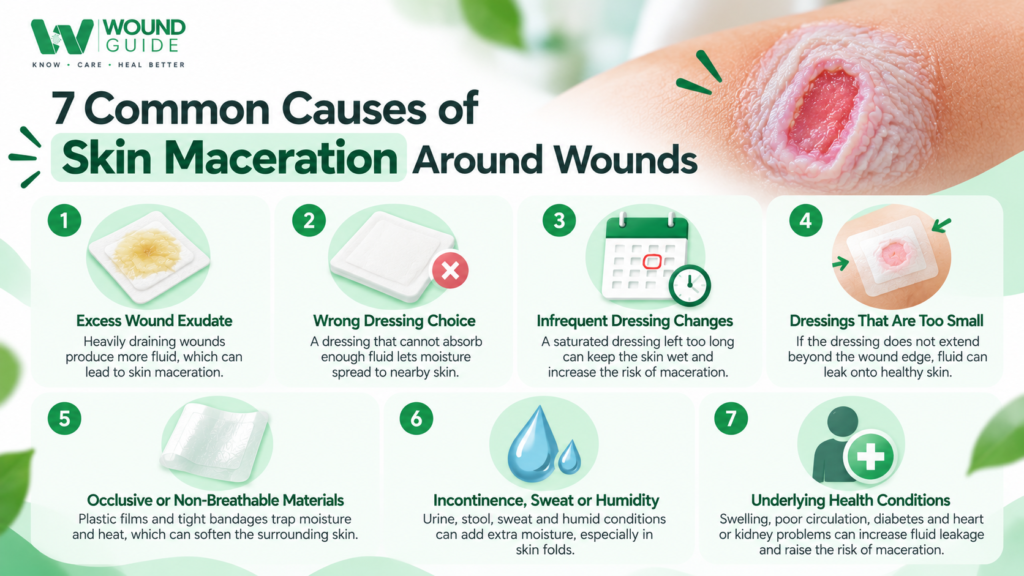
1. Excess Wound Exudate
Heavily draining wounds are the top cause of skin maceration around wounds. Venous leg ulcers, burns and infected wounds often produce large amounts of fluid.
2. Wrong Dressing Choice
A dressing that cannot absorb enough fluid lets exudate pool and spread. A very absorbent dressing on a dry wound can also cause problems, but the usual culprit is an under-absorbent one.
3. Infrequent Dressing Changes
A saturated dressing left in place becomes a wet compress against the skin. Skin maceration around wounds can start within hours when a dressing is overdue for change.
4. Dressings That Are Too Small
If the dressing does not extend beyond the wound edge, fluid wicks outward onto healthy skin. A good rule is to choose a dressing with a margin of at least 2 to 3 cm around the wound.
5. Occlusive or Non-Breathable Materials
Plastic films and tight bandages trap moisture and heat. This traps sweat as well as wound fluid and raises the risk of skin maceration around wounds.
6. Incontinence, Sweat or Humidity
Wounds near the groin, buttocks, skin folds or feet are more exposed to urine, stool and sweat. In these areas, skin maceration around wounds often develops from outside moisture.
7. Underlying Health Conditions
Swelling (edema), poor circulation, diabetes and heart or kidney problems can all increase fluid leakage. Treating the root cause is essential to control skin maceration around wounds in the long term.
Signs and Symptoms of Skin Maceration Around Wounds
Spotting skin maceration around wounds early lets you act before real damage occurs. Check the skin every time you change a dressing.
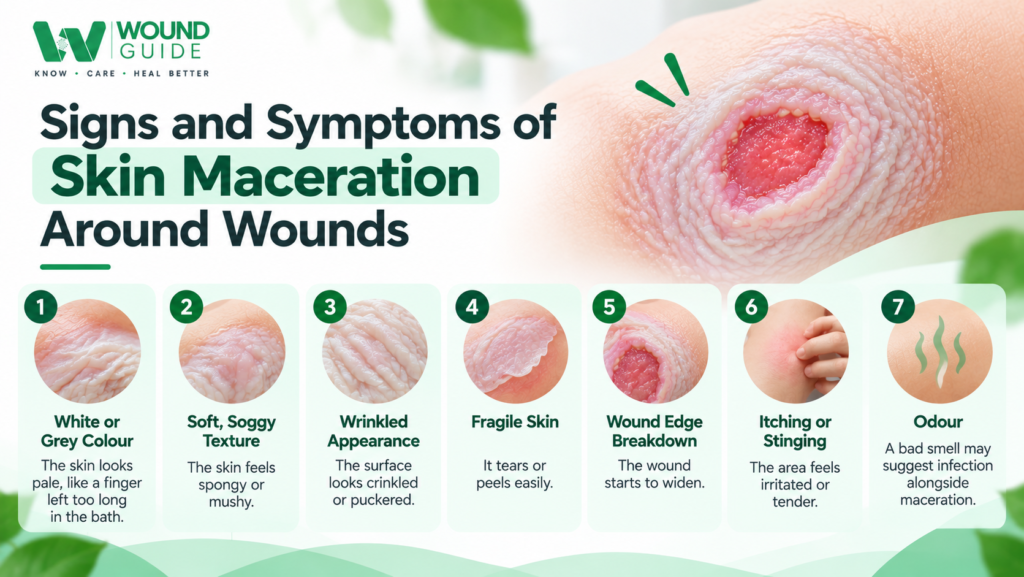
Common signs include:
- White or grey colour: the skin looks pale, like a finger left too long in the bath
- Soft, soggy texture: the skin feels spongy or mushy
- Wrinkled appearance: the surface looks crinkled or puckered
- Fragile skin: it tears or peels easily
- Wound edge breakdown: the wound starts to widen
- Itching or stinging: the area feels irritated or tender
- Odour: a bad smell may suggest infection alongside maceration
Skin maceration around wounds may be painless at first. That is why regular checks matter more than waiting for symptoms.
Why Skin Maceration Around Wounds Is a Problem
Many people treat skin maceration around wounds as a minor cosmetic issue. It is not. It causes several real complications:
- Delayed healing: the wound cannot close if its edges keep breaking down.
- Larger wounds: macerated skin tears, which increases the wound size.
- Higher infection risk: soft, damaged skin lets bacteria and fungi in.
- More pain: raw, inflamed skin hurts more than intact skin.
- Dressing problems: adhesives stick poorly to wet skin, so dressings leak and slip.
- Higher care costs: longer healing means more dressings, visits and sometimes hospital care.
Preventing skin maceration around wounds is therefore one of the simplest ways to speed recovery.
Who Is at Higher Risk?
Anyone with a wound can develop skin maceration around wounds, but some groups face higher risk:
- People with chronic wounds such as venous ulcers, diabetic foot ulcers and pressure injuries
- Older adults with thin, fragile skin
- People with leg swelling or heart failure
- Those with incontinence
- Patients with burns or surgical wounds that drain heavily
- Anyone who sweats heavily or lives in a hot, humid climate
- People with reduced mobility who cannot change position or dressings easily
How Skin Maceration Around Wounds Is Assessed
A nurse or doctor usually diagnoses skin maceration around wounds by looking and touching. No special test is needed.
They will typically check:
- The colour and texture of the periwound skin
- The amount, colour and smell of exudate
- The condition of the wound edges
- Signs of infection such as redness, heat, swelling or pus
- The current dressing and how often it is changed
They may also look for underlying causes, such as poor circulation or uncontrolled swelling. Finding the cause is key to stopping skin maceration around wounds from returning. If a wound is also slow to heal, read our guide on why wounds may not heal.
Treatment for Skin Maceration Around Wounds
Treating skin maceration around wounds means removing excess moisture and protecting the skin while it recovers.
Step 1: Control the Moisture
Switch to a more absorbent dressing if the current one is saturated. Foams, alginates and hydrofibre dressings are common options for heavy drainage.
Step 2: Change Dressings on Time
Change the dressing before it is full. Your care team can suggest a schedule based on how much the wound drains.
Step 3: Protect the Surrounding Skin
Barrier films or barrier creams create a thin protective layer. They keep exudate off the periwound skin and are widely used for skin maceration around wounds.
Step 4: Clean Gently
Use saline or a mild cleanser, then pat the skin dry. Never rub, because macerated skin tears easily.
Step 5: Treat the Root Cause
Compression therapy for venous ulcers, better blood sugar control in diabetes and proper continence care all reduce moisture at the source.
Step 6: Treat Infection if Present
If a doctor confirms infection, they may prescribe antiseptic dressings, antifungal products or antibiotics.
With proper care, mild skin maceration around wounds often improves within a few days once moisture is under control.
7 Best Ways to Prevent Skin Maceration Around Wounds
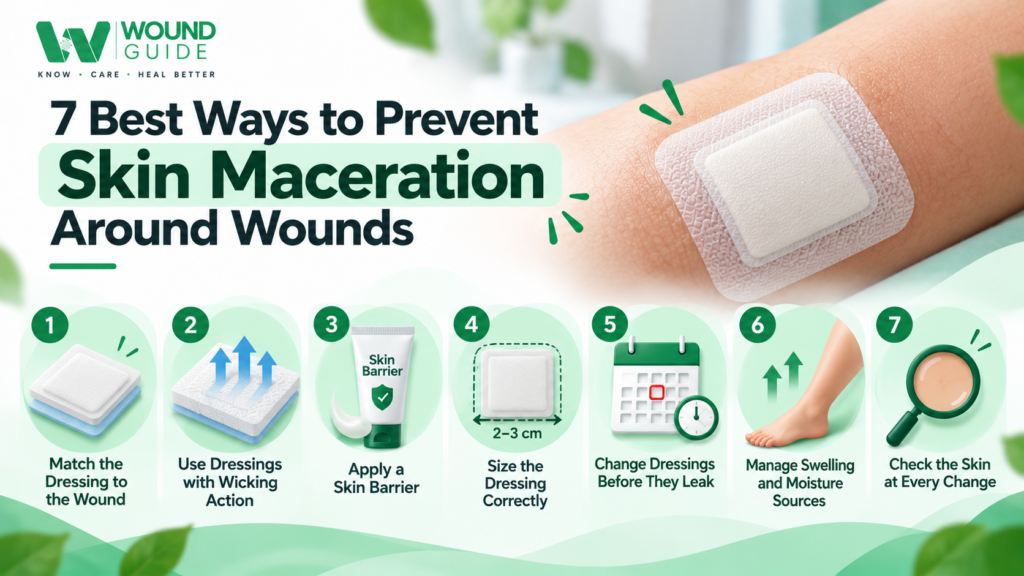
Prevention is easier than repair. These seven habits cut your risk of skin maceration around wounds.
1. Match the Dressing to the Wound
Assess how much the wound drains. Choose a dressing with enough absorbency for that level, and review the choice if drainage changes.
2. Use Dressings with Wicking Action
Some foam and fibre dressings lock fluid inside the pad instead of letting it spread sideways. This is very effective against skin maceration around wounds.
3. Apply a Skin Barrier
Apply a no-sting barrier film or cream to the periwound skin before dressing the wound. It shields the skin from exudate.
4. Size the Dressing Correctly
Make sure the dressing overlaps the wound edge by at least 2 to 3 cm. Poor coverage is a frequent cause of skin maceration around wounds.
5. Change Dressings Before They Leak
Do not wait for strike-through. Change the dressing when it is about three-quarters full, or as directed.
6. Manage Swelling and Moisture Sources
Elevate swollen limbs, use compression where prescribed and manage incontinence promptly. Keep skin folds clean and dry.
7. Check the Skin at Every Change
Look at the periwound skin each time. Early detection of skin maceration around wounds lets you adjust care before the problem spreads.
Choosing the Right Dressing
Dressing choice has a major effect on skin maceration around wounds. This table gives a general guide. Always follow your clinician’s advice. For additional clinical guidance on macerated skin and wound assessment, see the NHS Scotland Visual Wound Guide.
| Wound Drainage | Suitable Dressing Types | Notes |
| Dry or low | Hydrogel, thin film, hydrocolloid | Keeps the wound moist without excess fluid |
| Moderate | Foam, thin hydrofibre | Absorbs and protects nearby skin |
| Heavy | Alginate, thick hydrofibre, super-absorbent pads | Handles large volumes and reduces skin maceration around wounds |
| Heavy with infection | Antimicrobial foam or silver alginate | Use under professional guidance |
| Fragile skin | Silicone-adhesive dressings | Gentle removal, less skin damage |
Silicone adhesives are especially helpful for older adults. They hold well without ripping fragile skin that is already prone to skin maceration around wounds.
Home Care Dos and Don’ts
Simple daily habits make a big difference when you manage skin maceration around wounds at home.
Do:
- Wash your hands before touching any dressing
- Pat the skin dry after cleaning
- Use barrier products as recommended
- Keep the wound area clean and dry between changes
- Take photos to track progress and share them with your care team
- Stay hydrated and eat enough protein to support healing
Don’t:
- Leave a wet or soiled dressing in place
- Use dressings that are too small
- Rub or scrub soft skin
- Apply thick greasy ointments under dressings unless advised
- Pull off adhesives quickly
- Ignore a worsening white ring around the wound
When to See a Doctor
Mild skin maceration around wounds can often be managed with better dressings. Seek medical help if you notice:
- Spreading redness, warmth or swelling
- Pus or a foul smell
- Fever or chills
- Increasing pain
- A wound that is getting bigger
- Macerated skin that does not improve within a few days of better care
- Black or dying tissue
People with diabetes or poor circulation should seek advice early, because small problems can escalate quickly. Learn more about managing diabetic foot ulcers, bedsores and venous ulcers. Persistent skin maceration around wounds should always be reviewed by a nurse or doctor.
Skin Maceration vs Similar Skin Problems
It is easy to confuse skin maceration around wounds with other conditions. This comparison helps.
| Condition | Main Feature | Cause |
| Skin maceration around wounds | White, soggy, wrinkled skin | Prolonged moisture |
| Contact dermatitis | Red, itchy, sometimes blistered | Irritant or allergen |
| Fungal infection | Red rash, scaling, satellite spots | Yeast or fungus |
| Cellulitis | Hot, red, spreading, painful | Bacterial infection |
| Skin stripping | Shiny, raw patches | Adhesive removal |
Sometimes more than one condition exists together. Skin maceration around wounds can lead to fungal or bacterial infection, so a professional opinion is useful when symptoms are unclear.
Frequently Asked Questions
The skin appears white or pale grey, soft, wrinkled and soggy, usually at the wound edge.
It is usually not dangerous by itself, but it delays healing and raises infection risk if ignored.
With better moisture control, mild skin maceration around wounds often improves in a few days. Severe cases take longer.
Yes. A dressing that stays wet is one of the leading causes of skin maceration around wounds.
Short, careful washing is fine. Long soaks or keeping a wound wet for hours can contribute.
Conclusion
Skin maceration around wounds is common, avoidable and treatable. It occurs when too much moisture sits on the skin next to a wound, turning healthy tissue white, soft and weak.
The main causes are heavy drainage, the wrong dressing, late changes, sweat, incontinence and underlying conditions. Early signs include pale, soggy, wrinkled skin at the wound edge.
The best defence is simple:
- Choose absorbent, correctly sized dressings
- Change them on time
- Protect the periwound skin with a barrier
- Treat the cause of the moisture
Check the skin at every dressing change and act at the first sign of whitening. If skin maceration around wounds does not improve, or if you see signs of infection, contact a WoundGuide
Leave a Reply