
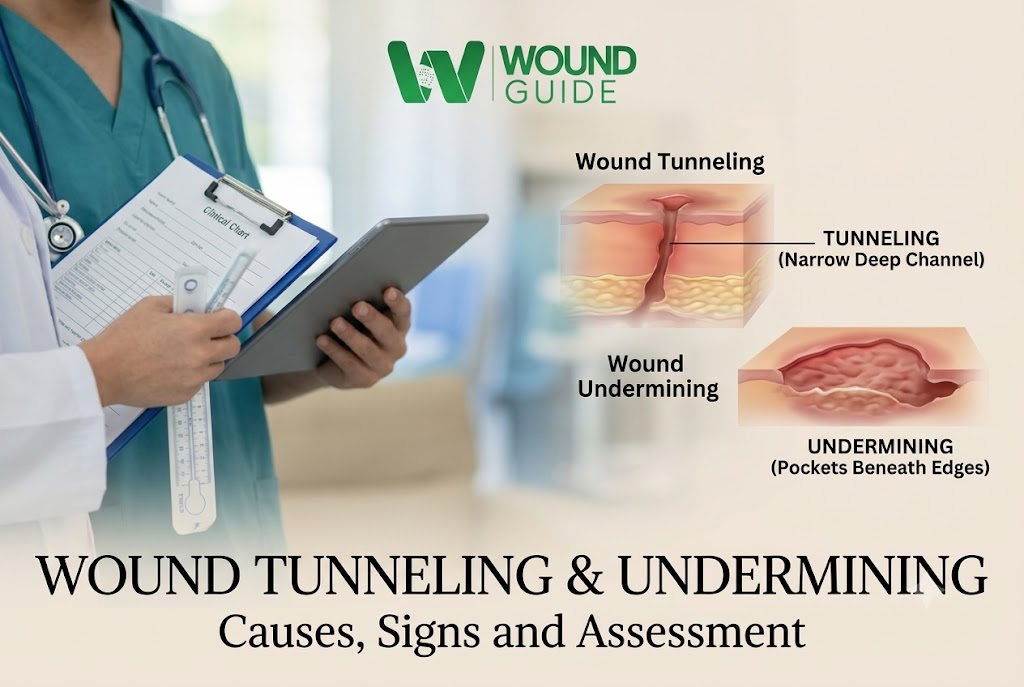
Wound Tunneling and Undermining are important wound characteristics that can indicate tissue damage beneath the skin’s surface. Although both conditions may appear similar, wound tunneling involves a narrow channel extending into deeper tissue, while undermining occurs when tissue damage spreads beneath the wound edges. Understanding their causes, signs, and assessment methods can help patients and caregivers recognize potential complications and seek appropriate medical care.
In this guide, we explain how wound tunneling and undermining develop, which warning signs to watch for, how healthcare professionals assess these wounds, and which care approaches may support healing.
What Is Wound Tunneling?
Wound tunneling refers to a narrow channel that extends from the main wound into deeper surrounding tissue. The opening may appear small, even when the channel extends farther beneath the skin.
A tunnel can develop when tissue damage progresses below the wound surface. Because the external opening does not always show the full extent of the damage, a wound may appear relatively small while having a deeper or more extensive structure.
Common characteristics of wound tunneling include:
- A narrow channel extending from the wound bed.
- Greater depth than the visible surface suggests.
- Drainage emerging from an opening or deeper tract.
- Difficulty determining the full extent of the wound by looking at the surface alone.
Tunneling can occur in pressure injuries, diabetic foot ulcers, surgical wounds, and certain wounds associated with infection or deeper tissue damage.
The presence of a tunnel does not automatically mean a wound is infected. However, it requires appropriate assessment to identify its depth, direction, possible cause, and any associated complications.
What Is Wound Undermining?
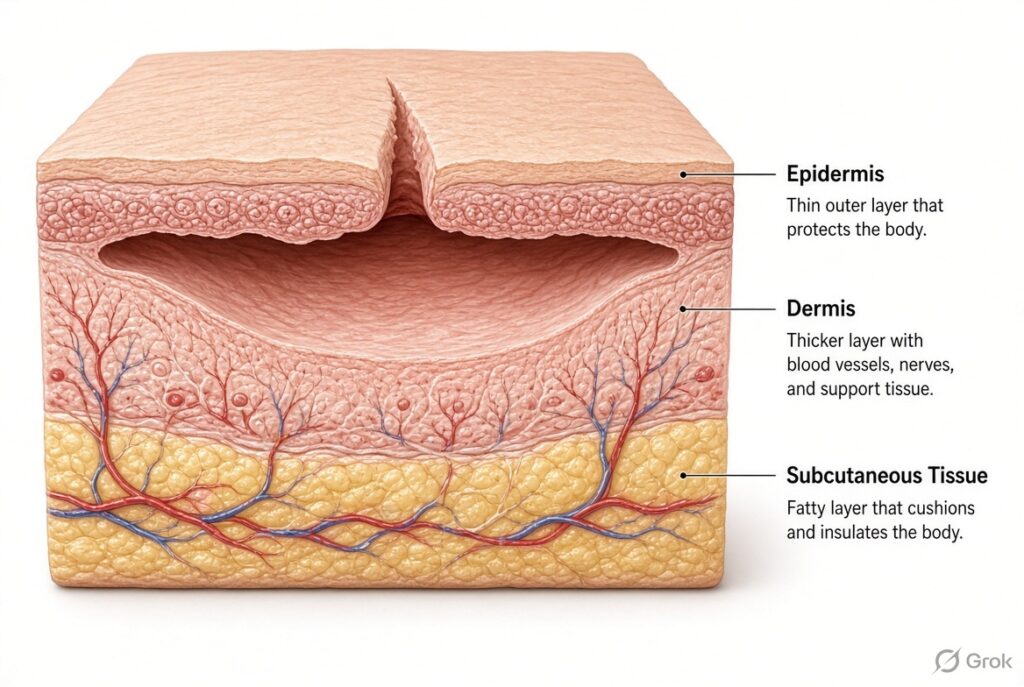
Wound undermining occurs when tissue beneath the wound edges is damaged or eroded, creating a pocket underneath the surrounding skin. Instead of extending mainly through a narrow channel, the damaged area spreads sideways beneath the wound margin.
The skin at the edge may appear intact even though the tissue underneath it has been affected. This can make the wound’s true size and extent difficult to judge from the surface.
Common characteristics of wound undermining include:
- A pocket beneath one or more wound edges.
- A wound opening that does not reflect the full area of tissue damage.
- Areas of weakened or unsupported tissue around the wound.
- A larger area of damage beneath the skin than is visible externally.
Undermining is frequently assessed in pressure injuries and other complex or chronic wounds. Its presence may indicate that the wound needs a more detailed clinical examination and an appropriate care plan.
Wound Tunneling vs. Undermining: Key Differences
Although both conditions involve tissue damage beneath the skin, their patterns are different.
| Feature | Wound Tunneling | Wound Undermining |
| Definition | A narrow channel extending into tissue | A pocket extending beneath wound edges |
| Direction | Often extends deeper or in a particular direction | Spreads sideways beneath the wound margin |
| Appearance | May have a small opening with a deeper tract | May have a visible opening with hidden lateral tissue loss |
| Assessment | Channel depth and direction are evaluated | Extent beneath the wound edges is evaluated |
| Documentation | Location, direction, and depth | Location and extent beneath the edges |
| Main concern | Hidden depth and possible deeper involvement | Hidden tissue damage and weakened wound margins |
Important: Wound tunneling and undermining can occur in the same wound. Neither should be assessed using appearance alone.
What Causes Wound Tunneling and Undermining?
Several factors can contribute to these wound changes. The underlying cause must be identified because wound care may be ineffective if the factor responsible for continued tissue damage remains unaddressed.
1. Prolonged Pressure
Continuous pressure can reduce blood flow to the affected tissues. This can damage the skin and deeper structures, particularly in people with limited mobility.
Pressure injuries may develop over bony areas such as the heels, hips, and tailbone. Some extend into deeper tissues and may develop tunneling or undermining.
2. Diabetes and Reduced Sensation
People with diabetes may experience reduced sensation, circulation problems, and delayed wound healing. An injury may therefore go unnoticed until tissue damage becomes more extensive.
Regular foot checks and timely assessment of new or worsening foot wounds are particularly important. Learn more in our guide to diabetic foot ulcer treatment.
3. Infection or Deeper Tissue Damage
Some infections can contribute to tissue destruction, drainage, and the formation of deeper wound channels. However, not every tunnel or undermined area is infected.
Increasing pain, warmth, swelling, pus-like drainage, spreading redness, or fever should prompt medical assessment.
4. Surgical Wound Complications
Surgical wounds may develop deeper tissue separation or other complications after an operation. Infection, tension on the wound, and underlying health conditions can affect healing.
A surgical wound that opens, develops a deep pocket, or begins draining unexpectedly should be assessed promptly by the treating healthcare team.
5. Poor Circulation and Delayed Healing
Adequate blood supply is essential for delivering oxygen and nutrients to healing tissue. Poor circulation can delay repair and allow existing wounds to deteriorate.
Other factors, including smoking, inadequate nutrition, repeated friction, and uncontrolled underlying health conditions, may also interfere with healing.
Signs and Symptoms to Watch For
Wound tunneling and undermining may not always cause obvious symptoms. In some cases, they are identified during a professional wound assessment rather than through visual inspection alone.
Possible signs include:
- Unexpected wound depth: The wound extends deeper than its surface appearance suggests.
- Drainage from a small opening: Fluid may emerge from a narrow channel or pocket.
- Changes in wound edges: The edges may appear weakened or may not reflect the extent of tissue damage beneath them.
- Delayed healing: The wound does not improve as expected despite appropriate care.
- Increasing pain or tenderness: New or worsening discomfort may indicate a complication.
- Changes in surrounding skin: Redness, warmth, swelling, or skin breakdown may require further evaluation.
These findings are not specific to tunneling or undermining. A qualified healthcare professional must evaluate the wound to determine what is happening.
When Could These Signs Indicate Infection?
Seek prompt medical advice if the wound develops increasing pain, spreading redness, warmth, swelling, pus-like drainage, or a new unpleasant odor accompanied by other changes.
Fever, rapidly worsening tissue damage, severe pain, or sudden deterioration requires urgent medical evaluation. Do not wait for all symptoms to appear before seeking help.
How Are Wound Tunneling and Undermining Assessed?
A structured wound assessment helps healthcare professionals determine the extent of tissue damage and plan appropriate care.
1. Visual Examination
The clinician examines the wound’s location, visible dimensions, edges, wound bed, drainage, and surrounding skin. They also review the wound’s history and any changes since the previous assessment.
2. Measurement of Depth and Extent
A trained healthcare professional may use an appropriate sterile assessment instrument to measure a tunnel or the area of undermining. The instrument must be used gently and should never be forced into tissue.
Measurements help establish the extent of damage and provide a baseline for monitoring changes over time.
3. Recording the Direction
The location of tunneling and undermining may be documented using a clock-face method. In this system, 12 o’clock points toward the patient’s head, helping the care team record the direction consistently.
4. Evaluation of Drainage and Surrounding Skin
The clinician records the amount, color, and consistency of drainage and examines the skin around the wound for moisture damage, discoloration, warmth, swelling, or other changes.
5. Assessment of Underlying Causes
The assessment may include checking circulation, sensation, pressure exposure, nutritional status, diabetes management, and other conditions that could interfere with healing.
For additional clinical background, see this Wound Assessment resource from NCBI Bookshelf.
How Are Wounds With Tunneling or Undermining Managed?
Treatment depends on the wound’s cause, depth, location, tissue condition, drainage, circulation, and overall health of the patient. There is no single dressing or treatment suitable for every wound.
Address the Underlying Cause
Reducing pressure, improving positioning, evaluating circulation, and managing underlying health conditions may be important parts of care. For people with diabetes, appropriate foot protection and clinical follow-up are particularly important.
Select an Appropriate Dressing
A healthcare professional selects a dressing based on the wound’s characteristics and drainage. Some wounds need moisture balance and protection, while others require specific management of excess drainage.
Explore our guide to wound dressing types to learn about different dressing options and their uses.
Manage Drainage and Protect Surrounding Skin
Excess drainage can irritate or damage the surrounding skin. Appropriate dressing selection and regular reassessment can help manage moisture while protecting the wound edges.
Follow Professional Wound Care Instructions
Some wounds may require specialist treatment, removal of damaged tissue, pressure-relieving measures, or further investigation. These decisions should be made by qualified healthcare professionals based on the individual wound.
Do not insert cotton buds, fingers, or other objects into a wound to explore a tunnel. Do not attempt to cut, scrape, or pack a deep wound yourself. Incorrect probing or packing may cause further injury or interfere with healing.
Can Wound Tunneling and Undermining Heal?
Yes, some wounds with tunneling or undermining can heal when the underlying cause is addressed and appropriate wound care is provided. The time required varies depending on the depth and extent of tissue damage, blood supply, infection status, pressure exposure, and overall health.
Regular reassessment helps the healthcare team determine whether the wound is improving. Positive changes may include reduced wound dimensions, less drainage, healthier wound tissue, and improvement in surrounding skin.
A wound that becomes deeper, develops new channels, produces increasing drainage, or fails to improve needs reassessment. Visible closure at the surface does not always establish that deeper tissue has healed completely.
When Should You See a Wound Care Professional?
Arrange a professional assessment if:
- A wound appears unusually deep or has a suspected tunnel.
- The skin beneath a wound edge appears damaged or hollow.
- Drainage increases or changes unexpectedly.
- A wound is not healing or repeatedly reopens.
- The wound develops new pain, redness, warmth, or swelling.
- You have diabetes and develop a new foot wound or notice worsening of an existing one.
Seek urgent medical care for fever with a worsening wound, rapidly spreading redness, severe or rapidly increasing pain, or sudden opening of a surgical wound. If a surgical incision opens significantly or deeper tissue is visible, contact the surgical team or seek emergency care immediately.
People with diabetes, poor circulation, or reduced sensation should not delay assessment simply because a wound is painless.
Frequently Asked Questions
Tunneling is a narrow channel extending into deeper tissue, whereas undermining is tissue damage that spreads beneath the wound edges and creates a pocket
No. Tunneling can occur for several reasons, and its presence alone does not confirm infection. Other clinical findings and the patient’s overall condition must be considered.
A trained clinician may gently assess the channel using an appropriate sterile instrument and document its depth, direction, and location. The assessment must not involve forceful probing.
There is no fixed healing time. Recovery depends on wound size, depth, circulation, underlying conditions, infection status, and the effectiveness of the treatment plan.
Rapid deterioration, severe pain, spreading redness with systemic symptoms, fever with a worsening wound, or significant opening of a surgical wound requires urgent medical assessment.
Final Thoughts
Wound tunneling and undermining are important wound characteristics because damage may extend beyond what is visible on the skin’s surface. Although the terms describe different patterns of tissue damage, both require careful assessment to understand the wound’s depth, extent, and possible underlying causes.
Early recognition, appropriate wound measurement, protection from further injury, and treatment of contributing conditions can support better wound management. If you notice a deep channel, a pocket beneath the wound edges, increasing drainage, or delayed healing, consult a qualified healthcare professional rather than attempting to assess or treat the deeper area yourself.
WoundGuide is committed to helping readers understand wound care through accessible educational resources. Explore our wound care guides to learn more about wound assessment, dressing options, and the management of difficult-to-heal wounds.
Leave a Reply