
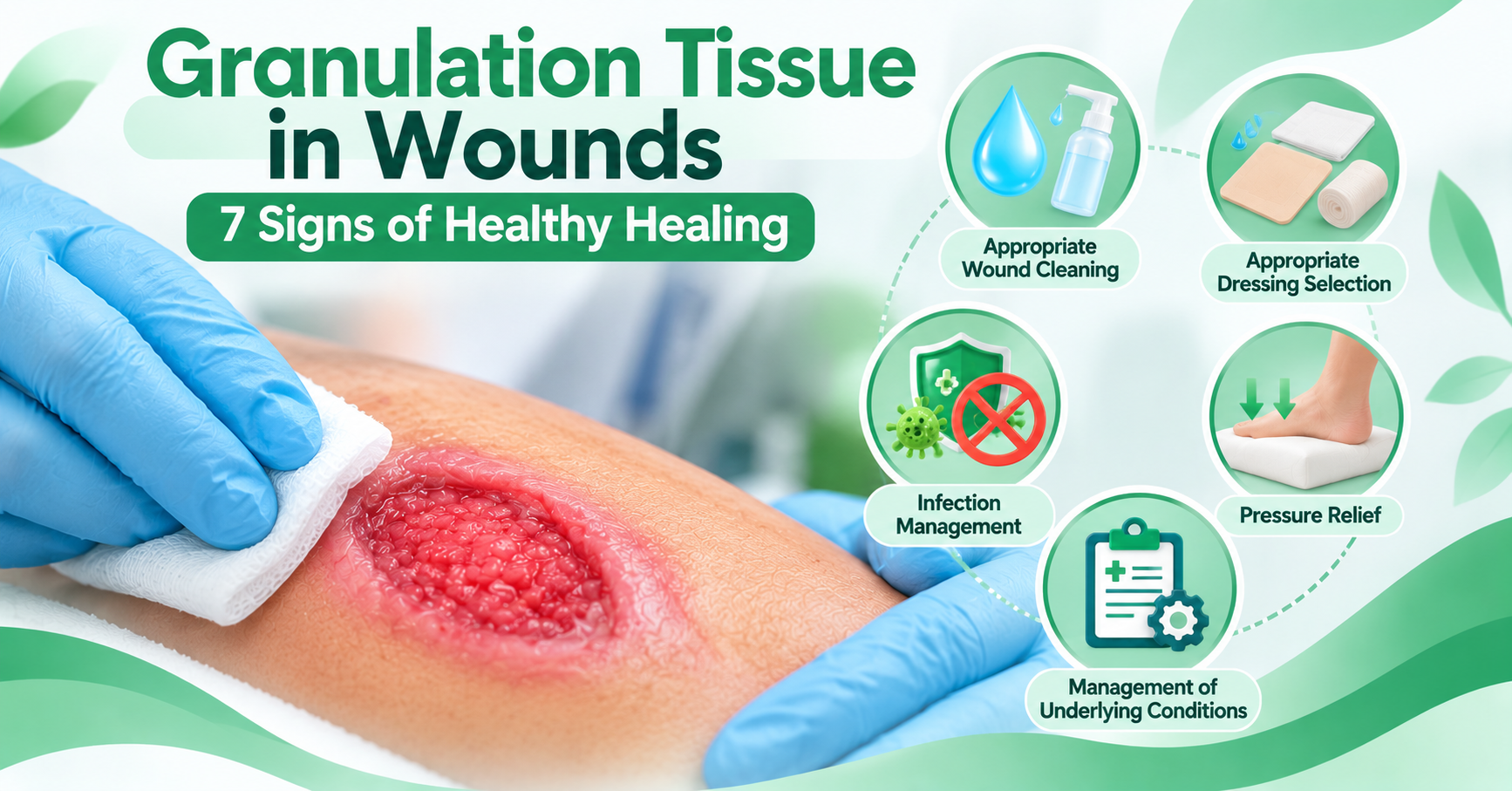
Granulation Tissue in Wounds is an important part of the body’s natural healing process. It is new tissue that develops as a wound begins to repair itself. Healthy granulation tissue can help fill the wound bed, support new blood vessels, and prepare the area for new skin formation. Understanding how wounds heal can also help you understand why choosing an appropriate dressing matters. Different wounds may require different approaches depending on drainage, depth, tissue condition, and other factors. You can learn more about this in our guide to Wound Dressing Types. Seeing pink or red tissue inside an open wound can sometimes be concerning, especially if you are unsure whether it represents healthy healing or another problem. Understanding what granulation tissue looks like, why it develops, and when changes may require professional assessment can make wound care easier to understand.
In this guide, we explain Granulation Tissue in Wounds, what healthy tissue looks like, what can delay its development, what hypergranulation means, and when a wound should be assessed by a healthcare professional.
What Is Granulation Tissue in Wounds?
Granulation Tissue in Wounds refers to the new connective tissue and tiny blood vessels that develop in the wound bed during the repair phase of healing.
Granulation Tissue in Wounds refers to the new connective tissue and tiny blood vessels that develop in the wound bed during the repair phase of healing. Granulation Tissue plays an important role in filling the wound and supporting tissue repair.
Granulation tissue may appear pink, bright red, or reddish and often has a moist, uneven, or granular appearance. This tissue is generally fragile because it contains many small blood vessels.
Its development is an important part of wound repair because it provides a foundation for the wound to gradually fill and for new skin cells to move across the wound surface.
However, not every red area in a wound automatically means healthy granulation tissue. The appearance of a wound should be considered along with its drainage, odor, pain, surrounding skin, size, depth, and overall healing progress.
What Does Granulation Tissue Look Like?
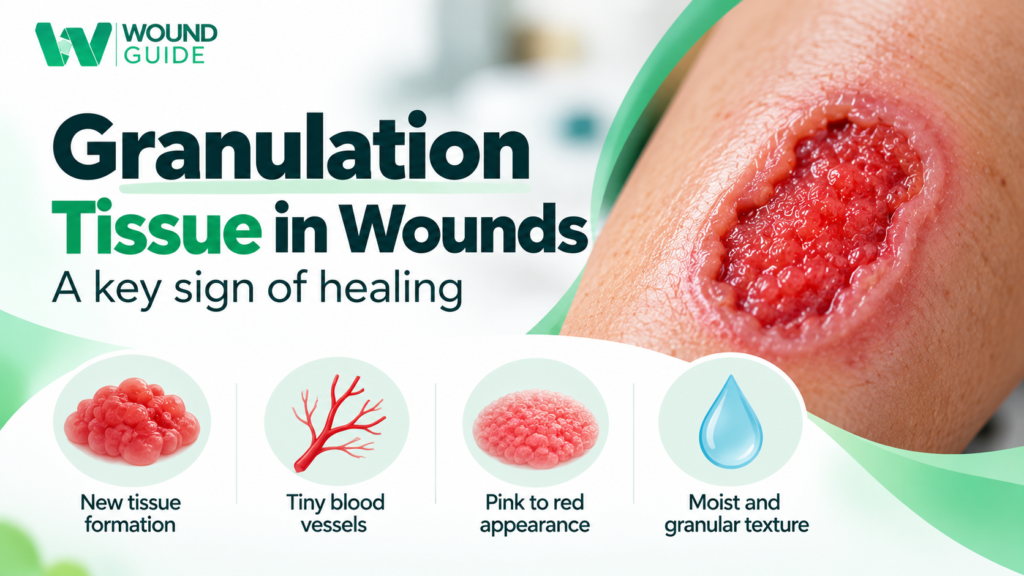
Healthy Granulation Tissue in Wounds can have several recognizable characteristics.
It may appear:
- Pink to bright red
- Moist rather than completely dry
- Soft and uneven in texture
- Slightly granular or pebbled
- Fragile and prone to minor bleeding when disturbed
- Located within the wound bed as the wound begins to fill
The appearance can vary depending on the wound, its location, depth, moisture level, and stage of healing.
A wound should not be assessed based on color alone. For example, increasing redness around the wound, worsening pain, swelling, pus-like drainage, or a foul odor may indicate a complication rather than normal healing.
Why Does Granulation Tissue Form?
Granulation Tissue in Wounds develops as part of the body’s tissue-repair process.
Several important processes occur during this stage of healing.
1. New Blood Vessels Develop
The healing wound needs oxygen and nutrients. The body therefore produces new small blood vessels that supply the developing tissue.
This increased blood supply contributes to the pink or red appearance of healthy granulation tissue.
2. Fibroblasts Produce New Tissue
Fibroblasts are cells involved in producing components of the extracellular matrix, including collagen. These materials help create the framework needed for tissue repair.
3. The Wound Bed Begins to Fill
As new tissue develops, the wound can gradually become shallower and begin filling from the bottom upward.
4. The Wound Prepares for Skin Formation
Granulation tissue creates a suitable wound bed that supports the next stage of healing, when epithelial cells spread across the wound surface.
7 Signs of Healthy Granulation Tissue
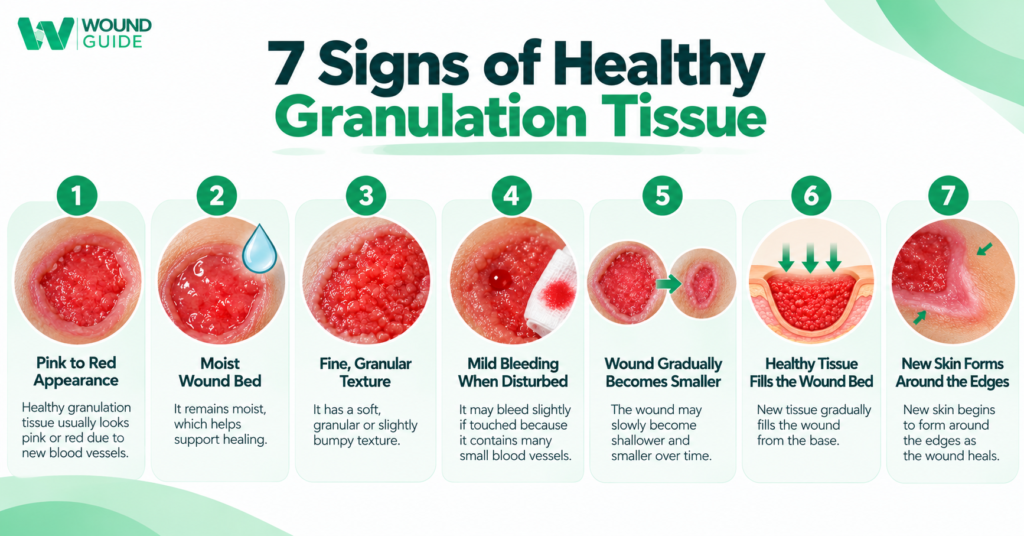
Recognizing the characteristics of healthy Granulation Tissue in Wounds can help you understand how a wound may be progressing.
1. Pink to Red Appearance
Healthy granulation tissue commonly has a pink or red appearance because it contains many small blood vessels.
The exact shade can vary depending on the individual wound and its stage of healing.
A red wound bed does not automatically mean infection. However, redness that is spreading into the surrounding skin, particularly when accompanied by increasing pain, warmth, or swelling, should be assessed.
2. Moist Wound Bed
Healthy granulation tissue generally develops in a wound environment with appropriate moisture.
A wound that is excessively dry may not provide an optimal environment for healing, while excessive moisture can damage the surrounding skin.
For this reason, wound dressings are selected according to factors such as the amount of wound drainage, wound depth, tissue condition, and surrounding skin.
Choosing the right wound dressing types can help maintain an appropriate wound environment.
3. Fine, Granular Texture
As the name suggests, granulation tissue can have a granular or uneven appearance.
The tissue may look slightly bumpy or textured rather than smooth. This appearance is associated with the developing tissue and small blood vessels within the wound bed.
It can look very different from normal intact skin because the wound is still undergoing repair.
4. Mild Bleeding When Disturbed
Because healthy granulation tissue contains many small blood vessels, it can bleed easily if it is rubbed, scraped, or otherwise traumatized.
Small amounts of bleeding can occur when a dressing is removed or when the wound is accidentally disturbed.
However, persistent, heavy, or difficult-to-control bleeding is not something to ignore and requires appropriate medical attention.
Avoid repeatedly touching or disturbing the wound simply to check its appearance.
5. The Wound Gradually Becomes Smaller
Healthy healing usually involves gradual changes in the wound’s size and depth.
As granulation tissue develops, it can help fill the wound bed. Over time, the wound may become shallower and smaller.
The rate of healing varies significantly depending on:
- Wound size
- Wound depth
- Location
- Blood supply
- Infection
- Diabetes
- Nutrition
- Pressure
- Underlying medical conditions
- Overall health
A wound that remains unchanged for a prolonged period or becomes larger should be professionally evaluated.
6. Healthy Tissue Fills the Wound Bed
Another important characteristic of Granulation Tissue in Wounds is progressive filling of the wound bed.
A deep wound may gradually develop new tissue from its base. As this happens, the depth can decrease and the wound can move toward later stages of healing.
The process is not always linear. A wound may improve slowly or experience setbacks when infection, pressure, poor circulation, repeated trauma, or other factors interfere with healing.
7. New Skin Begins to Form Around the Edges
As the wound continues to heal, new epithelial cells can gradually move across the wound surface.
This process is known as epithelialization.
You may notice lighter pink tissue developing at the wound edges as new skin forms. The appearance of newly healed skin can differ from the surrounding skin and may change over time.
Healthy vs Unhealthy Granulation Tissue
Understanding the difference between expected healing changes and concerning changes is important.
| Healthy Granulation Tissue | Concerning Wound Changes |
| Pink or red tissue | Grey, black, or unusual dead-looking tissue |
| Moist wound bed | Excessively dry or overly wet wound |
| Gradual filling of wound | Wound becoming deeper or larger |
| Mild bleeding when disturbed | Heavy or persistent bleeding |
| Wound gradually improves | Wound stops improving |
| No strong foul odor | New or worsening foul odor |
| Minimal surrounding inflammation | Increasing redness, warmth or swelling |
This comparison is only a general guide. A healthcare professional should assess wounds that are worsening, infected, unusually painful, or failing to heal.
What Is Hypergranulation Tissue?
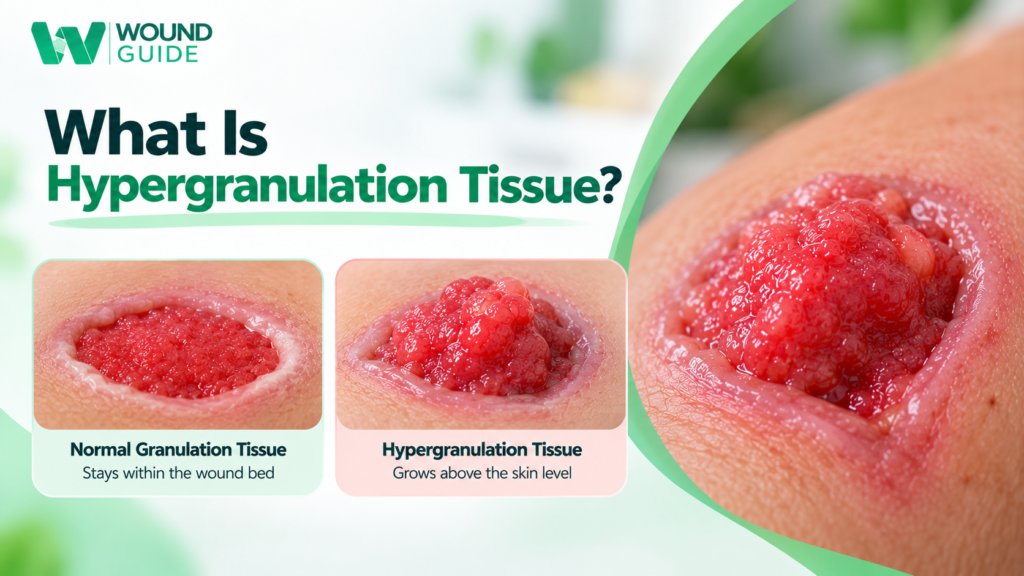
Hypergranulation tissue occurs when granulation tissue grows above the level of the surrounding skin.
Instead of remaining within the wound bed and supporting normal healing, the tissue may become raised or excessive.
Hypergranulation can interfere with epithelialization because new skin cells may have difficulty moving across the wound surface.
Possible factors associated with excessive granulation can include prolonged inflammation, excessive moisture, friction, infection, or other local wound factors.
If tissue appears unusually raised, continues growing, bleeds easily, or prevents the wound from closing, professional wound assessment is recommended.
Treatment depends on the underlying cause and should not be attempted using home remedies without appropriate medical advice.
What Can Delay Healthy Granulation Tissue?
Although the body has a natural ability to repair wounds, several factors can interfere with Granulation Tissue in Wounds and overall healing.
Infection
An infected wound may struggle to progress through normal healing stages.
Possible warning signs include:
- Increasing pain
- Increasing redness
- Swelling
- Warmth
- Pus-like drainage
- Foul odor
- Fever or feeling unwell
An infected wound may require professional evaluation and appropriate treatment.
Poor Blood Circulation
Adequate blood flow is essential for delivering oxygen and nutrients to healing tissue.
People with circulation problems may experience delayed wound healing, particularly in the lower legs and feet.
Diabetes
High blood glucose and diabetes-related complications can contribute to delayed wound healing.
People with diabetes should take foot and wound problems seriously because wounds can sometimes worsen without obvious symptoms in the early stages.
For more information, see our guide on Diabetic Foot Ulcer Treatment.
Pressure
Constant pressure can interfere with blood flow and prevent a wound from progressing normally.
This is particularly important for wounds affecting areas such as the heels, hips, and other pressure points.
Learn more about Heel Pressure Ulcers and pressure-related wound care.
Poor Nutrition
The body requires adequate energy, protein, vitamins, minerals, and fluids to support tissue repair.
Poor nutritional intake can make wound healing more difficult, particularly in people with chronic wounds or increased nutritional needs.
If you have a chronic wound, discuss your nutritional needs with a qualified healthcare professional rather than starting supplements without advice.
Repeated Trauma
Repeated friction, scratching, pressure, or accidental injury can damage newly developing tissue.
Protecting the wound and following the recommended dressing and activity instructions can help reduce unnecessary trauma.
How Is Granulation Tissue Managed?
The management of Granulation Tissue in Wounds depends on the cause, wound type, depth, drainage, infection status, and overall health of the patient.
Healthcare professionals may consider:
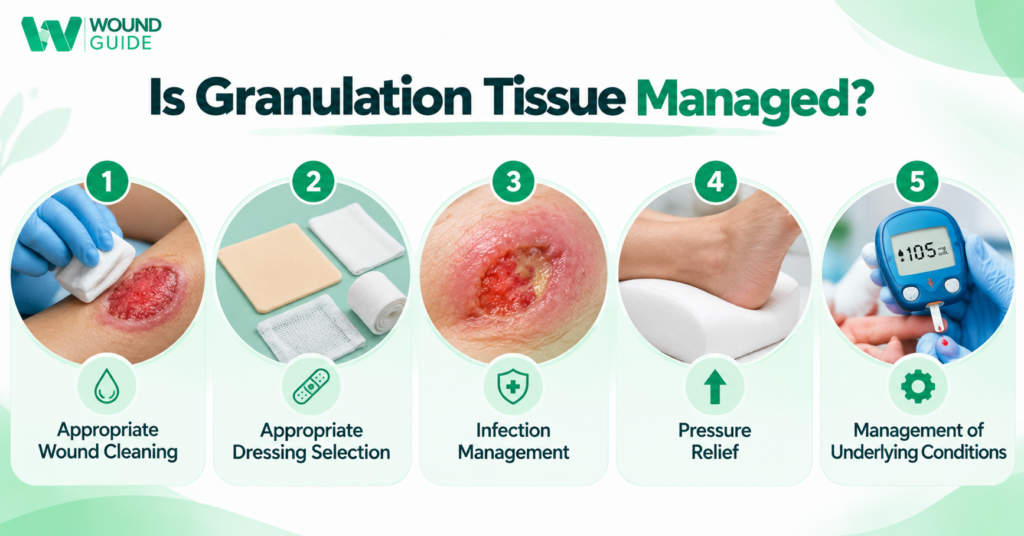
Appropriate Wound Cleaning
Wounds should be cleaned according to the advice provided by a healthcare professional. Harsh substances or unapproved home remedies can damage healing tissue.
Appropriate Dressing Selection
Different wounds require different dressing approaches.
A dressing may need to manage drainage, protect fragile tissue, maintain an appropriate moisture balance, or reduce contamination.
There is no single dressing that is suitable for every wound.
You can learn more about different options in our guide to Wound Dressing Types.
Infection Management
If infection is suspected, the wound may require professional assessment and targeted treatment.
Pressure Relief
Pressure should be reduced when it is contributing to delayed healing.
Management of Underlying Conditions
Conditions such as diabetes, circulation problems, or chronic swelling may need to be addressed as part of the overall wound-management plan.
Can You Remove Granulation Tissue at Home?
No. Granulation tissue should not be cut, scraped, or removed at home.
Healthy granulation tissue is part of the body’s repair process. Attempting to remove it can cause bleeding, pain, tissue damage, or delayed healing.
If the tissue looks excessive, raised, unusually fragile, or different from what your healthcare professional has previously described, arrange an assessment rather than attempting to treat it yourself.
When Should You See a Wound Care Professional?
Some wounds heal normally with appropriate care, while others require specialist evaluation.
Seek professional wound-care advice if:
- The wound is becoming larger or deeper.
- Pain is increasing instead of improving.
- Redness is spreading around the wound.
- The area is increasingly warm or swollen.
- Pus or unusual drainage develops.
- The wound develops a strong foul odor.
- You experience fever or feel generally unwell.
- The wound repeatedly bleeds.
- The wound contains black or dead-looking tissue.
- Healing appears to have stopped.
- You have diabetes and develop a new foot wound.
- You are unsure whether the tissue in the wound is healthy granulation tissue.
Early assessment can be especially important for chronic wounds because identifying and treating the underlying cause is often just as important as treating the wound itself.
Frequently Asked Questions
Granulation Tissue in Wounds is newly developing connective tissue and small blood vessels that form during the repair phase of wound healing. It can help fill the wound bed and support later skin formation.
Healthy granulation tissue is commonly pink to red because it contains many small blood vessels. Appearance can vary depending on the wound and stage of healing.
Hypergranulation tissue is excessive granulation tissue that rises above the surrounding skin level. It can interfere with normal epithelialization and may require professional assessment.
The timing varies depending on wound size, depth, blood supply, infection, underlying health conditions, and other factors. Wound healing does not occur at exactly the same rate for everyone.
No. Granulation tissue itself does not mean that a wound is infected. Infection is more likely to be suspected when there are additional signs such as increasing pain, spreading redness, swelling, warmth, pus-like drainage, foul odor, or fever.
Final Thoughts
Granulation Tissue in Wounds is an important part of the body’s natural repair process. Healthy granulation tissue can help fill the wound bed, support new blood vessels, and create the foundation needed for new skin formation.
Pink or red tissue within a wound can therefore be a normal part of healing. However, wound appearance should always be considered alongside other signs such as pain, drainage, odor, swelling, wound size, and overall progress.
Avoid cutting, scraping, or disturbing granulation tissue yourself. If a wound is getting worse, failing to heal, repeatedly bleeding, developing unusual drainage, or showing signs of infection, professional assessment is important.
Need help understanding a wound?
Don’t let a wound become a bigger problem. Visit WoundGuide for reliable wound-care information and guidance.
Leave a Reply