
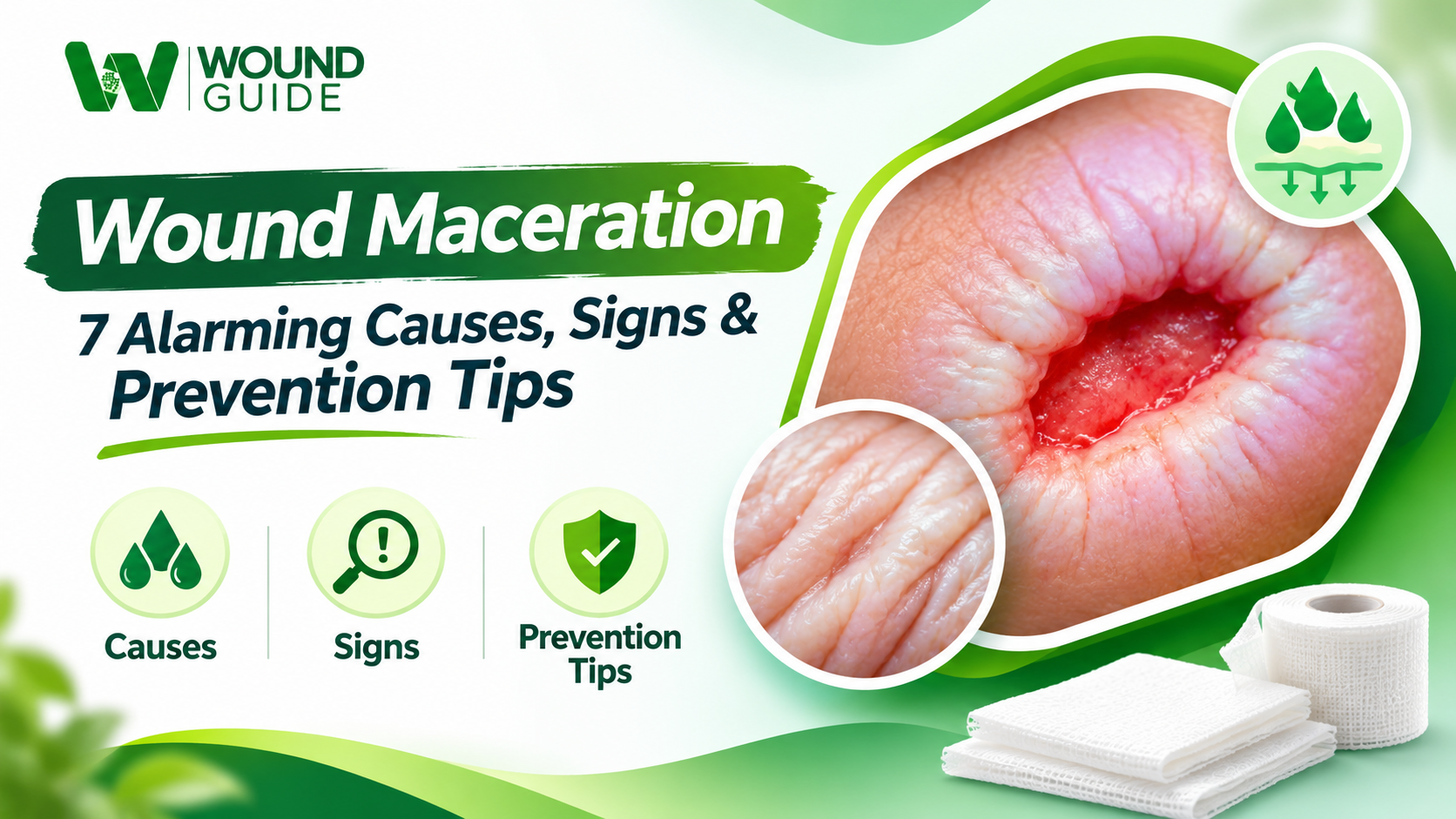
A wound surrounded by white, soft, wrinkled or soggy skin may be experiencing Wound Maceration. This condition develops when the skin is exposed to excessive moisture for too long, often because of wound drainage, sweat or an unsuitable dressing. Although moisture is essential for wound healing, too much moisture can weaken the surrounding skin, damage wound edges and interfere with recovery.
Understanding Wound Maceration is important because early changes in the skin can be easy to overlook. Learning about the different stages of wound healing can help you understand normal healing changes and recognise when a wound needs attention.
In this guide, we explain what wound maceration means, its seven common causes, warning signs, possible complications, treatment options and practical prevention tips. You will also learn when to seek professional wound-care advice and how suitable wound dressings can help protect the surrounding skin.
What Is Wound Maceration?
Wound maceration is the softening and weakening of skin caused by prolonged exposure to excessive moisture. It commonly affects the skin surrounding a wound, an area known as the periwound skin.
When wound fluid remains in contact with the surrounding skin for an extended period, the outer protective layer absorbs too much moisture. The skin can become pale, white, soft, wrinkled and fragile. In some cases, it may begin to peel or break down.
Wound fluid, also called exudate, is a natural part of the healing process. It helps maintain a suitable environment for tissue repair and supports the movement of cells involved in healing. However, when drainage is excessive or a dressing cannot absorb and retain it effectively, fluid may spread onto the surrounding skin.
This is where wound maceration can develop.
It is important to understand that a moist wound environment is not the same as an excessively wet wound. The aim of modern wound care is to maintain an appropriate moisture balance rather than allowing the wound to become either too dry or too wet.
What Does Wound Maceration Look Like?
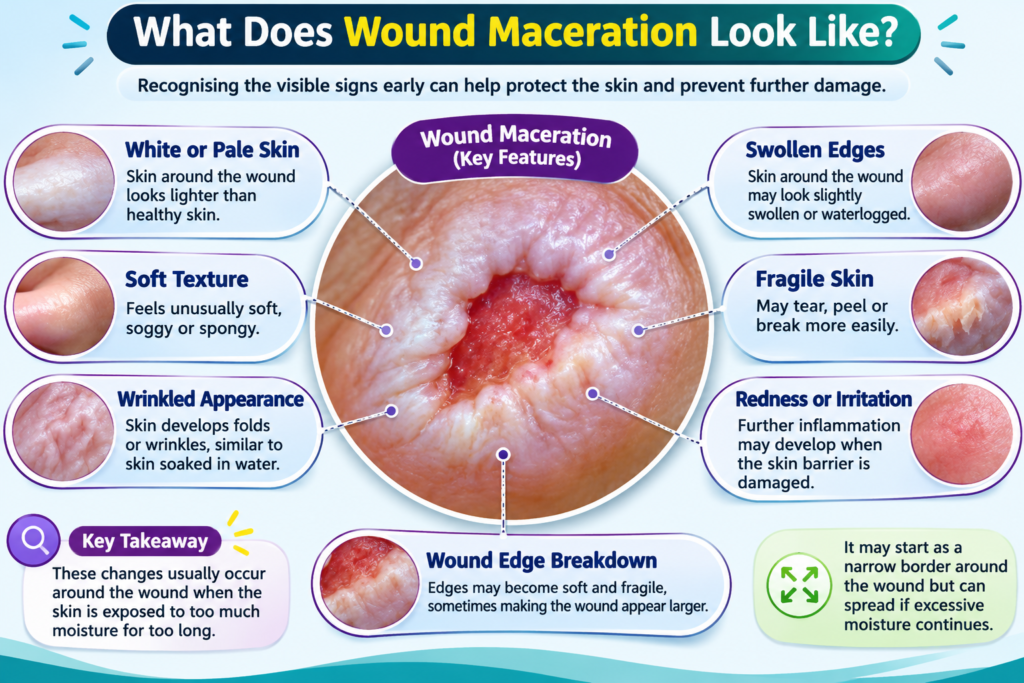
Recognising early changes can help prevent further skin damage. The appearance of wound maceration may vary depending on how long the skin has been exposed to moisture and how severe the damage has become.
Common visual characteristics include:
- White or pale skin: The skin around the wound may look lighter than the surrounding healthy skin.
- Soft texture: The affected area may feel unusually soft, soggy or spongy.
- Wrinkled appearance: The skin may develop folds or wrinkles, similar to skin that has been soaked in water.
- Swollen edges: The skin around the wound may look slightly swollen or waterlogged.
- Fragile skin: The affected area may tear, peel or break more easily.
- Redness or irritation: Further inflammation may develop when the skin barrier becomes damaged.
- Wound edge breakdown: The edges of the wound may become soft and fragile, sometimes making the affected area appear larger.
The affected area may initially be limited to a narrow border around the wound. If excessive moisture continues, the damaged area can spread.
Not every white area around a wound is caused by maceration. Skin colour changes can have other explanations, including poor circulation, pressure damage, infection or reactions to wound products. A healthcare professional should assess persistent or worsening changes.
7 Common Causes of Wound Maceration
Several wound-related, treatment-related and health-related factors can contribute to excessive moisture around a wound. Identifying the underlying cause is an important part of preventing further damage.
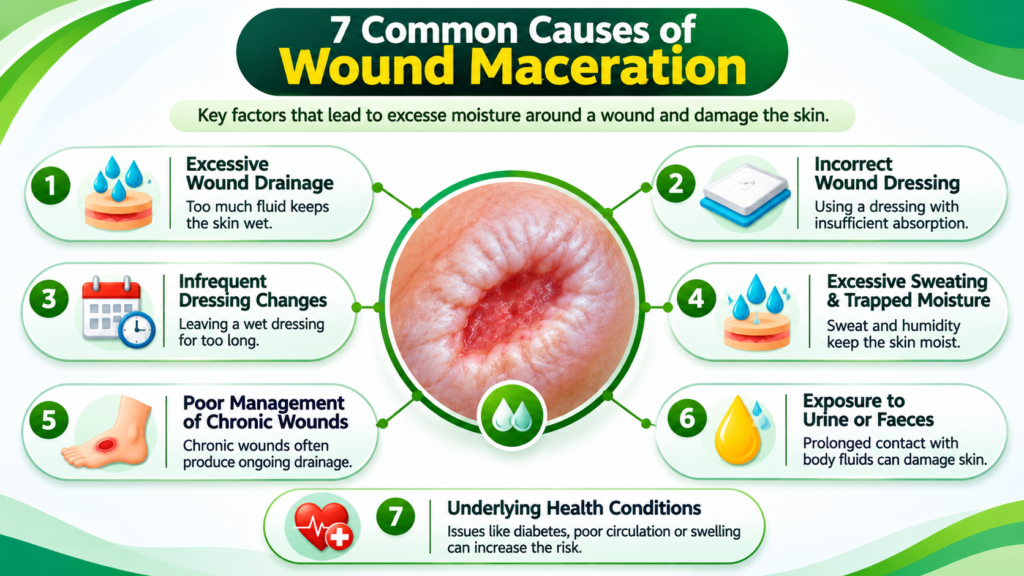
1. Excessive Wound Drainage
One of the most common causes of wound maceration is excessive wound drainage.
Wound drainage, or exudate, is the fluid released by damaged tissue during the healing process. A small amount of fluid is often normal. However, some wounds produce more drainage than the surrounding skin and dressing can safely manage.
When excessive fluid collects around the wound, the skin remains wet for long periods. This prolonged exposure can weaken the skin barrier and cause it to become soft, pale and fragile.
Increased drainage may occur in:
- Chronic wounds.
- Venous leg ulcers.
- Larger or deeper wounds.
- Inflammatory wounds.
- Some infected wounds.
- Wounds affected by swelling or fluid accumulation.
The amount, colour, consistency and smell of wound drainage should be considered together. A sudden increase in fluid, especially when accompanied by pain, redness, warmth or an unpleasant smell, should be medically assessed.
Managing drainage appropriately can help reduce moisture exposure and protect the skin surrounding the wound.
2. Incorrect Wound Dressing Selection
Choosing an unsuitable wound dressing can contribute to wound maceration.
Different wounds produce different amounts of fluid. A dressing that works well for a lightly draining wound may not provide enough absorption for a wound producing heavy exudate.
If the dressing becomes saturated quickly, moisture can spread towards the surrounding skin. Fluid may also leak through the dressing or collect beneath its edges.
Dressing-related problems may include:
- Using a dressing with insufficient absorption.
- Selecting a dressing that does not fit the wound properly.
- Using a dressing that cannot retain absorbed fluid effectively.
- Poor fixation that allows fluid to escape.
- Keeping a saturated dressing in place for too long.
- Using a dressing that irritates the surrounding skin.
Healthcare professionals select dressings according to wound depth, drainage, location, skin condition and healing goals.
For example, foam, alginate, hydrofibre and superabsorbent dressings may be considered for particular wounds with moderate or heavy drainage. They are not interchangeable, and the most suitable option depends on an individual wound assessment.
3. Infrequent or Inappropriate Dressing Changes
A dressing is designed to protect the wound and manage its moisture level. However, when it becomes saturated or starts leaking, it may no longer perform these functions effectively.
Leaving an unsuitable or saturated dressing in place can allow moisture to remain against the surrounding skin. This increases the risk of wound maceration.
Dressing changes should follow the instructions provided by the healthcare professional and the manufacturer’s guidance for the particular dressing.
The correct frequency depends on factors such as:
- The amount of wound drainage.
- The dressing’s absorption and fluid-retention capacity.
- The wound’s location and depth.
- Whether leakage is occurring.
- Signs of infection or deterioration.
- The patient’s overall treatment plan.
Changing a dressing too frequently can also disturb healing tissue, cause discomfort and damage fragile skin. Therefore, the aim is not to change every dressing as often as possible but to use an appropriate dressing and review it when needed.
If a dressing repeatedly becomes wet before the planned change, the wound-care plan may need reassessment.
4. Excessive Sweating and Trapped Moisture
Sweat can contribute to excessive moisture around a wound, particularly in warm and humid conditions.
Areas such as the armpits, groin, skin folds, feet and other parts of the body where moisture becomes trapped may be more vulnerable. When a wound is located in one of these areas, sweat can collect beneath a dressing or against the skin.
The risk may increase when:
- Clothing is tight or does not allow ventilation.
- The wound is covered with an unsuitable dressing.
- The person sweats heavily.
- Skin folds remain damp.
- Physical activity increases perspiration.
- The affected area is not dried carefully after cleansing.
Sweat-related moisture may be mistaken for wound drainage. A healthcare professional can help determine the source of fluid and recommend appropriate wound coverage and skin protection.
Keeping surrounding skin clean and dry, without drying out the wound bed unnecessarily, can help reduce moisture-related damage.
5. Poor Management of Chronic Wounds
Chronic wounds may produce drainage over extended periods. Examples include venous leg ulcers, diabetic foot ulcers and pressure injuries.
When the underlying cause is not adequately managed, drainage may continue and expose the surrounding skin to excessive moisture.
For example, venous leg ulcers can be associated with swelling and fluid leakage from affected tissues. If the drainage exceeds the dressing’s capacity, the skin around the ulcer may become macerated.
Diabetes may also complicate wound management. Reduced sensation, circulation problems and delayed healing can make it more difficult to recognise or manage changes around a wound.
People living with chronic wounds may benefit from regular assessment by a wound-care professional. Treatment should address the underlying condition as well as the wound itself.
Read our guide to diabetic foot ulcer treatment and wound care to understand why proper assessment and ongoing care are important for people with diabetes.
6. Skin Exposure to Urine, Faeces or Other Body Fluids
Moisture-related skin damage does not always come directly from wound drainage.
Urine, faeces, sweat and fluid from nearby medical devices can expose the skin to prolonged moisture. This can weaken the skin barrier and contribute to irritation and breakdown.
This is particularly relevant for people who:
- Have limited mobility.
- Need assistance with personal hygiene.
- Experience urinary or faecal incontinence.
- Have wounds near the groin or buttocks.
- Use stoma appliances or drainage devices.
- Have difficulty changing wet clothing or bedding.
In these situations, moisture management involves more than selecting a wound dressing. The surrounding skin must also be protected from repeated exposure to body fluids.
Appropriate hygiene, timely changes of wet clothing or continence products and suitable skin-protection products may be recommended by a healthcare professional.
7. Underlying Health Conditions and Swelling
Certain medical conditions can increase the risk of excessive wound drainage or make surrounding skin more vulnerable.
These include:
- Venous insufficiency: Poor functioning of the leg veins can contribute to swelling and fluid leakage.
- Lymphoedema: Lymphatic fluid accumulation can cause persistent swelling and skin changes.
- Diabetes: Diabetes can affect circulation, sensation and the body’s ability to repair tissue.
- Heart failure: Fluid accumulation and swelling may affect wound drainage and surrounding tissues.
- Reduced mobility: Limited movement can increase pressure and make it harder to notice or manage moisture.
- Malnutrition: Inadequate nutrition can affect skin integrity and tissue repair.
- Chronic inflammation: Persistent inflammation may contribute to ongoing drainage.
These conditions do not automatically cause wound maceration. However, they may make moisture management more difficult.
A healthcare professional may need to assess the wound, surrounding skin, circulation, swelling, medication history and general health to identify contributing factors.
Common Signs and Symptoms of Wound Maceration
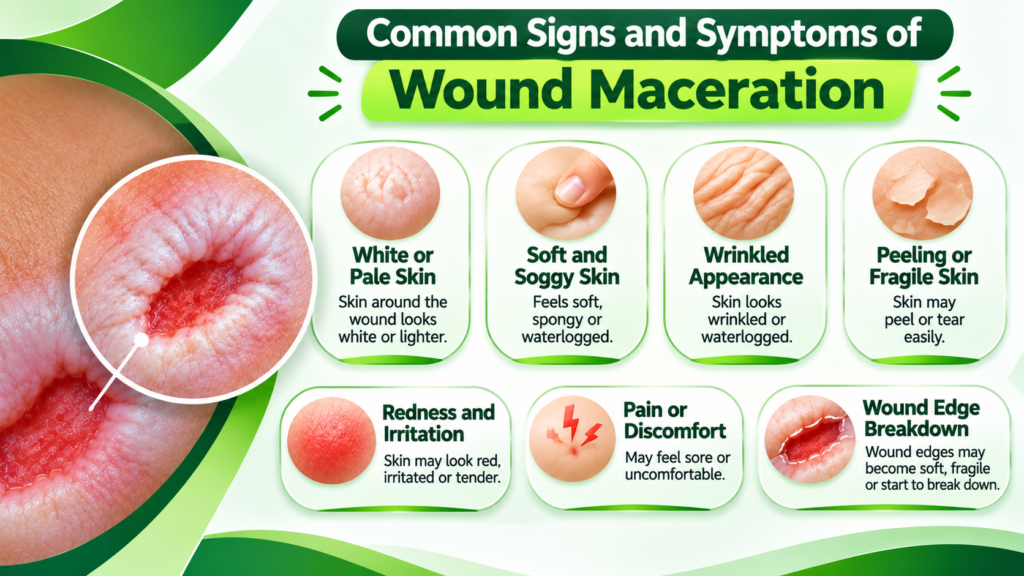
The signs of wound maceration can develop gradually. Early recognition is useful because continued moisture exposure may cause additional damage.
Look for the following changes:
White or Pale Skin Around the Wound
The surrounding skin may become white, pale or unusually light compared with nearby healthy skin. This is one of the most recognisable appearances of maceration.
Soft and Soggy Skin
The affected area may feel soft, spongy or waterlogged. This happens when the skin absorbs excessive moisture over time.
Wrinkled or Waterlogged Appearance
The skin may develop wrinkles or folds similar to those seen after prolonged contact with water.
Peeling or Fragile Skin
As the skin barrier weakens, the outer layer may begin to peel or become more easily damaged.
Redness and Irritation
Some people develop redness, tenderness or irritation around the wound. These changes can also occur with inflammation, contact dermatitis or infection, so they should not automatically be attributed to maceration.
Pain or Discomfort
Macerated skin may become uncomfortable, particularly when it is rubbed by clothing, disturbed during dressing changes or exposed to further moisture.
Wound Edge Breakdown
The edges of the wound may become soft, fragile or damaged. In more advanced cases, the wound may appear larger because the surrounding skin has broken down.
A healthcare professional should review symptoms that are worsening, spreading or accompanied by signs of infection.
How Is Wound Maceration Diagnosed?
A healthcare professional usually identifies wound maceration through a clinical assessment of the wound and surrounding skin.
The assessment may include the following steps.
1. Examining the Surrounding Skin
The clinician checks for whitening, softening, wrinkling, swelling, peeling, redness and skin breakdown.
The extent of the affected area may also be recorded to monitor changes over time.
2. Assessing Wound Drainage
The amount, colour, consistency and smell of wound fluid are reviewed.
The healthcare professional may also check whether the current dressing is saturated, leaking or failing to retain fluid.
3. Reviewing the Current Dressing
The type of dressing, how it fits, how long it has been worn and how frequently it needs changing are considered.
This helps identify whether the dressing is suitable for the wound’s drainage level.
4. Checking for Infection
The clinician looks for symptoms such as increasing pain, warmth, redness, swelling, pus and unpleasant odour.
If infection is suspected, additional investigations may be recommended according to the clinical findings.
5. Reviewing Medical History
Underlying conditions, medications, mobility, circulation, swelling, nutrition and previous wound problems may be considered.
The aim is to identify both the immediate cause of moisture exposure and any health-related factors contributing to the problem.
For additional background, consult this wound assessment and management guidance, which discusses wound evaluation and appropriate care.
How to Treat Wound Maceration Safely
The treatment of wound maceration focuses on controlling excessive moisture, protecting surrounding skin and addressing the reason the wound is producing or retaining too much fluid.
There is no single treatment suitable for every wound. The approach depends on the wound’s cause, depth, location, drainage level and overall condition.
1. Identify and Manage the Source of Moisture
The first step is to determine why the surrounding skin is becoming too wet.
Possible sources include excessive wound drainage, sweat, urine, leakage from a nearby device or an unsuitable dressing.
Once the source is identified, the healthcare professional can recommend changes to wound care and skin protection.
Simply drying the surrounding area without addressing the cause may not prevent the problem from returning.
2. Select an Appropriate Wound Dressing
The right dressing can help absorb excess fluid while maintaining a suitable environment for healing.
Depending on the wound assessment, a healthcare professional may consider:
- Foam dressings: Often used for wounds producing moderate amounts of drainage.
- Alginate dressings: May be suitable for certain wounds with moderate to heavy exudate.
- Hydrofibre dressings: Designed to absorb wound fluid and form a gel-like material.
- Superabsorbent dressings: May be considered when greater fluid-handling capacity is required.
- Non-adherent contact layers: Can help protect fragile wound tissue during dressing changes.
These products have different indications and limitations. Some are unsuitable for particular wounds, and dressing selection should be guided by a trained professional.
3. Protect the Skin Around the Wound
A skin barrier product may be recommended to help protect the periwound area from repeated contact with moisture.
Depending on the patient’s needs, options may include:
- Barrier films.
- Suitable skin-protection creams.
- Zinc-based skin protectants.
- Other products recommended by a wound-care professional.
These products should be used according to their instructions. They should not be placed inside the wound unless specifically designed and prescribed for that purpose.
4. Follow an Appropriate Dressing Change Schedule
Dressings should be changed according to the wound-care plan and product instructions.
If a dressing becomes saturated, leaks or no longer protects the wound, it may need earlier replacement and reassessment.
On the other hand, unnecessary frequent dressing changes may disturb healing tissue and irritate fragile skin.
The appropriate schedule depends on drainage, dressing performance and the wound’s condition.
5. Manage Infection if Present
Maceration itself is not an infection, and antibiotics are not automatically needed.
If the wound shows signs of infection, a healthcare professional should assess it and recommend appropriate treatment.
Depending on the situation, treatment may involve wound cleansing, drainage management, appropriate dressings, further investigations or prescribed antimicrobial treatment.
Do not use leftover antibiotics or apply antiseptic products without professional guidance.
6. Address Swelling and Underlying Conditions
When swelling, venous disease or lymphoedema contributes to excessive fluid, treating the underlying problem is important.
For selected patients with venous leg ulcers, compression therapy may be recommended after appropriate assessment of circulation and other contraindications.
People with diabetes may need closer monitoring of their feet and wounds. Those with reduced mobility may require pressure management and support with regular skin checks.
Treatment should be individualised rather than relying on one dressing or cream.
7. Reassess the Wound Regularly
The wound and surrounding skin should be monitored to determine whether the treatment is working.
A healthcare professional may review:
- Changes in wound size and depth.
- The amount of drainage.
- The condition of the wound edges.
- Skin colour and texture.
- Signs of irritation or infection.
- Dressing performance.
- Pain and comfort.
If the surrounding skin continues to deteriorate despite appropriate care, the wound-management plan should be reviewed.
Explore our guide to different types of wound dressings and their uses to learn more about dressing options and their role in wound care.
7 Effective Tips to Prevent Wound Maceration
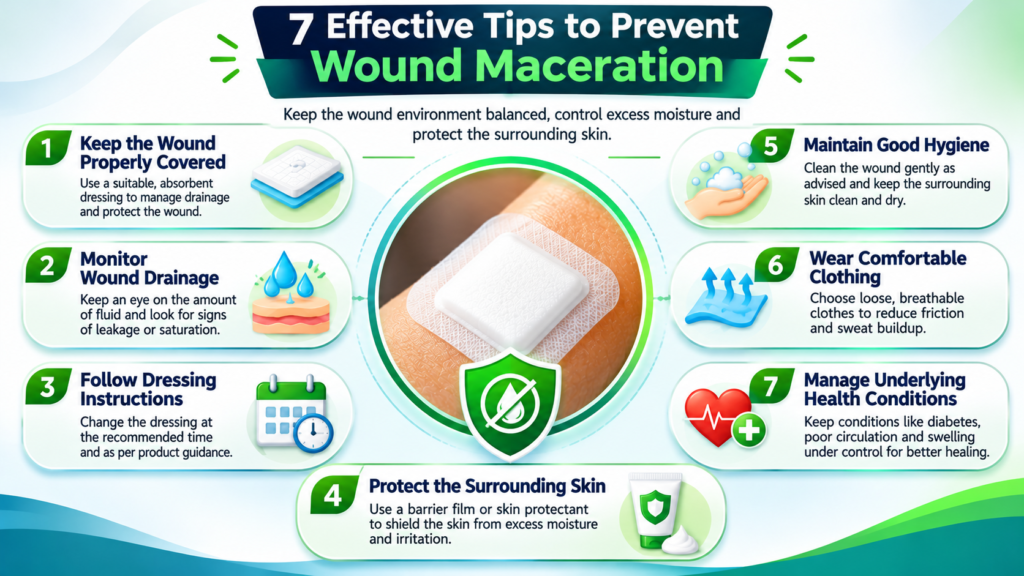
Preventing excessive moisture around a wound is an important part of supporting skin health and recovery.
The following measures can help reduce the risk of wound maceration.
1. Keep the Wound Properly Covered
Use a suitable dressing recommended by a healthcare professional. The dressing should protect the wound, manage drainage and fit the wound appropriately.
Avoid leaving a wound exposed when it requires protection, but do not cover it with an unsuitable material that traps excessive moisture.
2. Monitor Wound Drainage
Pay attention to how much fluid the wound produces and whether the dressing becomes wet or saturated.
A sudden increase in drainage should be reviewed, particularly when accompanied by other symptoms.
3. Follow Dressing Instructions
Follow the recommended dressing-change schedule and the product’s instructions.
If a dressing repeatedly leaks or becomes saturated too quickly, contact the wound-care provider for reassessment.
4. Protect the Surrounding Skin
Ask a healthcare professional whether a barrier film or suitable skin protectant is appropriate for the area around the wound.
Protecting the periwound skin can help reduce direct exposure to excessive moisture.
5. Maintain Good Hygiene
Clean the wound according to the instructions provided by your healthcare professional.
Keep the surrounding skin clean and dry. Avoid rubbing fragile skin or using harsh cleaning products unless specifically advised.
6. Wear Comfortable Clothing
Choose clothing that does not rub against the wound or trap unnecessary moisture.
Breathable materials may help reduce sweat accumulation, particularly in warm weather.
If the wound is located in an area exposed to frequent friction or sweating, ask a healthcare professional about suitable protection.
7. Manage Underlying Health Conditions
Conditions such as diabetes, venous insufficiency and lymphoedema may affect wound healing and moisture management.
Follow the recommended treatment plan, attend wound-care appointments and seek advice if swelling, drainage or skin changes worsen.
These preventive measures can help, but they do not replace professional wound assessment when a wound is deteriorating.
For more educational information, explore the WoundGuide wound care resources.
When Should You See a Doctor or Wound Care Specialist?
Not every case of mild skin maceration is an emergency, but persistent or worsening changes should be assessed.
Seek medical advice if you notice:
- White, soft or wrinkled skin that continues to worsen.
- Increasing wound drainage.
- Repeated dressing leakage.
- Skin peeling or breakdown around the wound.
- Increasing redness, warmth or swelling.
- New or worsening wound pain.
- Thick, cloudy or pus-like discharge.
- An unpleasant or unusual wound smell.
- A wound that is becoming larger or deeper.
Seek urgent medical care if you develop fever with a worsening wound, rapidly spreading redness or swelling, severe or rapidly increasing pain, confusion, faintness or feel seriously unwell.
People with diabetes, poor circulation, reduced sensation or a weakened immune system should seek medical advice promptly when they notice new wound deterioration. They may not experience typical warning signs.
Early professional assessment can help identify the cause and prevent further complications.
Frequently Asked Questions
No. Wound maceration is moisture-related skin damage, not an infection by itself. However, damaged surrounding skin may be more vulnerable to complications. Increasing pain, redness, warmth, swelling, pus or fever should prompt medical assessment.
Recovery time varies depending on the severity of skin damage, the amount of moisture exposure and the person’s general health. Mild changes may improve after the cause is corrected, while more significant skin breakdown can take longer. A healthcare professional can assess progress.
Not every wound or surrounding skin area needs petroleum jelly. The choice of skin-protection product depends on the wound, the amount of drainage and the dressing being used. Ask a healthcare professional before applying a product, especially inside an open wound.
The most suitable dressing depends on the amount of wound drainage, wound depth, location and surrounding skin condition. Foam, alginate, hydrofibre and superabsorbent dressings may be considered for certain wounds. A healthcare professional should select the appropriate product.
Conclusion
Wound maceration is a moisture-related condition that can weaken the skin surrounding an open wound. It commonly develops when excessive wound drainage, sweat or other fluids remain against the skin for too long.
Recognising early signs such as white, soft, wrinkled or fragile skin can help identify a moisture-management problem before further damage occurs.
The most important steps are to identify the source of excessive moisture, select an appropriate dressing, protect the surrounding skin and manage any underlying health conditions. Regular wound assessment also helps determine whether the current care plan is working.
WoundGuide encourages informed wound care and timely professional assessment to support safer healing.
Leave a Reply