
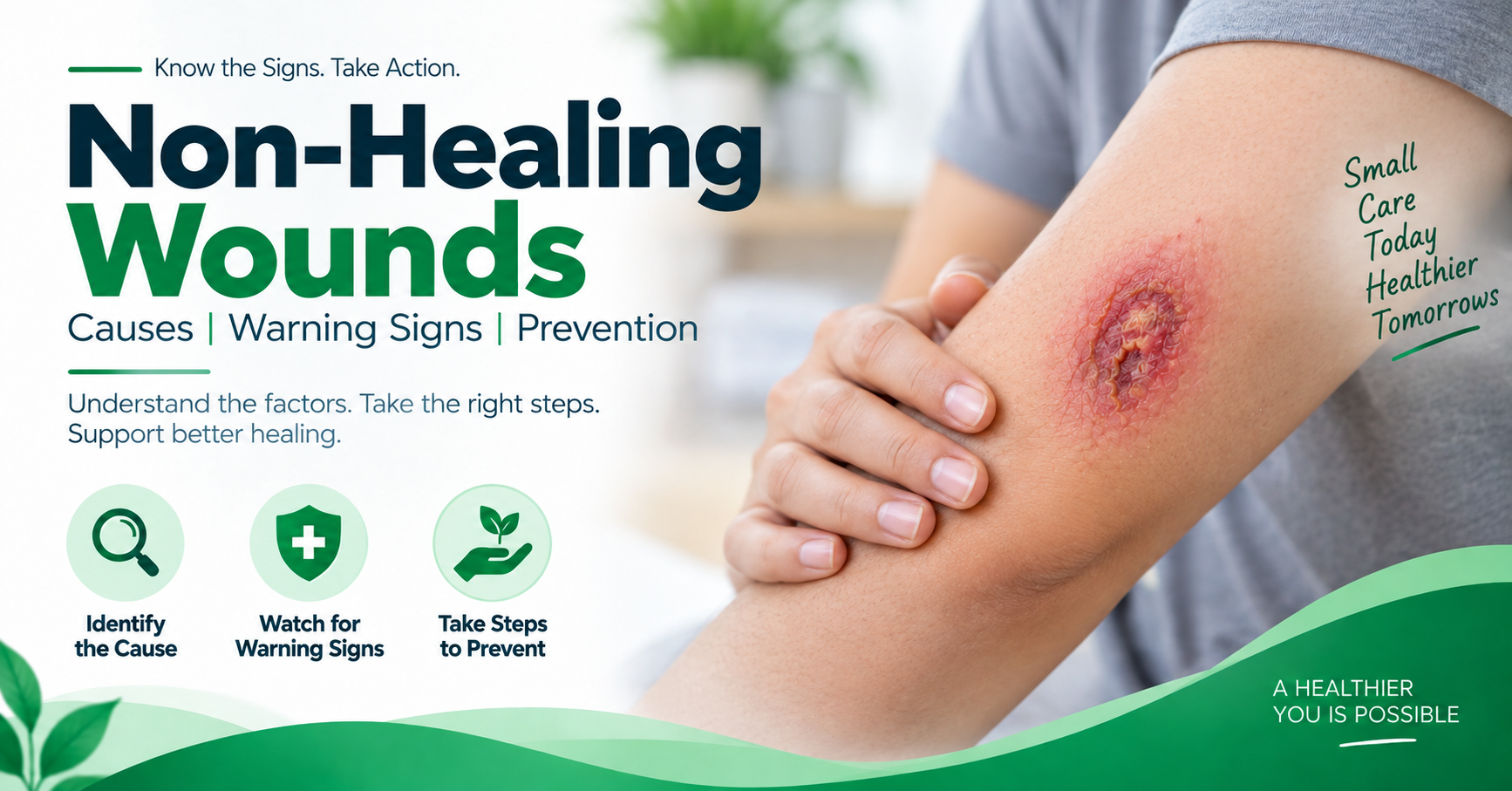
Non-Healing Wounds can start as a small cut, blister, pressure injury, or minor skin break but may become a serious concern when they fail to improve over time. Conditions such as diabetes, poor blood circulation, nerve damage, infection, repeated pressure, and poor nutrition can interfere with the body’s natural healing process. Recognizing the early warning signs is important because timely wound assessment and appropriate care may help prevent complications. In this article, we’ll discuss 7 warning signs of non-healing wounds, common causes, risk factors, treatment approaches, and when you should seek professional medical attention.
Early attention to Non-Healing Wounds can help identify underlying problems and support appropriate wound care.
What Are Non-Healing Wounds?
Non-Healing Wounds may require professional assessment when normal healing does not occur as expected.
Non-Healing Wounds are wounds that fail to progress through the normal healing process or remain open for an unusually long period despite appropriate care. A minor cut or injury normally begins to improve over time, but some wounds may remain open, repeatedly break down, become larger, or develop signs of infection.
Chronic wounds are commonly associated with conditions such as diabetes, poor blood circulation and venous insufficiency. They frequently occur on the feet and lower legs.
A wound that is not improving should not simply be covered and ignored. Identifying the reason for delayed healing is important because treatment often needs to address the underlying problem as well as the wound itself.
7 Warning Signs of Non-Healing Wounds
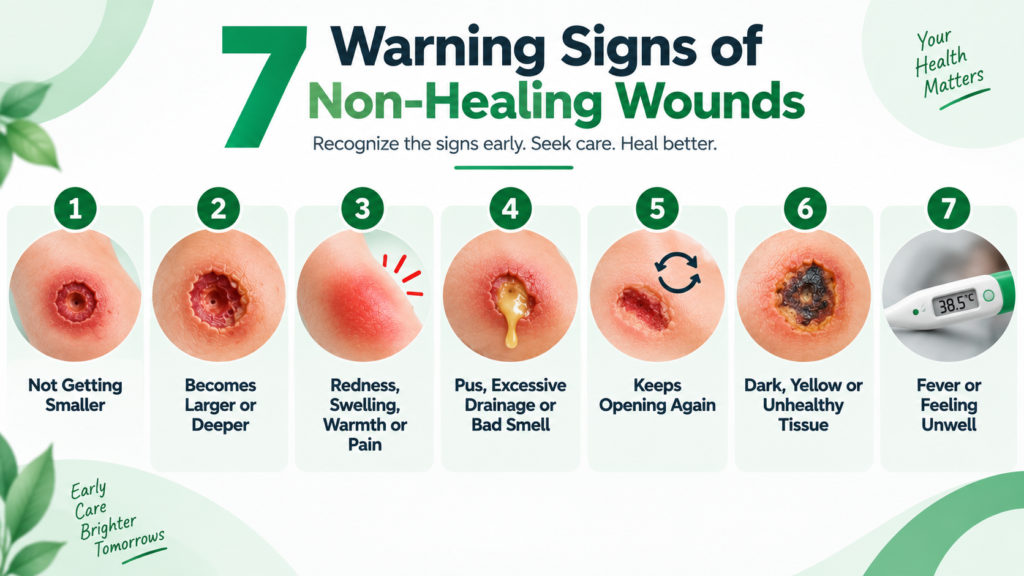
Recognizing changes early can help you seek appropriate medical attention before a wound becomes more difficult to manage.
1. The Wound Is Not Getting Smaller
One of the clearest warning signs is a wound that does not appear to be getting smaller over time.
A healthy healing process generally involves gradual changes in the wound, including the formation of new tissue and reduction in wound size. If the wound remains the same size or continues to enlarge, it may indicate that something is interfering with healing.
A wound that remains unchanged over time may be one of the early signs of Non-Healing Wounds.
Possible contributing factors include:
- Poor circulation
- Diabetes
- Repeated pressure
- Infection
- Excessive moisture or dryness
- Poor nutrition
- Repeated trauma
- Underlying medical conditions
A healthcare professional can assess the wound and determine why healing may have stalled.
2. The Wound Becomes Larger or Deeper
A wound that continues to increase in size or depth requires attention.
Repeated pressure or friction can prevent damaged tissue from recovering. This can be particularly important for wounds on the feet, where walking can repeatedly stress the affected area.
In people with diabetes, nerve damage can reduce the ability to feel pain or pressure. As a result, a person may continue walking on an injured area without realizing that the wound is getting worse.
If a wound is becoming deeper, exposing underlying tissue, or developing a larger opening, seek professional assessment.
3. Increasing Redness, Swelling, Warmth or Pain
Changes around a wound can indicate inflammation or infection.
Watch for:
- Increasing redness
- Swelling
- Warmth around the wound
- Increasing tenderness or pain
- Changes in skin colour
- Rapid worsening of the wound
These signs are particularly important when several occur together. Clinical guidance on diabetic foot infections identifies findings such as redness, warmth, swelling, pain and purulent discharge as important signs requiring assessment.
However, people with diabetes or nerve damage may not always experience significant pain even when a wound is serious. Therefore, visual inspection and regular monitoring are important.
4. Pus, Excessive Drainage or a Bad Smell
Changes in wound drainage can be another warning sign.
Clear or small amounts of wound fluid can occur during healing. However, pus, cloudy drainage, increasing discharge or an unpleasant odour may indicate a problem requiring medical assessment.
Chronic wounds can sometimes develop subtle infection-related changes rather than the classic symptoms seen in acute infections. These may include changes in the wound tissue, increased drainage, unpleasant odour or delayed healing.
Do not rely on smell or drainage alone to determine whether a wound is infected. A healthcare professional should assess the wound when infection is suspected.
5. The Wound Keeps Opening Again
A wound that repeatedly closes and then breaks down may indicate that the underlying cause has not been addressed.
For example, repeated pressure can damage tissue even after the surface appears to improve. This can happen with:
- Foot ulcers
- Pressure injuries
- Venous leg ulcers
- Diabetic foot wounds
- Wounds around areas exposed to friction
If the same wound keeps reopening, treatment should focus not only on the visible wound but also on the reason it is repeatedly being injured.
For example, pressure relief may be important for a wound located on a weight-bearing part of the foot.
6. The Wound Develops Dark, Yellow or Unhealthy-Looking Tissue
Changes in the appearance of the wound bed can also be concerning.
A wound may develop:
- Yellowish tissue
- Grey tissue
- Black or severely discoloured areas
- Fragile or unhealthy-looking tissue
- Changes in the appearance of granulation tissue
These changes do not always mean the same thing, so the wound should be professionally assessed rather than diagnosed from appearance alone.
In diabetic foot wounds, changes in wound-bed colour, unhealthy granulation tissue, abnormal odour and increased drainage may be associated with infection or delayed healing.
7. You Develop Fever or Feel Generally Unwell
A wound accompanied by fever or feeling significantly unwell can be a sign that an infection is becoming more serious.
Seek prompt medical attention if you develop:
- Fever
- Chills
- Increasing weakness
- Rapidly worsening wound symptoms
- Spreading redness or swelling
- Significant drainage
- Severe or rapidly increasing pain
Serious wound infections can extend into deeper tissues and may require urgent treatment. Diabetic foot infections are particularly important because infection can spread from an ulcer into deeper soft tissues and, in severe cases, bone.
Common Causes of Non-Healing Wounds
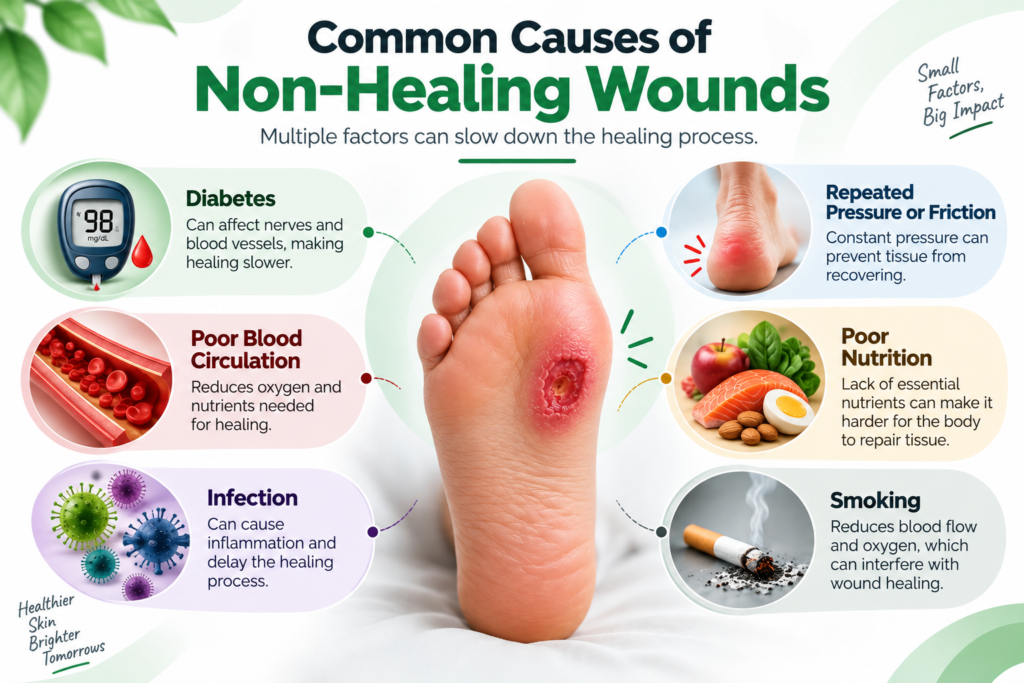
There is rarely one single reason why a wound fails to heal. Several factors can contribute at the same time.
Diabetes
Diabetes can affect nerves and blood vessels. Neuropathy can reduce sensation, making it harder to notice blisters, cuts and pressure injuries. Circulation problems can also reduce the delivery of oxygen and nutrients required for tissue repair.
People with diabetes may have a higher risk of developing Non-Healing Wounds, particularly on the feet.
Learn more about diabetic neuropathy and foot ulcers.
Poor Blood Circulation
Adequate blood flow is important for wound repair. Arterial circulation problems can reduce oxygen and nutrient delivery to the tissues, making wounds more difficult to heal.
Venous problems can also contribute to chronic wounds, particularly around the lower legs and ankles. Venous ulcers are associated with poor return of blood through the veins, while arterial ulcers are associated with inadequate arterial blood flow.
Poor circulation can reduce the oxygen and nutrients needed for Non-Healing Wounds to heal properly.
Infection
An infected wound may heal slowly or deteriorate instead of improving.
Signs can include increasing redness, swelling, warmth, pain, pus, abnormal drainage or an unpleasant smell. However, infection can sometimes be difficult to identify, especially in people with diabetes or other conditions that alter the body’s inflammatory response.
Repeated Pressure or Friction
Constant pressure can prevent tissue from recovering.
This is particularly important for wounds on:
- Heels
- Soles of the feet
- Toes
- Ankles
- Other pressure-prone areas
Pressure relief may therefore be an important part of wound management.
Poor Nutrition
The body requires adequate nutrients to support tissue repair. Poor nutritional intake can make it harder for the body to maintain the processes involved in healing.
A healthcare professional or dietitian can help assess nutritional needs when poor nutrition may be contributing to delayed healing.
Smoking
Smoking can negatively affect circulation and tissue oxygenation, which may interfere with wound healing.
If you smoke and have a chronic wound, discuss cessation support with your healthcare professional.
Who Is at Higher Risk of Non-Healing Wounds?
Some people have a higher risk of developing wounds that heal slowly.
Risk can be increased by:
- Diabetes
- Peripheral neuropathy
- Poor circulation
- Peripheral artery disease
- Venous insufficiency
- Reduced mobility
- Previous ulcers
- Pressure injuries
- Repeated trauma
- Smoking
- Poor nutritional status
- Certain chronic medical conditions
People with diabetes and peripheral vascular disease may require particularly careful monitoring because normal signs of infection or inflammation can sometimes be less obvious.
How Are Non-Healing Wounds Treated?
Treatment for Non-Healing Wounds depends on the underlying cause, wound condition, and overall health.
A healthcare professional may recommend several approaches.
Wound Assessment
The wound may be assessed for:
- Size
- Depth
- Location
- Tissue condition
- Drainage
- Signs of infection
- Surrounding skin
- Blood circulation
- Pressure or friction
For difficult-to-heal wounds, identifying the underlying cause is an important part of treatment.
Appropriate Wound Dressing
Different wounds require different dressing strategies.
The appropriate dressing may depend on the amount of drainage, wound-bed condition, infection status and surrounding skin.
Avoid repeatedly applying unapproved home remedies or medications to a chronic wound without professional advice.
Pressure Relief
When pressure contributes to the wound, reducing that pressure can be essential.
For example, a diabetic foot ulcer located on a weight-bearing area may require appropriate offloading or specialised footwear.
Infection Management
If a wound is clinically infected, a healthcare professional may recommend appropriate treatment based on the infection’s severity and location.
Antibiotics are not automatically required for every open wound; treatment depends on whether there is a clinical infection.
Managing the Underlying Condition
Long-term wound management may also involve addressing:
- Blood glucose
- Circulation problems
- Venous disease
- Pressure
- Nutrition
- Foot deformities
- Mobility
- Other medical conditions
This matters because simply covering the wound may not address why it isn’t healing.
When Should You See a Doctor?
You should seek professional medical evaluation if a wound is:
- Not showing signs of improvement
- Becoming larger or deeper
- Producing pus
- Developing a bad smell
- Surrounded by increasing redness or swelling
- Increasingly painful
- Repeatedly reopening
- Developing dark or severely discoloured tissue
- Associated with fever or feeling unwell
Mayo Clinic also advises medical evaluation when a wound is not healing or develops increasing pain, pus, swelling, fever, spreading redness or other infection-related changes.
If you have diabetes and develop a new foot wound, do not wait for significant pain before seeking medical advice. Neuropathy can reduce sensation and allow a wound to worsen without obvious discomfort.
How Can You Help Prevent Chronic Wounds?
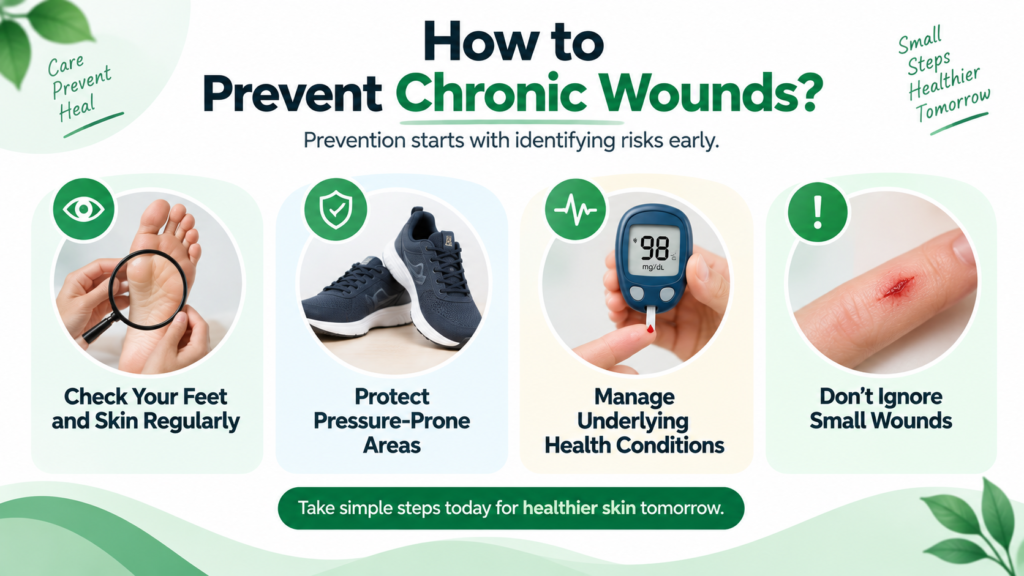
Prevention starts with identifying risks early.
Check Your Feet and Skin Regularly
If you have diabetes or reduced sensation, regularly inspect your feet for:
- Blisters
- Cuts
- Cracks
- Calluses
- Redness
- Swelling
- Skin colour changes
- New wounds
Protect Pressure-Prone Areas
Use appropriate footwear and avoid unnecessary friction or pressure.
People at risk of pressure injuries may also need appropriate repositioning and pressure-relieving strategies.
Manage Underlying Health Conditions
Following your healthcare professional’s advice for conditions such as diabetes, circulation problems and venous disease can support overall wound health.
Don’t Ignore Small Wounds
A small wound may seem harmless, but it can become more difficult to manage if the underlying cause is not addressed.
Early assessment is especially important for people with diabetes, neuropathy or circulation problems.
Frequently Asked Questions
Non-Healing Wounds are wounds that do not progress through normal healing or remain open for an unusually long time. Chronic wounds are often associated with diabetes, circulation problems, venous insufficiency and other underlying conditions.
Yes. Diabetes can contribute to nerve damage and circulation problems, both of which can make wounds harder to notice and heal.
There is not one universal time threshold for every wound. One clinical reference describes a chronic wound as one that does not begin to heal within approximately 4–12 weeks despite treatment.
Yes. An open wound can become infected, and infection can further interfere with healing. Signs may include increasing redness, warmth, swelling, pain, pus, abnormal drainage or unpleasant odour
A persistent or worsening wound should be professionally assessed rather than managed indefinitely with home remedies. This is particularly important if you have diabetes, poor circulation, neuropathy or signs of infection.
Final Thoughts
Non-Healing Wounds should not be ignored, especially when a wound is getting larger, deeper, increasingly painful, producing unusual drainage, developing an unpleasant smell or showing signs of infection.
The most important step is to identify why the wound is not healing. Diabetes, neuropathy, poor circulation, infection, repeated pressure and nutritional problems can all interfere with normal healing.
Early assessment can help identify the underlying problem and guide appropriate wound care. If you have a wound that is worsening or failing to improve, speak with a qualified healthcare professional rather than waiting for it to resolve on its own.
Don’t Ignore a Non-Healing Wound
If your wound is not healing, getting worse, or showing signs of infection, don’t wait for the problem to become serious. Early assessment and proper wound care can help support better healing.
👉 Need help with your wound? Contact WoundGuide today for professional wound-care guidance.
Leave a Reply