
Periwound skin care is an important part of wound management because the skin surrounding a wound helps protect underlying tissues and supports healing. Although wound care often focuses on the wound bed, the surrounding Skin Maceration also needs regular attention. Excess moisture, friction, wound drainage, and adhesive dressings can cause irritation and skin damage. Proper care helps protect the skin barrier, improve comfort, and support an appropriate healing environment.
In this guide, we explain common periwound skin problems, seven essential care tips, and when to seek professional advice.
What Is Periwound Skin?
Periwound skin is the skin immediately surrounding a wound. It may be affected by wound drainage, pressure, friction, cleansing products, and dressing adhesives.
Periwound skin care involves assessing, gently cleansing, and protecting this area while ensuring the wound receives appropriate treatment. The goal is to maintain a suitable moisture balance without allowing excessive fluid to damage the surrounding skin.
Why Is Periwound Skin Care Important?
Healthy surrounding skin acts as a protective barrier. When this barrier becomes damaged, the area may become more vulnerable to irritation and further breakdown.
Effective periwound skin care can help:
- Reduce moisture-related skin damage.
- Minimize irritation and discomfort.
- Protect fragile skin during dressing changes.
- Reduce damage caused by adhesives and friction.
- Help identify changes that require medical attention.
Common Periwound Skin Problems
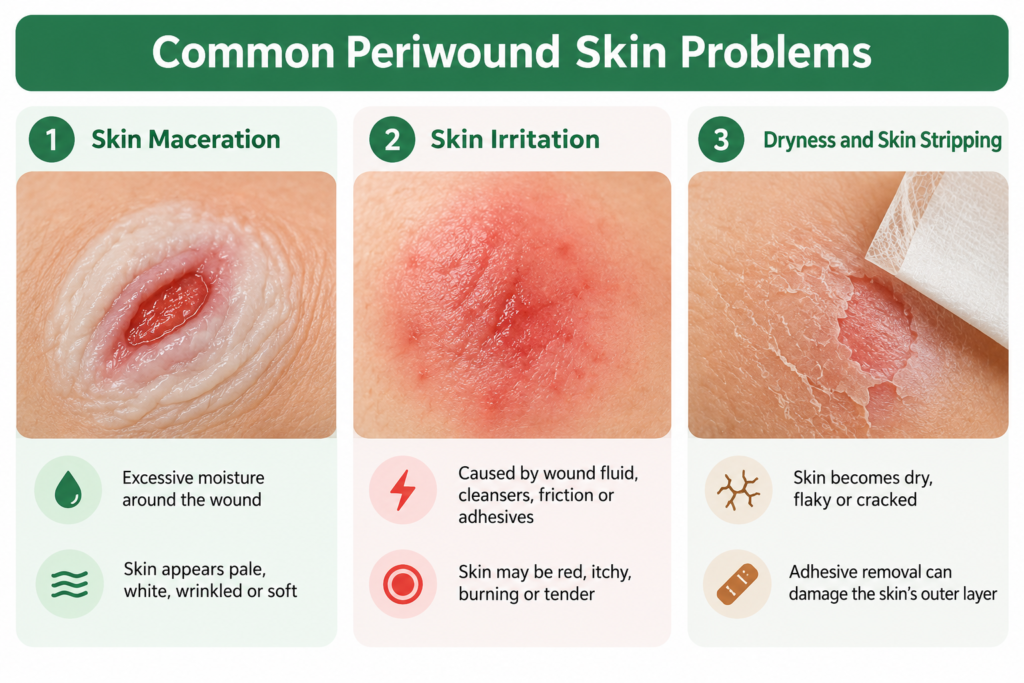
1. Skin Maceration
Maceration occurs when the skin remains exposed to excessive moisture. It may appear pale, white, wrinkled, or unusually soft. Excess wound drainage and saturated dressings are common contributing factors.
2. Skin Irritation
Wound fluid, harsh cleansers, friction, and adhesives may cause redness, itching, burning, or tenderness. These symptoms can have different causes and should be assessed if they persist or worsen.
3. Dryness and Skin Stripping
Dry skin may become flaky or cracked, while forceful removal of adhesive dressings can damage the skin’s outer layer. Gentle dressing removal and suitable skin protection can help reduce this risk.
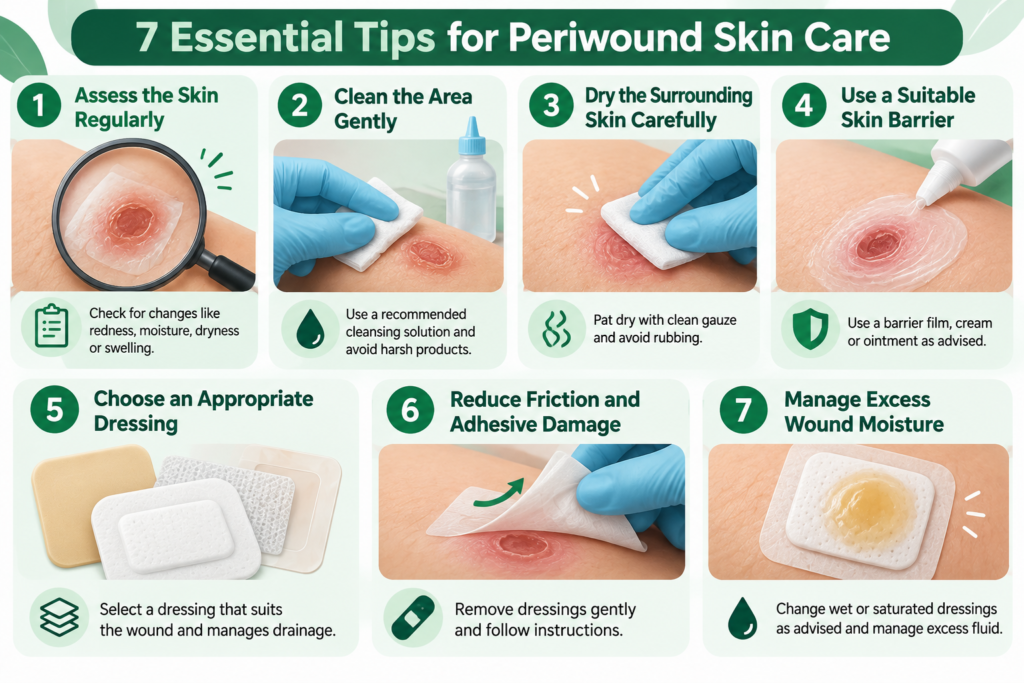
7 Essential Tips for Periwound Skin Care
1. Assess the Skin Regularly
Check the surrounding skin during dressing changes and whenever symptoms develop. Look for discoloration, unusual moisture, dryness, swelling, tenderness, or skin breakdown.
Record changes when appropriate, particularly for chronic wounds. Seek professional advice if the wound becomes larger or deeper or the surrounding skin deteriorates.
2. Clean the Area Gently
Wash your hands before and after wound care. Use the cleansing solution recommended by the healthcare professional. Avoid vigorous rubbing, harsh soaps, and unapproved chemicals that may irritate fragile skin.
Follow the prescribed care plan because cleansing recommendations may differ between minor wounds and complex or chronic wounds.
3. Dry the Surrounding Skin Carefully
After cleansing, gently pat the surrounding skin dry with clean gauze or a suitable clean material. Avoid rubbing, which can damage fragile skin.
Do not attempt to dry out the wound bed unless instructed by a healthcare professional. Many wounds require an appropriate moisture balance to heal.
4. Use a Suitable Skin Barrier
A healthcare professional may recommend a barrier film, cream, or ointment to protect surrounding skin from excess moisture. The right product depends on the skin condition and dressing type.
Use products as directed. Some creams may affect dressing adhesion, and unapproved products should not be placed inside the wound.
5. Choose an Appropriate Dressing
Dressings should suit the wound’s location, depth, and drainage level. A dressing that cannot manage the fluid may allow moisture to collect around the wound, while an unsuitable wound dressing may cause excessive dryness or trauma.
6. Reduce Friction and Adhesive Damage
Removing adhesive tape forcefully can injure fragile skin. Follow the dressing manufacturer’s instructions and your clinician’s advice when removing a dressing.
People with sensitive or fragile skin may benefit from an appropriate alternative dressing or fixation method recommended by a professional. Do not change a prescribed dressing system without advice.
7. Manage Excess Wound Moisture
Check whether the dressing becomes wet, saturated, loose, or contaminated. Follow the care plan for changing it, and do not leave a saturated dressing in place longer than instructed.
If drainage repeatedly leaks onto surrounding skin, a healthcare professional may need to reassess the dressing and investigate the cause. Persistent or increasing drainage should not be ignored.
Periwound Skin Care for People With Diabetes
People with diabetes may have reduced sensation, circulation problems, or delayed healing. These factors can make it harder to recognize skin damage early.
Check the feet regularly and follow professional instructions for wound care and pressure relief. Seek prompt medical assessment for a Diabetic Foot Ulcer, increasing drainage, swelling, discoloration, or other concerning changes.
Common Mistakes to Avoid
Avoid these common mistakes when caring for the skin around a wound:
- Using harsh cleansing products or scrubbing the skin.
- Leaving a wet or saturated dressing in place longer than instructed.
- Applying unapproved creams or home remedies.
- Pulling adhesive dressings off forcefully.
- Assuming that every change in skin color means infection.
- Delaying professional assessment when symptoms worsen.
When Should You Seek Medical Advice?
Contact a healthcare professional if the surrounding skin becomes increasingly red, painful, swollen, warm, blistered, or damaged. Increasing drainage, an unpleasant odor, or a wound that becomes larger or deeper also needs assessment.
Seek urgent medical care for rapidly spreading redness, severe or rapidly worsening pain, fever with concerning wound changes, or significant systemic illness.
For general information about minor wound care, consult the NHS guide to cuts and grazes.
Frequently Asked Questions
It involves assessing, gently cleansing, and protecting the skin around a wound to help prevent moisture damage, irritation, and skin breakdown.
Maceration usually results from prolonged exposure to excessive moisture, often due to wound drainage or a dressing that cannot manage the fluid effectively.
A suitable moisturizer may help dry surrounding skin, but the product should be compatible with the wound-care plan. Do not apply unapproved products inside the wound.
No. Redness may result from irritation, friction, pressure, or infection. Worsening redness, warmth, swelling, pain, or unusual drainage should be assessed professionally.
Conclusion
Periwound skin care is an essential part of effective wound management. Regular assessment, gentle cleansing, careful drying, suitable skin barriers, appropriate dressings, and reduced friction can help protect the skin surrounding a wound.
Monitor changes and follow professional instructions. If symptoms worsen or healing does not progress as expected, seek advice from a qualified healthcare professional.
Protect the Skin Around Every Wound
Healthy skin around a wound is an essential part of effective wound care. Follow these seven tips to help prevent moisture damage, reduce irritation, and protect fragile skin.
Need expert guidance for wound care? Visit WoundGuide.org to explore helpful wound care resources and learn when to seek professional support.
Take the next step toward better wound care today!
Leave a Reply