
A wound that starts healing but repeatedly opens can be frustrating and concerning. You may notice that the edges separate, a scab comes off too early, or the affected area begins bleeding or leaking fluid again. If this keeps happening, it is important to understand what is interfering with the healing process.
Why Does a Wound Keep Opening? There is no single explanation. Repeated wound opening may be related to infection, pressure, excessive movement, poor blood circulation, diabetes, nutritional deficiencies, smoking, or problems with the original wound closure. Sometimes, the wound may appear closed on the surface while deeper tissues are still healing.
A wound that repeatedly reopens should not be ignored. It may need professional assessment to identify the underlying cause and prevent complications. You can also learn about common changes that may occur during the wound healing process to better understand how the skin repairs itself. This guide explains common reasons, warning signs, risk factors, treatment options, and practical wound-care measures that can support recovery.
What Does It Mean When a Wound Keeps Opening?
When a wound closes, its edges gradually come together while the body produces new tissue and strengthens the injured area. This process takes time. The skin may look healed before the deeper tissues have regained enough strength to tolerate normal movement and pressure.
If the wound edges separate again after they have started joining, this may be described as wound reopening. When a previously closed surgical incision separates, healthcare professionals may call it wound dehiscence.
Wound separation can be classified in different ways:
- Partial wound opening: Only a small section of the wound edges separates.
- Superficial wound opening: The skin layers separate, but deeper supporting tissues remain intact.
- Deep wound opening: The separation extends into deeper tissue layers and may require urgent medical attention.
- Recurrent wound opening: The wound repeatedly separates after appearing to close.
The seriousness depends on the wound’s location, depth, cause, and whether infection or deeper tissue involvement is present. A small reopening is not automatically an emergency, but a surgical wound that separates should be reported to the treating healthcare professional promptly.
Why Does a Wound Keep Opening? 7 Common Causes
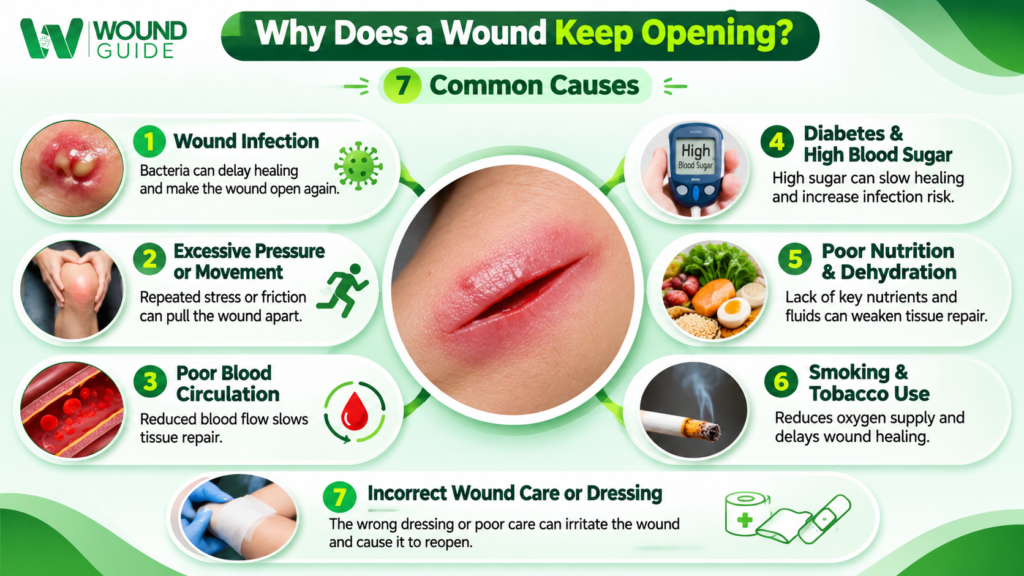 Understanding the reason behind repeated wound separation is essential for choosing the right care. Several factors can delay healing or place stress on a wound. Sometimes, more than one factor contributes to the problem.
1. Wound Infection
Infection is one important reason a wound may fail to close properly. Bacteria can enter damaged skin and multiply in the wound tissue. The resulting inflammation can interfere with the body’s repair process and may damage newly formed tissue.
An infected wound may become increasingly painful, swollen, warm, or red. You may also notice thick yellow or green discharge, an unpleasant smell, or a fever. Sometimes, the wound edges become weak and begin separating.
Common warning signs of wound infection include:
- Increasing redness around the wound.
- Swelling or warmth that is getting worse.
- Increasing pain or tenderness.
- Thick or pus-like discharge.
- An unpleasant smell from the wound.
- Fever, chills, or feeling generally unwell.
Not every wound with a small amount of clear fluid is infected. However, increasing drainage, pus, worsening pain, or spreading redness needs medical assessment.
If you suspect infection, do not try to close the wound yourself or apply leftover antibiotics. A healthcare professional may need to examine the wound, clean it, take a sample when appropriate, or prescribe suitable treatment.
2. Excessive Pressure, Friction or Movement
A healing wound needs protection from unnecessary pulling and repeated friction. Activities such as bending, stretching, lifting heavy objects, walking long distances, or repetitive movement may place tension on certain wounds.
For example, a wound near the knee, elbow, abdomen, shoulder, or another frequently moving area may experience repeated stress. Clothing, footwear, bedding, or poorly secured dressings can also rub against the affected skin.
If the wound edges are under tension, newly developing tissue may not tolerate the stress. This can cause discomfort, bleeding, or separation.
People recovering from surgery should follow their activity restrictions carefully. Avoid strenuous exercise or heavy lifting until the treating healthcare professional says it is safe. Do not use tight bandages to force the wound edges together.
3. Poor Blood Circulation
Healthy blood circulation delivers oxygen, nutrients, and immune cells that help repair damaged tissue. When blood flow is reduced, the wound may receive less of what it needs to heal.
Poor circulation can be associated with conditions affecting the arteries or veins. For example, peripheral artery disease may reduce blood supply to the legs and feet, while chronic venous problems can contribute to swelling and skin changes.
A wound affected by poor circulation may take longer to close, remain painful, or repeatedly break down. The skin around it may also look unusually pale, bluish, or darkened, or feel cooler than the surrounding area.
People with suspected circulation problems should seek medical evaluation rather than relying only on home wound care. A clinician may assess pulses, skin temperature, swelling, and circulation using appropriate tests.
4. Uncontrolled Diabetes and High Blood Sugar
Diabetes can affect wound healing in several ways. Persistently high blood glucose may interfere with immune function and tissue repair. Some people with diabetes also develop nerve damage, which can reduce sensation in the feet.
Reduced sensation means a person may not notice pressure, friction, a small injury, or a developing wound. If the affected area continues to experience pressure, the wound may become larger or reopen.
Diabetes can also occur alongside circulation problems, increasing the risk of delayed healing. A wound on the foot deserves particular attention because untreated foot wounds can become serious.
People with diabetes should monitor their wounds regularly and follow their clinician’s advice about blood glucose management, footwear, pressure relief, and wound assessment.
For more information, read our guide to diabetic foot ulcer treatment and wound care. Do not attempt to remove dead tissue or treat a deep foot wound yourself.
5. Poor Nutrition and Dehydration
The body needs sufficient energy, protein, vitamins, minerals, and fluids to repair damaged tissue. If a person does not eat enough or has a nutritional deficiency, the healing process may be affected.
Protein is important for tissue building and repair. Nutrients such as vitamin C and zinc also play roles in normal tissue maintenance and healing. However, taking supplements without a confirmed need is not a substitute for a balanced diet or medical advice.
Older adults, people recovering from major surgery, and individuals with poor appetite may be at risk of inadequate nutrition.
A balanced eating pattern that includes protein sources, vegetables, fruits, whole grains, and adequate fluids can support general recovery. If you have a medical condition that affects your diet, ask a doctor or registered dietitian for individual guidance.
6. Smoking and Tobacco Use
Smoking can interfere with the body’s ability to deliver oxygen to healing tissues. Nicotine causes blood vessels to narrow, while carbon monoxide reduces the blood’s oxygen-carrying capacity.
This combination may make it harder for the wound to receive the oxygen it needs. Smoking is also associated with a higher risk of wound-healing complications after surgery.
If you smoke, speak with a healthcare professional about support for stopping or reducing tobacco use. Avoiding smoking during recovery may help create better conditions for healing.
Do not assume that switching to another tobacco or nicotine product automatically removes wound-healing risks. Discuss any nicotine use with your treating clinician.
7. Incorrect Wound Care or Dressing Problems
Wound care that does not match the wound’s needs may contribute to irritation, damage, or delayed healing. A dressing that sticks to the wound may disturb new tissue when removed. A dressing that is too tight may create pressure, while one that does not manage drainage properly may allow surrounding skin to become overly moist.
Other problems include repeatedly touching the wound with unclean hands, picking scabs, using harsh cleaning products, or applying creams and home remedies that have not been recommended.
The right dressing depends on the wound’s depth, location, drainage, surrounding skin, and clinical condition. Learn more about different types of wound dressings and their uses to understand how suitable dressings help protect healing tissue.
If you are unsure which dressing to use or how often to change it, ask a wound-care professional. Avoid pulling away material that is firmly attached to the wound.
Risk Factors That Can Make a Wound Reopen
Some people are more likely to experience delayed healing or wound separation. The presence of one risk factor does not mean a wound will definitely reopen, but it may increase the need for careful monitoring.
Diabetes
High blood glucose and associated nerve or circulation problems can interfere with wound repair. Foot wounds in people with diabetes need particular attention.
Older Age
Some older adults have thinner skin, reduced circulation, chronic health conditions, or nutritional challenges that can affect recovery. Healing time varies from person to person.
Obesity
Excess body weight can increase tension on certain surgical incisions and may make wound care or movement more difficult. It can also be associated with other health conditions that affect healing.
Poor Circulation
Reduced blood supply can limit the oxygen and nutrients reaching damaged tissue. This may contribute to slow healing, particularly in the lower legs and feet.
Weakened Immune System
Some medical conditions and treatments can reduce the body’s ability to fight infection. People taking immune-suppressing medicines should follow their clinician’s wound-care instructions carefully.
Long-Term Steroid Use
Certain corticosteroid medicines can affect inflammation and tissue repair. Never stop prescribed medication suddenly. Ask the prescribing clinician whether your medication could influence healing.
Previous Wound Infection
A wound that has already become infected may need additional assessment and treatment. Infection can damage tissue and make wound closure more difficult.
Signs That a Wound Is Opening Again
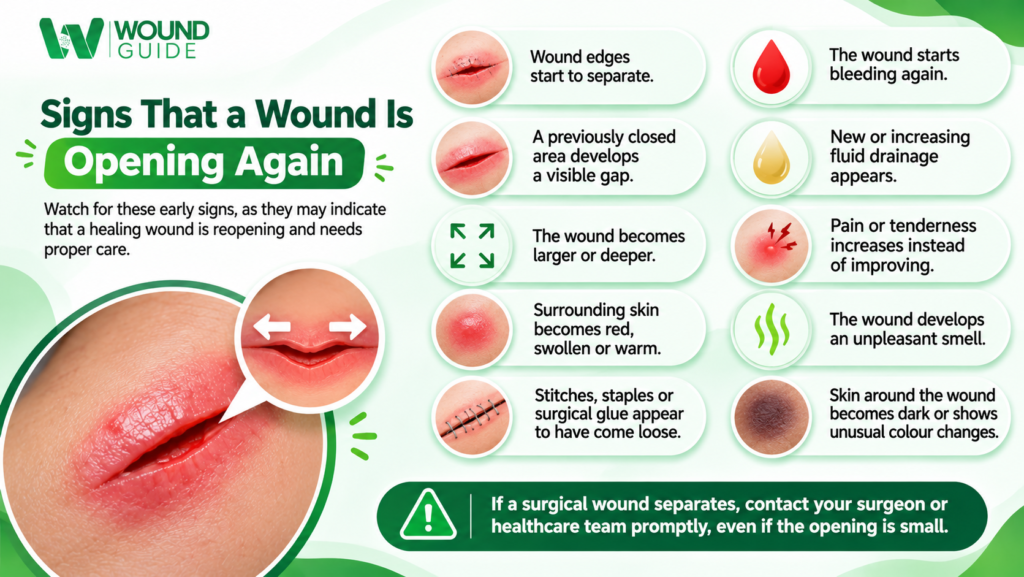
Recognising early changes can help you seek care before the problem becomes more serious. Watch for the following signs:
- The edges of the wound begin to separate.
- A previously closed area develops a visible gap.
- The wound starts bleeding again.
- New or increasing fluid drainage appears.
- The wound becomes larger or deeper.
- Pain or tenderness increases instead of improving.
- The surrounding skin becomes increasingly red, swollen, or warm.
- The wound develops an unpleasant smell.
- Stitches, staples, or surgical glue appear to have come loose.
- The skin around the wound becomes dark or develops unusual colour changes.
A wound may reopen without showing every symptom on this list. If a surgical incision separates, contact the surgeon or treating healthcare team promptly, even if the opening appears small.
When Does a Reopening Wound Become an Emergency?
Some wound problems need immediate medical attention. Do not wait for a routine appointment if you notice:
- A deep surgical wound suddenly opens.
- Internal tissue or organs are visible.
- There is heavy bleeding that does not stop with firm, direct pressure.
- You develop fever, chills, confusion, or feel severely unwell alongside wound symptoms.
- Redness or swelling spreads rapidly around the wound.
- You notice severe or rapidly increasing pain.
- The wound is associated with a serious injury or loss of movement or sensation.
If abdominal surgery has been followed by a wound opening with tissue or organs visible, seek emergency care immediately. Do not push anything back inside. Cover the area loosely with a sterile dressing moistened with saline, if available, while emergency help is arranged.
How Is a Reopening Wound Diagnosed?
A healthcare professional will assess the wound to understand why it is not staying closed. The evaluation may include several steps.
1. Medical History
The clinician may ask when the wound first appeared, when it began reopening, whether you recently had surgery, and whether you have symptoms such as pain, fever, or discharge.
They may also ask about diabetes, circulation problems, smoking, nutrition, medicines, and previous wound infections.
2. Physical Examination
The wound may be examined for its length, width, depth, location, drainage, odour, surrounding skin condition, and degree of separation.
For a surgical wound, the clinician may assess whether the deeper supporting tissue is affected. This is important because deeper wound separation can require urgent treatment.
3. Tests for Infection
If infection is suspected, a clinician may collect a wound sample or request blood tests. Not every wound requires a culture or laboratory testing. The decision depends on the symptoms and examination.
4. Circulation and Blood Sugar Assessment
If poor circulation or diabetes may be affecting healing, the clinician may recommend blood glucose testing or circulation assessments.
5. Imaging or Further Assessment
In selected cases, imaging may be needed to look for a deeper collection of fluid, an underlying problem, or involvement of structures beneath the skin.
The tests used depend on the individual wound. A healthcare professional will decide which investigations are appropriate.
How to Treat a Wound That Keeps Opening
Treatment depends on the reason the wound is separating, how deep it is, whether infection is present, and the person’s overall health. There is no single treatment suitable for every wound.
1. Get the Wound Professionally Assessed
The first step is to have a repeatedly reopening wound examined. This is especially important for surgical incisions, diabetic foot wounds, deep wounds, or wounds showing signs of infection.
Do not wait for the wound to open several more times before seeking advice. Early assessment can help identify pressure, infection, circulation problems, or other factors that need attention.
2. Clean the Wound as Directed
Follow the cleaning instructions provided by your healthcare professional. Depending on the wound, they may recommend gentle rinsing with clean water or sterile saline.
Avoid scrubbing, rubbing, or repeatedly disturbing the wound. Do not pour alcohol, hydrogen peroxide, strong antiseptics, or household cleaning products into the wound unless specifically instructed by a qualified clinician.
3. Use an Appropriate Dressing
A suitable dressing can protect the wound, manage drainage, and reduce friction. The choice depends on the wound’s condition.
Some wounds need absorbent dressings, while others may require a dressing that maintains a suitable moist healing environment. A clinician can help select the right option and explain how often it should be changed.
For surgical wounds, follow the surgeon’s instructions rather than changing the dressing schedule based on general advice.
4. Reduce Pressure and Stretching
Protect the wound from repeated pulling, pressure, and friction. If the wound is on a joint or another moving area, ask your healthcare professional whether movement restrictions or support are needed.
After surgery, follow the recovery instructions about lifting, bending, exercise, and returning to work. Do not use a tight wrap or improvised closure to pull separated edges together.
5. Manage Infection if Present
If a clinician diagnoses an infection, treatment may include wound cleaning, drainage of a collection, or prescribed medication. Antibiotics are not needed for every open wound and should only be used when recommended by a qualified healthcare professional.
Complete prescribed treatment as directed and attend follow-up appointments. Seek further advice if symptoms worsen or do not improve.
6. Address Underlying Health Conditions
Diabetes, circulation problems, nutritional deficiencies, and other health conditions may need attention alongside local wound treatment.
For example, people with diabetes may need help managing blood glucose and reducing pressure on the affected foot. People with circulation problems may need specialist assessment before a treatment plan is chosen.
7. Consider Specialist Wound Care
Some wounds need care from a wound-care nurse, surgeon, dermatologist, vascular specialist, or another relevant professional.
Depending on the wound, treatment may involve removal of unhealthy tissue by a trained clinician, specialised dressings, pressure relief, or further procedures. These treatments are selected after an assessment, not simply because a wound has reopened.
7 Safe Tips to Help Prevent a Wound From Opening Again
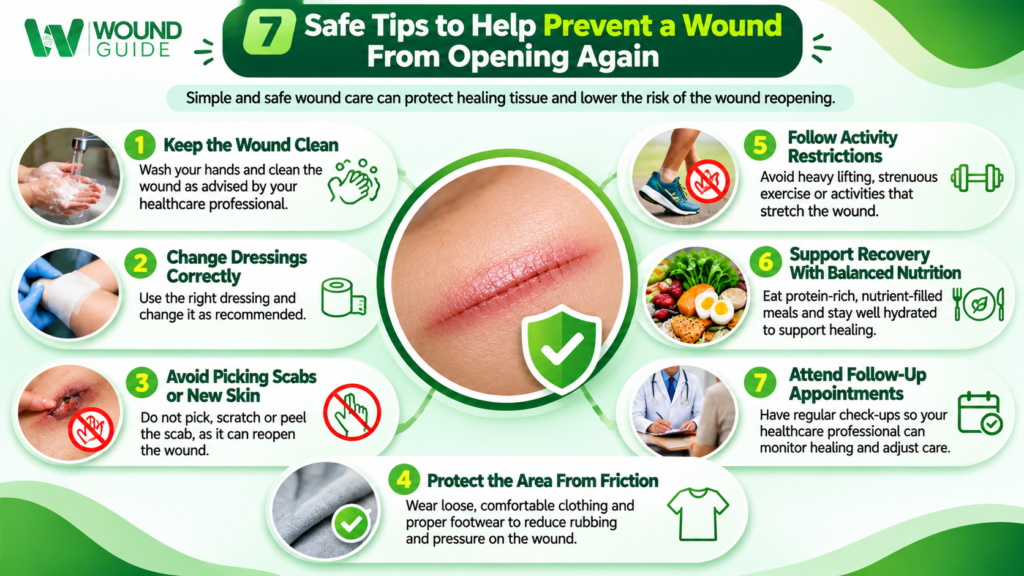
You cannot prevent every wound complication, but good care can reduce avoidable irritation and stress during recovery.
1. Keep the Wound Clean
Wash your hands before and after wound care. Follow the cleaning method recommended by your healthcare professional. Use clean supplies and avoid touching the wound unnecessarily.
2. Change Dressings Correctly
Use the dressing type and change schedule recommended for your wound. If a dressing sticks, do not pull it off forcefully. Ask a healthcare professional how to remove it safely.
3. Avoid Picking Scabs or New Skin
Picking, scratching, or peeling a scab can disturb the tissue underneath. Allow the healing process to continue and seek advice if the area becomes painful, swollen, or starts bleeding.
4. Protect the Area From Friction
Choose clothing that does not rub against the wound. Keep footwear comfortable if the wound is on the foot. Ask for advice if everyday activities repeatedly put pressure on the affected area.
5. Follow Activity Restrictions
Do not return to strenuous exercise, heavy lifting, or activities that stretch a surgical incision until your healthcare professional says it is safe.
6. Support Recovery With Balanced Nutrition
Eat regular, balanced meals that provide adequate protein, energy, vitamins, and minerals. Drink fluids according to your health needs. If you have a restricted diet or poor appetite, ask for professional nutritional advice.
7. Attend Follow-Up Appointments
Follow-up visits allow a healthcare professional to check whether the wound is closing and whether the treatment needs adjustment. Report new pain, bleeding, drainage, or separation rather than waiting until the next scheduled appointment.
Can a Wound Reopen After Surgery?
Yes. A surgical incision can sometimes separate after it has been closed with stitches, staples, or surgical glue. This is known as surgical wound dehiscence.
It may happen when the wound is under excessive tension, becomes infected, or has not developed enough strength to withstand normal stress. Other factors, such as diabetes, smoking, poor nutrition, obesity, and reduced blood supply, may also contribute.
A surgical wound that opens should be reported to the surgeon or healthcare team promptly. Do not attempt to stitch, tape, glue, or tightly bandage the incision yourself.
The treatment depends on how much of the wound has separated and whether deeper tissue is involved. Some superficial wounds may be managed with professional wound care, while deeper separation may require urgent surgical treatment.
For further information, read these surgical wound care instructions to understand how to care for an incision and when to contact your healthcare provider.
How Long Does a Reopening Wound Take to Heal?
There is no fixed healing time for a wound that has reopened. Recovery depends on the wound’s size, depth, location, cause, blood supply, infection status, and the person’s general health.
A small superficial wound may improve relatively quickly once the cause is addressed. A deeper wound, infected wound, or wound affected by diabetes or poor circulation may take considerably longer.
Some wounds are allowed to heal gradually from the base upward, while others may need further procedures or specialist treatment. A clinician can give a more realistic estimate after examining the wound.
If a wound is not improving, becomes larger, or repeatedly separates, it needs reassessment. Do not judge healing only by how the surface looks.
Common Mistakes That Can Make a Wound Reopen
Avoiding common wound-care mistakes can help protect fragile healing tissue.
Removing a dressing too forcefully: Pulling away a dressing that sticks to the wound may disturb new tissue and cause bleeding.
Ignoring early infection symptoms: Increasing pain, swelling, warmth, pus, or fever should not be dismissed as normal healing.
Returning to strenuous activity too soon: Stretching or pressure can place stress on a wound before it is ready.
Using unverified home remedies: Toothpaste, powders, oils, herbal mixtures, and other household products may irritate the wound or contaminate it.
Applying tight bandages: Excessive pressure can damage tissue or affect circulation. Use compression only when it has been recommended for your specific condition.
Stopping prescribed treatment early: Do not stop medication or change a wound-care plan without discussing it with the treating clinician.
Skipping follow-up visits: A wound may need ongoing monitoring even when it looks better on the surface.
Frequently Asked Questions
A wound may repeatedly open because of infection, pressure, friction, movement, poor circulation, diabetes, or delayed tissue repair. Sometimes the original cause has not been corrected. A healthcare professional should assess a wound that repeatedly separates.
Yes. Infection can damage tissue and interfere with wound repair. Increasing redness, warmth, swelling, pain, pus, an unpleasant smell, or fever may indicate infection and should be assessed promptly.
Many wounds need protection with an appropriate dressing, but the right choice depends on their depth, location, and drainage. Follow professional instructions. If a surgical incision has separated, contact the surgeon rather than deciding on a dressing alone.
Seek prompt medical advice if a wound repeatedly separates, becomes larger, starts bleeding, or develops increasing pain or drainage. A surgical wound that opens should be reported to the surgical team. Deep separation, visible internal tissue, uncontrolled bleeding, or severe illness requires emergency care.
Many wounds can heal after reopening, but the underlying cause must be identified and managed. Treatment may include professional cleaning, suitable dressings, pressure reduction, infection treatment, or specialist care. Healing time varies according to the wound and the person’s health.
Conclusion
Why Does a Wound Keep Opening? Repeated wound separation can be linked to infection, pressure, friction, poor circulation, diabetes, smoking, inadequate nutrition, or wound-care problems. Identifying the cause is an important part of preventing further damage and supporting recovery.
Keep the affected area protected, follow the recommended dressing and cleaning instructions, avoid unnecessary pressure, and attend follow-up appointments. Most importantly, do not ignore a wound that repeatedly opens or shows signs of infection.
If your wound has separated after surgery, or if it is deep, painful, bleeding, or producing unusual discharge, contact a healthcare professional promptly. Early assessment can help guide appropriate treatment and reduce the risk of complications.
WoundGuide is committed to helping people understand wound care and recognise when professional support is needed.
Leave a Reply