
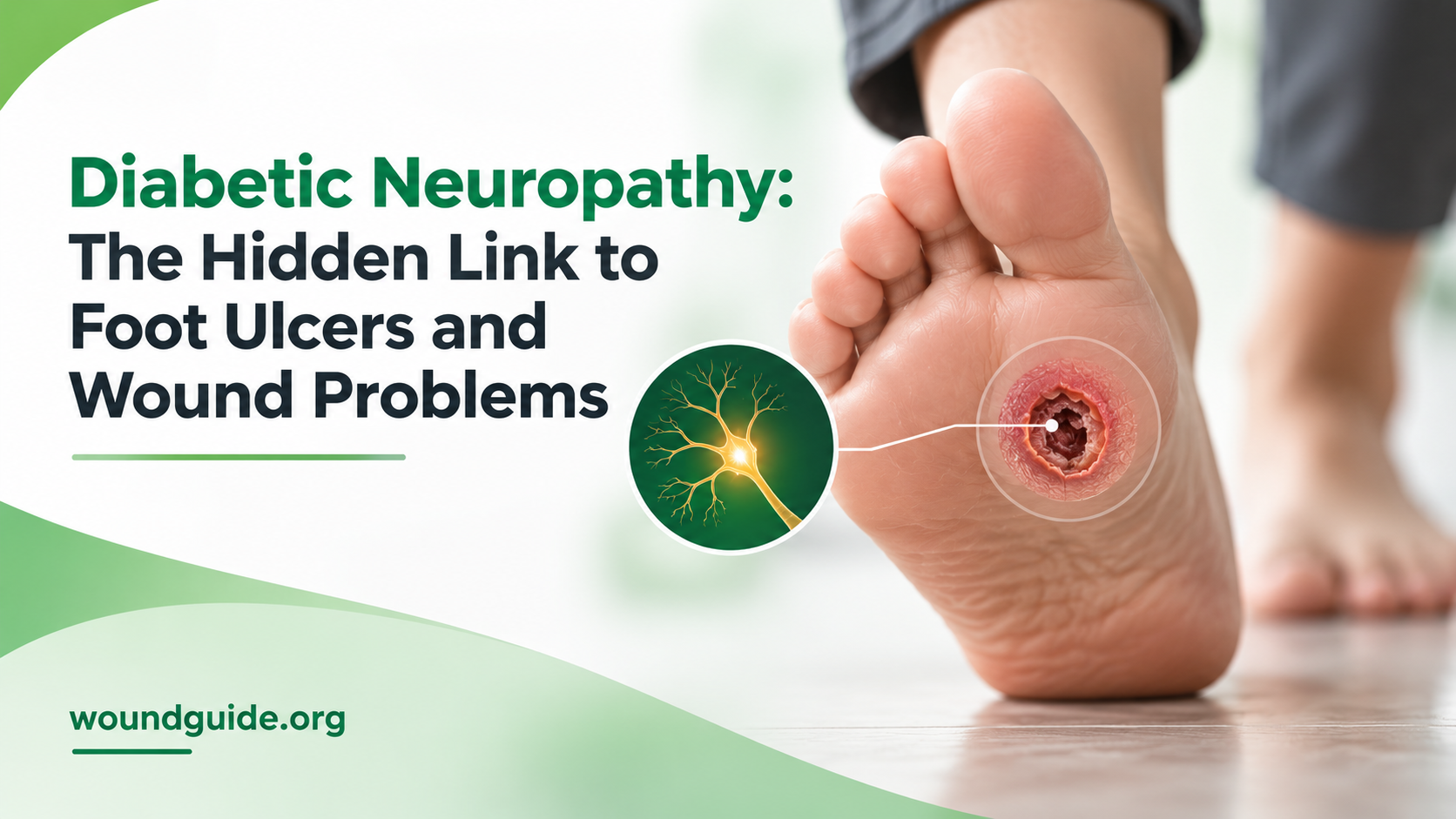
A Diabetic Neuropathy can quietly affect your feet and increase the risk of unnoticed injuries, foot ulcers, and wound complications. You may have a small cut, blister, burn, or pressure spot without feeling the usual pain or discomfort that tells you something is wrong.
This loss of sensation is one reason people with diabetes need to pay close attention to their feet. When an injury goes unnoticed, continued pressure or friction can damage the skin further and may eventually lead to a diabetic foot ulcer. Problems such as poor circulation and infection can make these wounds even harder to heal.
The good news is that regular foot checks, appropriate footwear, good diabetes management, and early medical attention can help reduce the risk of serious complications.
In this guide, you’ll learn how diabetic neuropathy is linked to foot ulcers, which warning signs to watch for, and practical steps you can take to protect your feet.
What Is Diabetic Neuropathy?
Diabetic neuropathy is nerve damage that can develop as a complication of diabetes. It can affect different nerves throughout the body, but diabetic peripheral neuropathy commonly affects the feet and legs.
Symptoms can vary from person to person. Some people may experience:
- Numbness in the feet or toes
- Tingling or pins-and-needles
- Burning sensations
- Sharp or shooting pain
- Increased sensitivity to touch
- Reduced ability to feel temperature
- Loss of sensation
However, diabetic neuropathy does not always cause noticeable symptoms. Some people can have reduced protective sensation without experiencing significant pain.
This is particularly important for foot health because pain normally acts as an early warning system. If sensation is reduced, an injury may continue to worsen without being noticed.
How Does Diabetic Neuropathy Lead to Foot Ulcers?
The connection between diabetic neuropathy and foot ulcers often begins with a small injury.
For example, imagine that a person develops a blister because of a tight shoe. Someone with normal sensation may feel pain or discomfort and stop wearing the shoe.
A person with neuropathy may not feel the blister at all.
They may continue walking normally, putting pressure on the same area repeatedly. The skin can break down, and the small injury may develop into an ulcer.
Neuropathy can therefore increase the risk of foot ulcers by making it harder to recognise:
- Blisters
- Cuts
- Burns
- Pressure points
- Calluses
- Shoe-related friction
- Minor injuries
NIDDK notes that loss of feeling from diabetic neuropathy can make it difficult to notice injuries such as blisters, cuts, and sores.
Why Can a Small Foot Wound Become Serious?
Neuropathy is only one part of diabetic foot problems.
A diabetic foot ulcer can become difficult to heal when several risk factors occur together.
Reduced Sensation
When you cannot properly feel pain or pressure, you may continue putting weight on an injured area.
Repeated Pressure
Walking or standing repeatedly on the same damaged area can prevent the wound from healing.
Poor Blood Circulation
Diabetes can be associated with peripheral artery disease (PAD), which can reduce blood flow to the legs and feet. Poor circulation can make wound healing more difficult.
Infection
An open wound can become infected. In people with diabetes, a foot infection can become serious and requires prompt medical assessment.
Foot Shape or Deformities
Changes in foot structure can create areas of increased pressure. These pressure points may contribute to repeated skin damage and ulcer formation.
What Are the Early Signs of Diabetic Neuropathy?
Recognising neuropathy early can help you protect your feet.
Possible symptoms include:
1. Numbness
Your feet may feel less sensitive than they used to.
2. Tingling
You may experience pins-and-needles sensations in your toes or feet.
3. Burning Pain
Some people describe diabetic nerve pain as burning or unusually hot.
4. Shooting or Sharp Pain
Nerve damage can sometimes cause sudden sharp or electric-shock-like pain.
5. Reduced Temperature Sensation
You may have difficulty telling whether water or another surface is too hot or cold.
6. Loss of Protective Sensation
You may not notice pressure, friction, or minor injuries normally.
Not everyone with diabetic neuropathy experiences pain. In fact, a lack of pain does not necessarily mean that the nerves are healthy.
What Does a Diabetic Foot Ulcer Look Like?
A diabetic foot ulcer can appear in different ways depending on its location and severity.
You may notice:
- An open sore
- A break in the skin
- A blister that has opened
- Red or irritated skin
- A callused area with underlying damage
- Drainage from the wound
- Swelling
- Changes in skin colour
Some ulcers may be painful, while others may cause little or no pain because of neuropathy.
Any unexplained open wound on a diabetic foot deserves attention.
How Can You Check Your Feet for Problems?
If you have diabetes, make foot inspection part of your daily routine.
Look carefully at:
- The tops of your feet
- The soles
- Between your toes
- Your heels
- Around your toenails
- Areas where your shoes rub
Look for cuts, blisters, redness, swelling, cracks, calluses, colour changes, or wounds.
If you cannot see the bottom of your feet easily, use a mirror or ask someone you trust to help.
The American Diabetes Association recommends daily foot inspection for people with diabetes, particularly those who have loss of protective sensation or other risk factors.
How Can You Prevent Diabetic Foot Ulcers?
Preventing foot ulcers is easier than dealing with a complicated wound later.
Check Your Feet Every Day
Do not wait until your feet hurt. Neuropathy may reduce or eliminate the pain associated with an injury.
Wear Comfortable, Properly Fitting Shoes
Your shoes should not create excessive pressure or rubbing.
Avoid footwear that is too tight, especially around the toes.
Avoid Walking Barefoot
Walking barefoot can increase the risk of cuts, burns, and other injuries that may go unnoticed.
Protect Your Skin
Keep your feet clean and follow appropriate moisturising and skin-care practices. Avoid applying moisturiser between the toes unless specifically advised, as excess moisture in this area can contribute to skin problems.
Do Not Cut Corns or Calluses Yourself
Avoid using sharp tools or chemical products to remove calluses. Ask a healthcare professional about appropriate treatment.
Manage Diabetes as Advised
Work with your healthcare team to manage blood glucose and other diabetes-related risk factors.
Get Regular Foot Checks
People with diabetes should receive regular foot assessments. Those with neuropathy, previous ulcers, circulation problems, or other risk factors may need more frequent monitoring.
What Should You Do If You Find a Wound?
If you discover a cut, blister, or open wound on your foot, do not ignore it simply because it does not hurt.
Keep the area protected and follow the wound-care instructions provided by your healthcare professional.
Seek medical advice promptly if:
- The wound is deep or large
- Redness is spreading
- The foot is becoming swollen or warm
- There is pus or unusual drainage
- The wound has a bad smell
- Pain is increasing
- Your skin becomes unusually dark or black
- You develop a fever
- The wound is not improving
People with diabetes and reduced sensation should be particularly cautious because serious wounds may not cause significant pain.
When Is Diabetic Neuropathy an Emergency?
Some foot changes require urgent medical attention.
Seek prompt medical care if you notice a rapidly worsening wound, significant swelling, spreading redness, pus, fever, black or dead-looking tissue, or a sudden change in the shape of your foot.
A red, warm, swollen foot, especially when accompanied by neuropathy, may require urgent assessment because conditions such as Charcot foot can sometimes occur in people with diabetic neuropathy.
Can Diabetic Neuropathy Be Prevented?
Not every case of diabetic neuropathy can be prevented, but managing diabetes and addressing other risk factors can help reduce the risk of complications.
Your healthcare professional can assess your nerve function, circulation, foot structure, and overall risk of developing diabetic foot problems.
The goal is not simply to treat neuropathy after it develops—it is also to protect your feet from injuries that you may not be able to feel.
Final Thought
Diabetic neuropathy can be a hidden risk factor for foot ulcers because reduced sensation may allow injuries to go unnoticed.
A blister, cut, pressure spot, or burn that would normally cause pain may not be felt when protective sensation is reduced. Continued pressure can then damage the skin and contribute to ulcer formation.
The most important habits are simple:
- Check your feet every day
- Wear properly fitting footwear
- Avoid walking barefoot
- Take small injuries seriously
- Manage diabetes as advised
- Get regular professional foot assessments
Don’t Ignore the Signs Protect Your Feet
Diabetic Neuropathy can make a small foot injury difficult to notice, but early attention can help prevent complications. If you have diabetes and notice a cut, blister, swelling, redness, numbness, or a wound that is not healing, don’t wait for it to become serious.
🩺 Take the first step toward better wound care.
Learn more about diabetic foot ulcers, warning signs, treatment options, and prevention with WoundGuide.
The common symptoms include numbness, tingling, burning pain, sharp or shooting pain, and reduced sensation in the feet or legs. Some people may have no obvious symptoms.
Treatment focuses on managing diabetes, reducing risk factors, controlling nerve pain, and preventing complications. Your healthcare professional may recommend lifestyle changes, foot care, or medicines depending on your symptoms.
Diabetic neuropathy generally develops gradually, but its progression varies between individuals. Regular screening can help detect nerve problems before they lead to serious foot complications.
There is currently no established cure that reliably reverses diabetic nerve damage. Treatment aims to manage symptoms, slow further nerve damage, and prevent complications such as foot ulcers.
Diabetic neuropathy does not occur at one specific stage of diabetes. It can develop in both type 1 and type 2 diabetes, with risk generally increasing as diabetes continues. Regular nerve and foot assessments are important.
Leave a Reply