
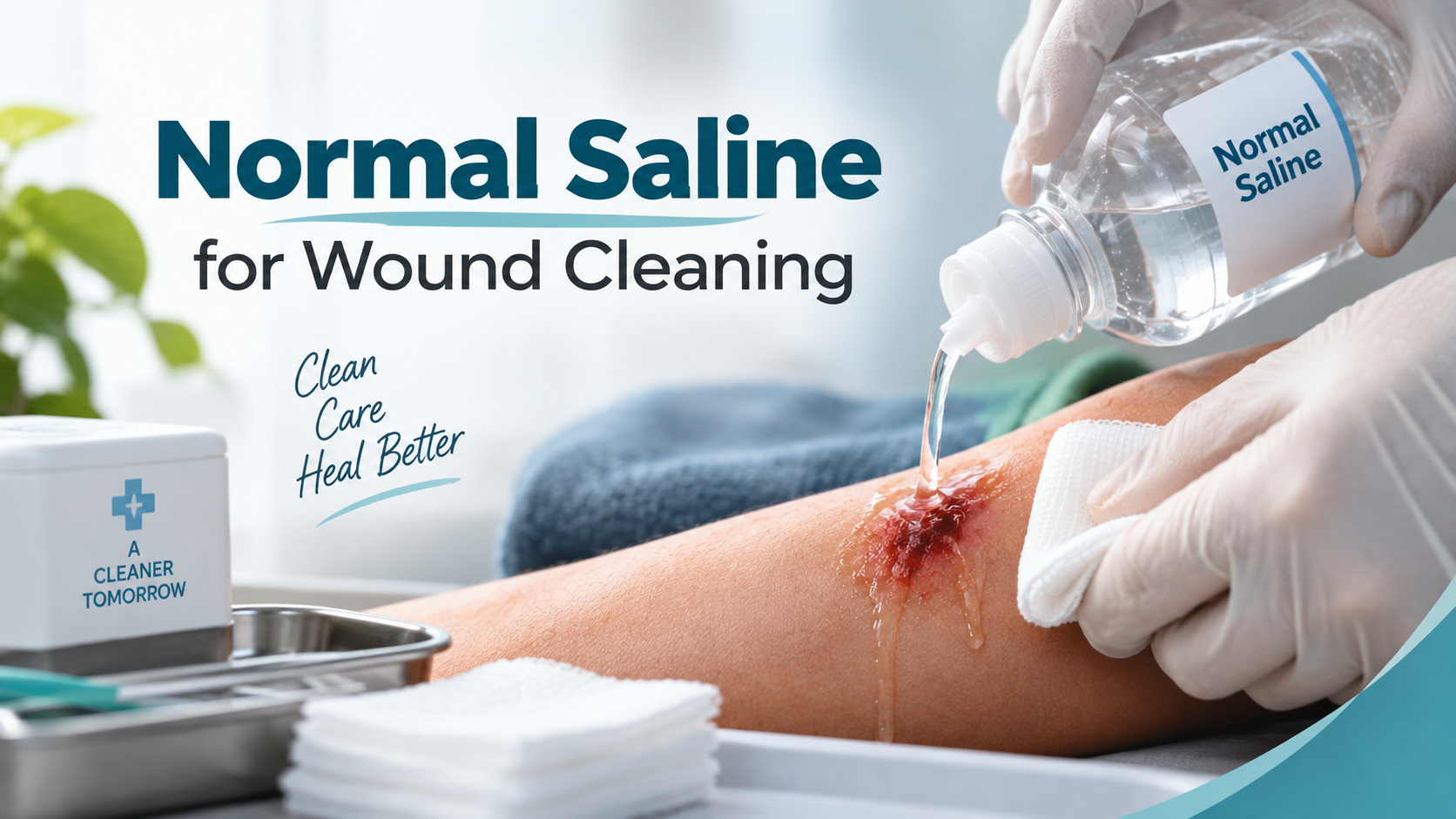
Normal saline is commonly used for wound cleaning because it is gentle and compatible with body tissues. However, the right way to clean a wound can depend on the type, depth, location, and condition of the wound.
In this guide, we explain what normal saline is, why it is used for wound cleaning, how wounds are generally cleaned, and when professional medical care may be necessary.
What Is Normal Saline?
Normal saline is a sterile salt-water solution containing 0.9% sodium chloride. Its salt concentration is similar to that of fluids naturally present in the human body.
Because of this, normal saline is commonly used in healthcare settings for different medical purposes, including:
- Wound irrigation and cleaning
- Rinsing debris from wounds
- Moistening wound dressings when clinically appropriate
- Medical procedures requiring sterile saline
For wound care, sterile normal saline is often preferred because it can clean the wound without exposing it to harsh chemicals that may irritate healthy tissue.
Why Is Normal Saline Used for Wound Cleaning?
A wound needs to be cleaned to remove materials that may interfere with healing, such as:
- Dirt
- Loose debris
- Dried drainage
- Excess wound fluid
Normal saline is widely used because it is generally gentle on body tissues.
Potential benefits of Normal Saline for wound cleaning include:
- Helps rinse away loose debris
- Does not contain harsh antiseptic chemicals
- Is compatible with body tissues
- Can be used for wound irrigation under appropriate medical guidance
- Is commonly available in sterile medical formulations
However, not every wound should be managed in the same way. Deep wounds, infected wounds, diabetic foot wounds, pressure ulcers, and wounds with poor circulation may require professional assessment and specialised treatment.
How Does Normal Saline Help Clean a Wound?
Normal saline primarily works by rinsing the wound surface.
When sterile saline is gently applied to a wound, it can help remove loose contaminants and wound drainage. The cleaning action is mainly mechanical rather than chemical.
This is different from antiseptic products that are designed to kill or reduce microorganisms.
Depending on the wound, healthcare professionals may choose different cleansing methods and products.
How to Clean a Wound Using Normal Saline
For minor wounds, wound cleaning should be performed carefully. The exact method may vary depending on the wound and medical advice.
A general wound-cleaning approach may include:
1. Wash Your Hands
Always clean your hands thoroughly before touching the wound or changing a dressing.
If advised, use appropriate disposable gloves.
2. Prepare a Clean Area
Use clean supplies and avoid placing wound-care materials on contaminated surfaces.
3. Use Sterile Normal Saline When Appropriate
Sterile normal saline may be gently used to rinse loose debris or drainage from the wound.
Avoid aggressively rubbing the wound unless specifically advised by a healthcare professional.
4. Clean the Surrounding Skin Carefully
The skin around the wound may need to be cleaned separately according to medical guidance.
Avoid introducing dirt or contaminated material into the wound.
5. Apply the Appropriate Wound Dressing
After cleaning, the wound may need an appropriate dressing depending on:
- Wound size
- Amount of drainage
- Location
- Infection risk
- Depth of the wound
- Underlying medical conditions
Different wounds require different dressing approaches.
Can Normal Saline Be Used on All Types of Wounds?
Normal saline is commonly used in wound care, but not all wounds should be treated at home.
Professional assessment is especially important for:
Diabetic Foot Ulcers
People with diabetes may have reduced sensation or poor circulation, which can make wounds more serious.
Learn more about diabetic foot ulcers and their management.
Pressure Ulcers or Bedsores
Pressure ulcers may require pressure relief, specialised dressings, nutritional support, and treatment of underlying risk factors.
Deep or Large Wounds
Deep wounds may require medical treatment, closure, or other interventions.
Infected Wounds
Cleaning alone may not be sufficient if a wound is infected.
Signs of infection may include:
- Increasing redness
- Swelling
- Increasing pain
- Warmth around the wound
- Pus or unusual drainage
- Unpleasant odour
- Fever
Seek medical advice if these symptoms occur.
Normal Saline vs Antiseptic for Wound Cleaning
Normal saline and antiseptic solutions serve different purposes.
| Normal Saline | Antiseptic Solution |
| Primarily used for rinsing and cleansing | Designed to reduce microorganisms |
| Generally gentle on body tissues | Some products may irritate or damage tissue if used incorrectly |
| Commonly used for wound irrigation | May be recommended for specific situations |
| Does not replace infection treatment | May form part of infection-management protocols |
The best product depends on the wound and should be chosen according to appropriate medical guidance.
Can You Make Normal Saline at Home?
Homemade salt-water solutions may not be sterile and may not have the correct salt concentration.
For open wounds, particularly chronic, deep, surgical, or infected wounds, using a sterile commercially prepared normal saline solution is generally safer when sterile wound irrigation is required.
Do not assume that homemade salt water is the same as medical-grade normal saline.
How Often Should You Clean a Wound With Normal Saline?
The frequency of wound cleaning depends on several factors, including:
- Type of wound
- Amount of wound drainage
- Type of dressing
- Presence of infection
- Location of the wound
- Recommendations from a healthcare professional
Cleaning a wound too frequently or aggressively may irritate healing tissue.
Follow the wound-care instructions provided by your healthcare professional.
Common Mistakes to Avoid When Cleaning Wounds
When using normal saline or any wound-cleaning method, avoid:
- Touching the wound with unwashed hands
- Using contaminated materials
- Aggressively scrubbing healing tissue
- Using harsh chemicals without medical advice
- Reusing single-use saline containers
- Ignoring increasing redness or drainage
- Delaying treatment for a non-healing wound
When Should You See a Doctor?
Seek medical attention if you notice:
- A wound that is getting worse instead of healing
- Increasing redness or swelling
- Pus or foul-smelling drainage
- Severe or increasing pain
- Fever
- A deep or large wound
- A wound caused by an animal or human bite
- A diabetic foot wound
- Black or dead-looking tissue
- A wound that does not show signs of healing
Early assessment can be particularly important for people with diabetes, circulation problems, or reduced sensation.
Final Thought
Normal saline is commonly used for wound cleaning because it can gently rinse away loose debris and drainage without relying on harsh chemicals.
However, wound care depends on the type and severity of the wound. Deep wounds, infected wounds, diabetic foot ulcers, pressure ulcers, and non-healing wounds may require professional treatment beyond routine cleaning.
If a wound is worsening, painful, infected, or not healing, seek medical advice promptly.
Yes, sterile Normal Saline is commonly used to clean and irrigate open wounds. It can help rinse away loose debris and wound drainage without relying on harsh chemicals. However, the best cleaning method depends on the type, depth, and condition of the wound. Deep, infected, diabetic, surgical, or non-healing wounds should be assessed and managed according to advice from a healthcare professional
For wound cleansing, sterile 0.9% sodium chloride solution, commonly known as Normal Saline, is widely used. Commercially prepared sterile saline is generally preferred when sterile wound irrigation is needed.
Homemade salt water should not be considered equivalent to sterile medical-grade Normal Saline, especially for deep, chronic, surgical, or complex wounds.
The best solution for wound cleansing depends on the type and condition of the wound. Sterile Normal Saline is commonly used because it is gentle and compatible with body tissues, while clean running water may also be appropriate for some minor wounds.
Infected, deep, chronic, diabetic, or non-healing wounds may require specialised wound cleansing and professional treatment.
Avoid using harsh substances such as alcohol or hydrogen peroxide directly on a wound unless specifically recommended by a healthcare professional
Both Normal Saline and clean water may be appropriate for wound cleansing in certain situations. Normal Saline is sterile and isotonic, meaning its salt concentration is similar to that of body fluids.
For some minor wounds, clean running water may be suitable. Sterile Normal Saline may be used when sterile wound cleansing or irrigation is recommended.
The best choice depends on the wound type, contamination, location, and advice from a healthcare professional
Normal Saline does not directly make a wound heal faster. Its main purpose is to gently cleanse the wound and help rinse away loose debris and drainage.
Proper wound healing also depends on factors such as infection control, good blood circulation, appropriate wound dressings, nutrition, pressure relief, and management of underlying health conditions.
If a wound is not improving, keeps reopening, or becomes worse, it should be assessed by a healthcare professional
Leave a Reply