
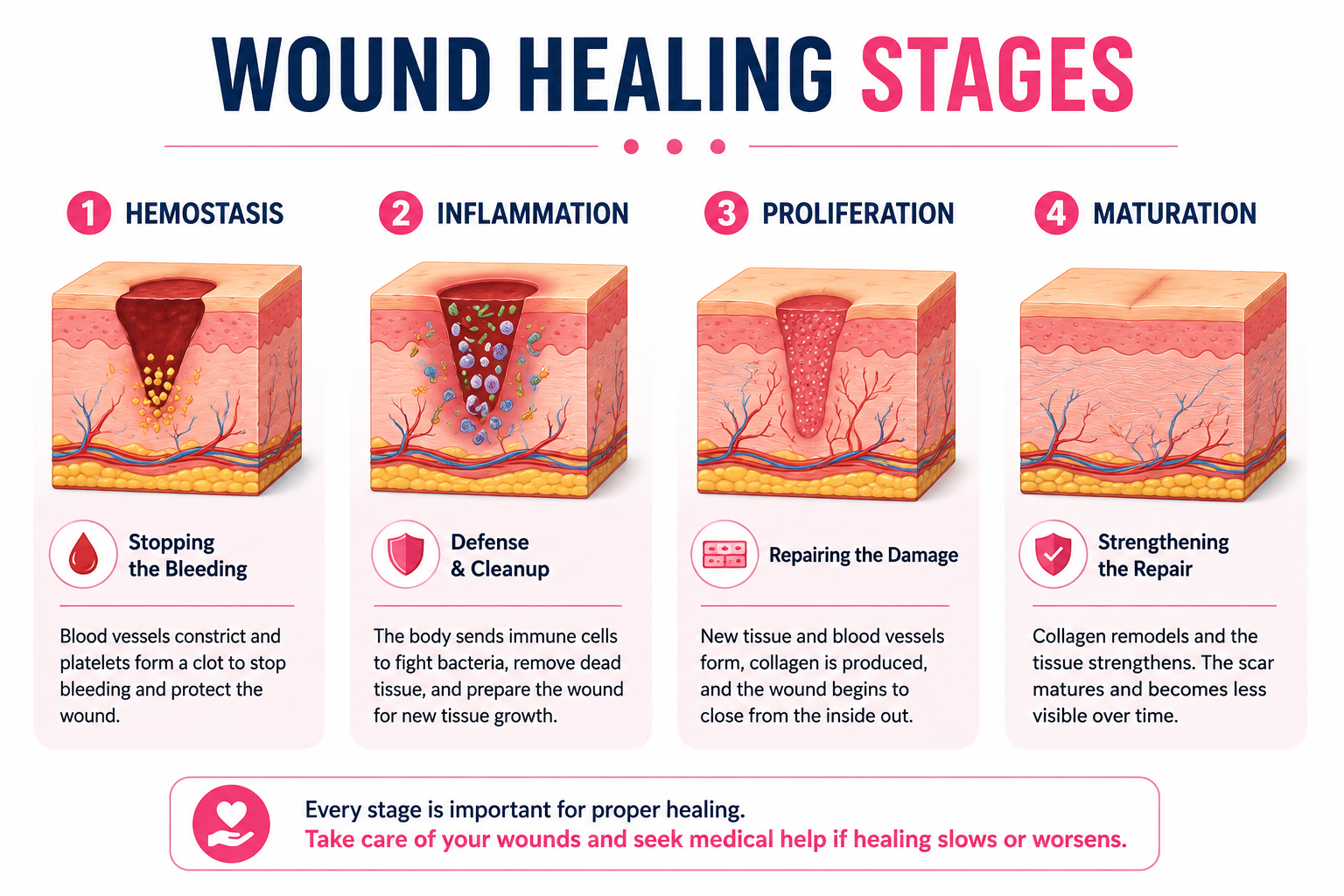
Understanding the Wound Healing Stages can help you know whether a wound appears to be healing normally or whether it may need medical attention.
When the skin is injured, the body immediately begins a complex repair process. Whether the injury is a small cut, surgical wound, burn, ulcer, or deeper wound, healing generally follows a series of overlapping stages.
The four main Wound Healing Stages are:
- Hemostasis
- Inflammation
- Proliferation
- Remodeling or maturation
These stages do not always happen in completely separate steps. Instead, they can overlap as the body works to stop bleeding, protect the wound, remove damaged tissue, build new tissue, and strengthen the repaired area.
However, not every wound heals at the same speed. The size and depth of the wound, infection, diabetes, poor circulation, repeated pressure, smoking, nutrition, age, and other health conditions can affect the healing process.
In this guide, we explain the stages of wound healing, what you may notice during each stage, signs of normal healing, and when you should be concerned about a wound.
What Are the Wound Healing Stages?
The body generally moves through four overlapping phases when repairing damaged skin and tissue.
These Wound Healing Stages are:
- Hemostasis – stopping the bleeding
- Inflammation – cleaning and protecting the wound
- Proliferation – building new tissue
- Remodeling – strengthening and maturing the healed tissue
Each stage plays an important role. If healing is disrupted, the wound may take longer to close or may develop into a chronic or non-healing wound.
Stage 1: Hemostasis – Stopping the Bleeding
Hemostasis is the first stage of wound healing.
It begins almost immediately after an injury occurs.
When the skin is damaged, blood vessels and platelets respond to help reduce blood loss. The body forms a blood clot that helps seal the injured area and provides an initial protective barrier.
You may notice:
- Bleeding immediately after an injury
- Bleeding gradually slowing down
- A blood clot forming
- A scab developing as the surface dries
The purpose of this stage is simple but essential: stop excessive bleeding and begin protecting the damaged tissue.
A scab can act as a protective covering over some wounds. However, not every wound will form a visible scab, and different types of wounds may heal differently depending on their location, depth, moisture level, and treatment.
Once bleeding is controlled, the body continues into the next important phase of the wound healing process.
Stage 2: Inflammation – Cleaning and Protecting the Wound
The inflammatory stage is often misunderstood.
Many people think that any redness or swelling around a wound automatically means infection. However, a certain amount of inflammation can be a normal part of healing.
During this stage, the body’s immune system sends cells to the injured area to:
- Remove damaged tissue
- Clear debris
- Fight harmful microorganisms
- Protect the wound
- Prepare the area for new tissue growth
You may notice mild:
- Redness
- Swelling
- Warmth
- Tenderness
- Clear fluid around the wound
These symptoms can occur as part of the normal inflammatory response.
However, inflammation should be monitored carefully.
Redness that continues to spread, increasing swelling, worsening pain, foul-smelling drainage, pus, fever, or a rapidly deteriorating wound may indicate infection or another complication rather than normal healing.
The inflammatory stage is important because the body needs to clean and prepare the wound before significant new tissue can develop.
Stage 3: Proliferation – Building New Tissue
The proliferation stage is when the body begins actively rebuilding the damaged area.
This is one of the most important Wound Healing Stages because new tissue begins to fill and cover the wound.
Several important processes occur during this phase.
Granulation Tissue Formation
New tissue known as granulation tissue develops within the wound.
Healthy granulation tissue often appears:
- Pink
- Red
- Moist
- Slightly bumpy or granular
This tissue contains new blood vessels and cells that help support repair.
New Blood Vessel Formation
The body develops new blood vessels to bring oxygen and nutrients to the healing tissue.
Adequate blood flow is extremely important for wound healing.
When circulation is poor, wounds may take longer to heal because damaged tissues may not receive enough oxygen and nutrients.
Collagen Production
The body produces collagen, which helps provide structure and support to the new tissue.
Collagen is an important building block during wound repair.
Wound Contraction
As healing progresses, the edges of some wounds gradually move inward.
This process can help reduce the size of the open wound.
New Skin Formation
New skin cells gradually move across the wound surface.
This process is known as re-epithelialization.
The proliferation stage can continue for weeks depending on the type, size, depth, and location of the wound.
A small superficial cut may heal much faster than a deep wound, pressure ulcer, diabetic foot ulcer, surgical wound, or chronic wound.
Stage 4: Remodeling – Strengthening the Healed Tissue
The final stage is known as remodeling or maturation.
During this phase, the newly repaired tissue gradually becomes stronger and more organized.
The wound may already appear closed, but healing is not necessarily complete.
The body continues to:
- Reorganize collagen
- Strengthen the repaired tissue
- Improve the structure of the scar
- Reduce some redness and swelling
- Mature the new tissue
A scar may initially appear:
- Red or pink
- Raised or slightly firm
- Shiny
- Tight
- Itchy
Over time, many scars become flatter and lighter.
However, healed skin and scar tissue may not regain exactly the same strength or flexibility as the original uninjured skin.
The remodeling phase can continue for months and, in some cases, much longer.
This is why a wound may appear healed on the surface while deeper tissue is still undergoing repair.
How Long Do the Wound Healing Stages Take?
There is no single timeline that applies to every wound.
Healing depends on many factors, including:
- Wound size
- Wound depth
- Wound location
- Blood circulation
- Infection
- Diabetes
- Pressure on the wound
- Nutrition
- Smoking
- Age
- Medications
- Other health conditions
For a minor wound, the early stages may progress relatively quickly.
Larger or deeper wounds usually require more time.
Some wounds, especially diabetic foot ulcers, pressure ulcers, venous ulcers, arterial ulcers, and chronic wounds, may require specialized treatment and regular monitoring.
Instead of focusing only on the number of days a wound has been present, it is also important to watch whether the wound is showing signs of progress.
A wound that is gradually becoming smaller and developing healthy new tissue may be progressing differently from a wound that continues to enlarge or deteriorate.
What Does a Normally Healing Wound Look Like?
A healing wound can look different depending on the type of injury and treatment.
Possible signs that a wound may be progressing include:
- The wound gradually becomes smaller
- Healthy new tissue develops
- Redness around the wound does not continue spreading
- Swelling gradually improves
- Pain reduces over time
- Drainage decreases
- The wound edges gradually move closer together
- New skin begins forming
It is important to remember that healing does not always happen at a perfectly steady rate.
Some days may look different from others.
If you are unsure whether a wound is healing normally, professional assessment can help identify potential problems.
Signs That a Wound May Not Be Healing Properly
A wound should not simply be ignored because it has been present for a long time.
Potential warning signs include:
- The wound is getting larger
- The wound is becoming deeper
- Redness is spreading
- Swelling is increasing
- Pain is worsening
- Yellow, green, or foul-smelling drainage develops
- The wound develops black or dark tissue
- The wound edges are breaking down
- Healing has stopped or shows little progress
- Fever or feeling unwell occurs
A wound that does not progress through the normal healing process may need further assessment to identify the underlying cause.
Why Do Some Wounds Take Longer to Heal?
Many factors can interfere with the Wound Healing Stages.
Infection
Infection can damage tissue and prolong inflammation.
An infected wound may require medical assessment and appropriate treatment.
Diabetes
Diabetes can affect sensation, circulation, immune function, and wound healing.
People with diabetes should pay close attention to foot wounds and ulcers.
Poor Blood Circulation
Adequate blood flow helps deliver oxygen and nutrients to healing tissues.
Arterial disease and venous problems can interfere with normal wound healing.
Repeated Pressure
Constant pressure on a wound can prevent healing.
This is particularly important in pressure ulcers and diabetic foot ulcers.
Smoking
Smoking can interfere with circulation and tissue repair.
Stopping smoking can be an important part of supporting overall health and wound healing.
Poor Nutrition
The body requires energy, protein, vitamins, and minerals to support tissue repair.
Poor nutritional intake may contribute to delayed healing.
Certain Medications and Health Conditions
Some medications and medical conditions can affect inflammation, immune function, blood flow, and tissue repair.
A healthcare professional can help determine whether an underlying condition may be affecting wound healing.
When Should You Worry About a Wound?
You should seek medical advice if you notice significant changes in a wound.
Do not wait for severe symptoms if the wound is clearly worsening.
Seek prompt medical attention if you notice:
- Rapidly spreading redness
- Increasing warmth and swelling
- Pus or thick drainage
- A foul smell
- Severe or worsening pain
- Fever or chills
- Black or dead-looking tissue
- Uncontrolled bleeding
- A wound that becomes significantly larger or deeper
- A wound that opens after appearing to close
People with diabetes, poor circulation, neuropathy, or a history of chronic wounds should be particularly careful about new wounds.
A small foot injury may become more serious if it is not noticed and treated early.
How to Support the Wound Healing Process
Proper wound care depends on the type and severity of the wound.
However, some general steps may support healing.
Keep the Wound Clean
Follow the wound-care instructions provided by a healthcare professional.
For minor wounds, gentle cleaning and appropriate protection may help reduce contamination.
Avoid applying random home remedies or products without knowing whether they are appropriate for the wound.
Use the Right Dressing
Different wounds may require different dressings.
The choice of dressing depends on factors such as:
- Wound depth
- Amount of drainage
- Presence of infection
- Tissue type
- Moisture level
A healthcare professional can recommend the most appropriate dressing strategy.
Reduce Pressure on the Wound
Repeated pressure can delay healing.
Offloading and pressure reduction can be particularly important for foot wounds and pressure ulcers.
Support Good Nutrition
Adequate nutrition is important for tissue repair.
A balanced diet that provides enough energy and protein can support the body’s healing process.
People with specific nutritional concerns should seek personalized advice from a qualified healthcare professional.
Manage Underlying Health Conditions
Conditions such as diabetes and circulation problems may need appropriate management to support wound healing.
Avoid Smoking
Smoking can interfere with circulation and tissue repair.
Reducing or stopping smoking may support better healing and overall health.
Can a Wound Heal From the Inside Out?
Some wounds heal by gradually filling with new tissue from the base of the wound.
This is often described as healing from the inside out.
The exact healing process depends on how the wound was closed, its depth, location, and whether tissue loss is present.
A deeper wound should be monitored carefully because the surface may appear to close before deeper healing is complete.
Professional wound assessment can help determine whether the wound is progressing appropriately.
When Does a Wound Become a Chronic or Non-Healing Wound?
A wound may be considered chronic when it fails to progress through the expected healing process over an extended period.
Chronic wounds often have an underlying cause that needs to be identified.
Common examples include:
- Diabetic foot ulcers
- Pressure ulcers
- Venous leg ulcers
- Arterial ulcers
Simply changing the dressing may not be enough if an underlying problem such as poor circulation, infection, uncontrolled diabetes, or repeated pressure is preventing healing.
Successful treatment often requires addressing both the wound and the underlying cause.
Need Help With a Slow or Non-Healing Wound?
A wound that is taking too long to heal may be a sign that an underlying problem needs attention.
Redness, increasing pain, swelling, drainage, foul odor, black tissue, or a wound that continues to enlarge should not be ignored.
If you or someone you care for is struggling with a chronic, non-healing, diabetic, pressure, venous, or arterial wound, seek appropriate guidance from a qualified wound-care professional.
Understanding the cause of delayed healing is an important step toward choosing the right wound-care approach.
Final Thoughts
Understanding the Wound Healing Stages can help you better recognize what happens after an injury and why some wounds take longer to heal than others.
The body generally moves through four overlapping stages: hemostasis, inflammation, proliferation, and remodeling.
A wound may appear healed on the surface while deeper tissue continues to repair and strengthen.
If a wound is gradually improving, becoming smaller, and developing healthy tissue, it may be progressing through the healing process.
However, a wound that becomes larger, more painful, increasingly red, swollen, foul-smelling, or develops abnormal drainage may need medical attention.
Early assessment and proper wound care can help identify problems before they become more serious.
When in doubt, especially if you have diabetes, poor circulation, reduced sensation, or a history of chronic wounds, it is safer to seek professional wound-care guidance rather than waiting for the wound to worsen.
📞 Contact WoundGuide today and take the first step towards better wound healing.
If you have severe bleeding, rapidly spreading redness, fever, severe pain, black tissue, or signs of a serious infection, seek urgent medical care immediately.
The time required for a wound to heal depends on its size, depth, location, blood supply, and your overall health. Minor wounds may heal within a few days to a couple of weeks, while deeper or chronic wounds can take several weeks or months. Wound healing progresses through four overlapping stages: hemostasis, inflammation, proliferation, and remodeling.
A healing wound usually shows gradual improvement. Pain, swelling, and redness should decrease, the wound should slowly become smaller, and healthy tissue may develop within the wound. Drainage should generally reduce as healing progresses, followed by the formation of new skin. Increasing pain, swelling, redness, warmth, pus, foul-smelling drainage, or fever can be warning signs of infection and require medical attention.
Avoid picking at scabs, scratching the wound, or repeatedly touching it with unclean hands. Do not apply alcohol, hydrogen peroxide, or unapproved home remedies unless advised by a healthcare professional. Avoid prolonged soaking and unnecessary pressure or friction on the wound. Smoking can also slow wound healing by reducing blood flow and oxygen delivery to tissues. Follow the wound-care instructions provided by your healthcare professional.
The four main stages of wound healing are hemostasis, inflammation, proliferation, and remodeling. Hemostasis occurs immediately after injury and helps stop bleeding. Inflammation removes damaged tissue and supports the body’s defense against infection. During proliferation, new tissue, blood vessels, and skin develop. Remodeling, also called maturation, strengthens and reorganizes the repaired tissue. These stages overlap and the healing timeline can vary from person to person.
Leave a Reply