
Understanding wound itching during healing can help you recognise normal skin changes and possible irritation. You may wonder whether this itching is a normal sign of recovery or something that requires medical attention. In many cases, wound itching during healing is a natural part of the body’s repair process. As damaged skin begins to recover, new tissue develops, inflammation changes, and the surrounding skin gradually repairs itself. Understanding proper wound care, including choosing the right types of wound dressings, can help protect the healing area and reduce unnecessary irritation.
However, not every itchy wound is healing normally. Dry skin, dressing reactions, excessive moisture, skin irritation, and infections can also cause itching. Understanding these possible causes can help you manage discomfort, protect the affected area, and recognise warning signs that require professional medical attention. In this guide, WoundGuide explains why wounds itch during healing, practical care tips, and when you should consult a wound care professional.
Is It Normal for a Wound to Itch During Healing?
Yes, mild Wound Itching During Healing can be a normal part of the body’s natural repair process. It may occur after a minor cut, scrape, surgical procedure, or other skin injury.
During recovery, the body works to repair damaged tissue and restore the skin barrier. New skin cells develop, collagen is produced, and the wound gradually closes. These changes can stimulate itch-sensitive nerve endings and produce an itchy sensation.
According to MedlinePlus wound healing guidance, itching may occur as wounds heal and scar tissue develops. Understanding the healing process can help you recognise normal changes and identify symptoms that may require medical attention.
You may also experience:
- Mild tingling around the wound.
- Tightness as the skin closes.
- Itching around a scab.
- Slight sensitivity near the healing area.
- Temporary discomfort around developing scar tissue.
Occasional mild itching without worsening redness, swelling, pain, or unusual discharge is generally less concerning.
However, severe or persistent itching should not automatically be considered a sign of healing. It is important to assess the wound and surrounding skin for other changes.
Why Does a Wound Itch During Healing? 6 Common Causes
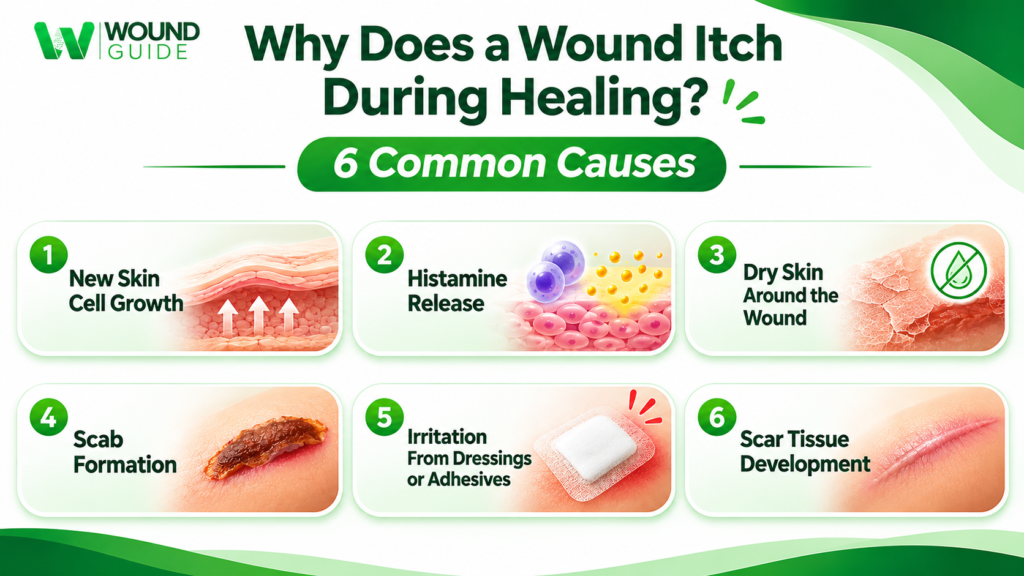
Several factors can contribute to itching around a healing wound. Understanding these causes can help you identify what may be irritating the affected area.
1. New Skin Cell Growth
One of the common reasons a healing wound may itch is the development of new skin.
After an injury, the body begins producing new cells to cover the damaged area. As this tissue develops, the skin may feel sensitive, tight, or itchy.
The healing process also involves changes in the surrounding nerves and inflammatory activity. These changes can contribute to unusual sensations as the wound gradually closes.
These natural repair activities may contribute to Wound Itching During Healing as new skin gradually develops.
2. Histamine Release During Healing
Histamine is a chemical released by certain immune cells during inflammatory responses.
When the skin is injured, the body activates several processes to support tissue repair. Histamine and other inflammatory mediators can stimulate itch-related nerve pathways.
This is one possible reason why a wound or scab may feel itchy during recovery. However, histamine is not the only factor involved. Wound-related itching can have several different causes.
Histamine activity is another possible contributor to Wound Itching During Healing, although several other factors may also be involved.
3. Dry Skin Around the Wound
Dryness is another common reason for itching.
The skin surrounding an injury may become dry, flaky, or tight, particularly because of frequent washing, environmental conditions, or certain wound-care products.
Dry surrounding skin can increase discomfort and make an existing itchy sensation worse.
Keeping intact surrounding skin appropriately moisturised may help. However, do not apply creams, oils, or lotions directly to an open wound unless recommended by a healthcare professional.
Managing dryness around the affected area may help reduce discomfort associated with Wound Itching During Healing.
4. Scab Formation
A scab forms when blood and other wound materials dry over an injured area. It helps protect the underlying tissue while healing continues.
As the skin repairs itself underneath, the scab and surrounding area may become itchy.
Although scratching or picking a scab may provide temporary relief, it can damage newly developing tissue, reopen the wound, and increase the risk of infection.
Allow the scab to separate naturally rather than removing it yourself.
5. Irritation From Wound Dressings or Adhesives
Sometimes, the itching does not come from the wound itself. It may be caused by the dressing or adhesive used to protect it.
Possible triggers include:
- Adhesive sensitivity.
- Friction from an improperly fitted dressing.
- Moisture trapped beneath the dressing.
- Irritation from certain cleaning products.
- Reactions to topical creams or antiseptics.
If itching occurs mainly around the edges of a dressing and is accompanied by a rash, redness, or small bumps, contact a healthcare professional for advice.
Choosing an appropriate dressing is important. Read our guide to different types of wound dressings and their uses to understand how dressing selection can affect wound protection and surrounding skin.
6. Scar Tissue Development
As deeper wounds heal, the body produces collagen to strengthen the repaired area.
The developing scar may feel tight, firm, sensitive, or itchy. These sensations can continue even after the wound surface has closed.
Scar tissue develops differently from normal skin and may take months to mature. Some scars can remain itchy or uncomfortable for longer periods.
If itching becomes severe, persistent, or is associated with raised or expanding scar tissue, seek professional assessment.
How to Stop a Wound From Itching: 7 Safe Care Tips
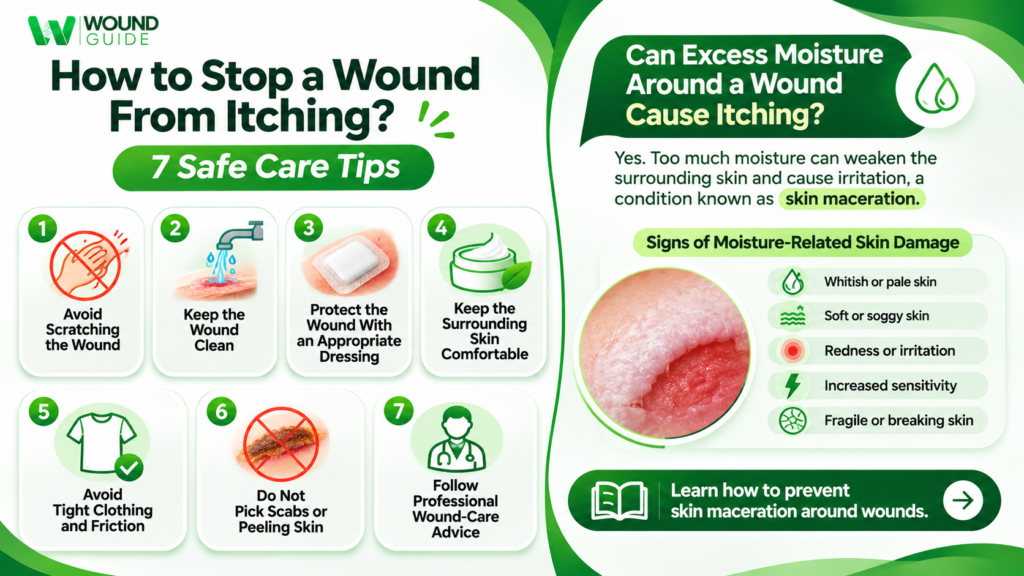
Managing Wound Itching During Healing starts with protecting the affected area, maintaining appropriate hygiene, and avoiding unnecessary irritation.
Here are seven practical tips to help care for an itchy wound.
1. Avoid Scratching the Wound
Scratching may damage newly formed skin and reopen the healing area.
It can also introduce bacteria from your fingers or fingernails, increasing the risk of infection.
Instead, avoid touching the wound unnecessarily. If itching becomes difficult to manage, ask a healthcare professional about suitable options.
2. Keep the Wound Clean
Proper wound cleaning helps remove dirt and contaminants that may interfere with recovery.
For minor wounds, gently clean the area with clean running water and follow appropriate wound-care instructions. Avoid harsh rubbing or aggressive cleaning.
For surgical wounds, chronic wounds, or wounds managed by a healthcare professional, follow the specific cleaning instructions provided to you.
3. Protect the Wound With an Appropriate Dressing
A suitable dressing helps protect the wound from friction, contamination, and further injury.
The right dressing depends on the wound’s size, depth, location, and drainage level.
Avoid repeatedly removing or changing a dressing without a reason, as unnecessary handling may irritate the surrounding skin.
4. Keep the Surrounding Skin Comfortable
Dry or irritated skin around a wound can make itching worse.
A suitable moisturiser or skin barrier product may help protect intact surrounding skin. However, avoid applying products directly into an open wound unless specifically advised by a healthcare professional.
Also avoid fragranced lotions or products that have previously caused irritation.
5. Avoid Tight Clothing and Friction
Clothing that repeatedly rubs against a healing wound may increase irritation and discomfort.
Choose loose, comfortable clothing where possible. Make sure bandages and dressings are not excessively tight.
If the wound is located near a joint, take care to avoid unnecessary stretching or pressure.
6. Do Not Pick Scabs or Peeling Skin
Scabs and newly forming skin help protect the recovering area.
Picking, peeling, or pulling at them can interrupt healing and increase the possibility of scarring or infection.
Let the healing process continue naturally and follow your wound-care professional’s instructions.
7. Follow Professional Wound-Care Advice
Different wounds require different care approaches. A minor scrape may need simple cleaning and protection, while a surgical incision or chronic ulcer may require specialised treatment.
Follow the recommended dressing schedule and seek advice if itching becomes severe, persistent, or is accompanied by other symptoms.
Can Excess Moisture Around a Wound Cause Itching?
Yes. Excessive moisture around a wound can weaken the surrounding skin and contribute to irritation
Excess moisture can worsen skin irritation and contribute to discomfort during Wound Itching During Healing.
When wound fluid remains in contact with nearby skin for too long, the skin may become soft, pale, wrinkled, or fragile. This condition is known as skin maceration.
Macerated skin may become uncomfortable and more vulnerable to friction and further damage.
Signs of moisture-related skin damage may include:
- Whitish or pale skin around the wound.
- Soft or soggy surrounding skin.
- Redness or irritation.
- Increased skin sensitivity.
- Skin that appears fragile or begins to break down.
Proper dressing selection and moisture management are important for protecting the surrounding skin.
Learn more about how to prevent skin maceration around wounds and protect the skin during wound recovery.
When Does an Itchy Wound Indicate an Infection?
Although mild itching may occur during normal recovery, infection can also cause changes in and around a wound.
Watch for the following warning signs:
- Increasing redness or discolouration around the wound.
- Swelling that is getting worse.
- Increasing pain or tenderness.
- Yellow, green, cloudy, or pus-like discharge.
- An unpleasant or unusual smell.
- Skin that feels increasingly hot around the wound.
- Fever or feeling generally unwell.
- A wound that is becoming larger or deeper.
These symptoms should not be ignored. Contact a healthcare professional promptly if you notice them.
Seek urgent medical attention if you experience rapidly spreading redness or discolouration, severe pain, fever with worsening wound symptoms, or feel seriously unwell.
Remember that itching alone does not confirm an infection. It is important to consider the overall appearance of the wound and any other symptoms.
Who Is More Likely to Experience Wound-Healing Problems?
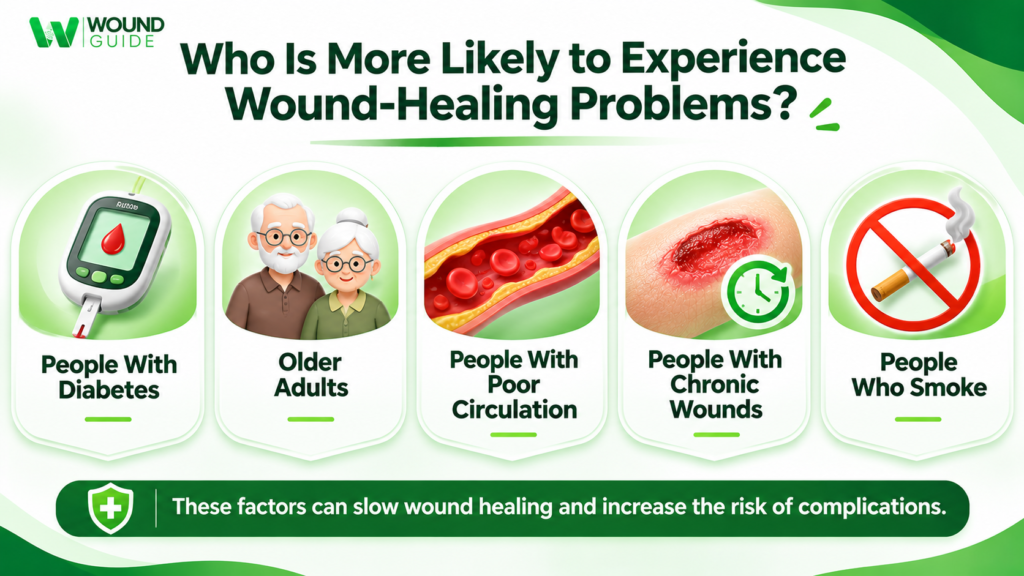
Some people need additional attention during wound recovery because certain health conditions and lifestyle factors can affect healing.
These include:
People With Diabetes
Diabetes can affect circulation, sensation, and the body’s ability to repair damaged tissue. A small foot wound may become more serious if it is not identified and managed early.
Read our guide to diabetic foot ulcer treatment and wound care for more information.
Older Adults
Age-related changes can make skin thinner and more fragile. This can increase the risk of skin tears, irritation, and dressing-related damage.
People With Poor Circulation
Reduced blood flow may limit the oxygen and nutrients reaching damaged tissue, potentially delaying wound recovery.
People With Chronic Wounds
Long-lasting wounds may involve persistent inflammation, excess moisture, damaged surrounding skin, and other healing challenges. Itching in chronic wounds should be assessed rather than ignored.
People Who Smoke
Smoking can negatively affect circulation and tissue repair. Avoiding tobacco can support better overall health and wound management.
Common Mistakes to Avoid When a Wound Itches
Avoid these common mistakes during wound recovery:
- Scratching the wound: This may damage new tissue and reopen the injured area.
- Removing scabs: Picking at scabs can interrupt the healing process.
- Using random creams: Some products may irritate the skin or interfere with wound care.
- Ignoring dressing reactions: Persistent itching, rashes, or redness around adhesives may indicate irritation or sensitivity.
- Ignoring infection symptoms: Increasing pain, swelling, discharge, or fever requires medical attention.
- Changing dressings unnecessarily: Excessive handling may disturb healing tissue.
- Using unverified home remedies: Household substances and unapproved products should not be applied to open wounds.
Good wound care involves protecting the injured area, following suitable dressing instructions, and monitoring changes over time.
Frequently Asked Questions
Mild itching can be a normal part of wound healing. It may occur as new skin develops and damaged tissue repairs itself. However, itching alone does not confirm that a wound is healing properly.
No. Scratching can damage newly formed skin, reopen the wound, and increase the risk of infection. Avoid picking scabs or rubbing the injured area.
Yes. Adhesives, friction, trapped moisture, or sensitivity to dressing materials may cause itching around the wound. If you notice a rash or persistent irritation, seek professional advice about changing the dressing.
Do not apply creams, oils, or other products directly to an open wound without professional advice. A suitable moisturiser may be used on intact surrounding skin if appropriate for your wound-care plan.
Seek professional advice if itching is severe, persistent, or accompanied by increasing redness, swelling, pain, unusual discharge, a rash, or delayed healing. People with diabetes or poor circulation should seek early assessment for new wounds.
Conclusion
Wound Itching During Healing is often a normal response as the body repairs damaged skin and develops new tissue. Dryness, scab formation, scar development, and irritation from dressings can also contribute to the sensation.
The most important thing is to avoid scratching, protect the wound, maintain appropriate hygiene, and follow professional wound-care instructions.
If itching becomes severe or is accompanied by increasing redness, swelling, pain, unusual discharge, or fever, seek medical advice promptly.
Take care of your wound at every stage of recovery. Visit WoundGuide for practical wound-care information and educational resources.
Leave a Reply