
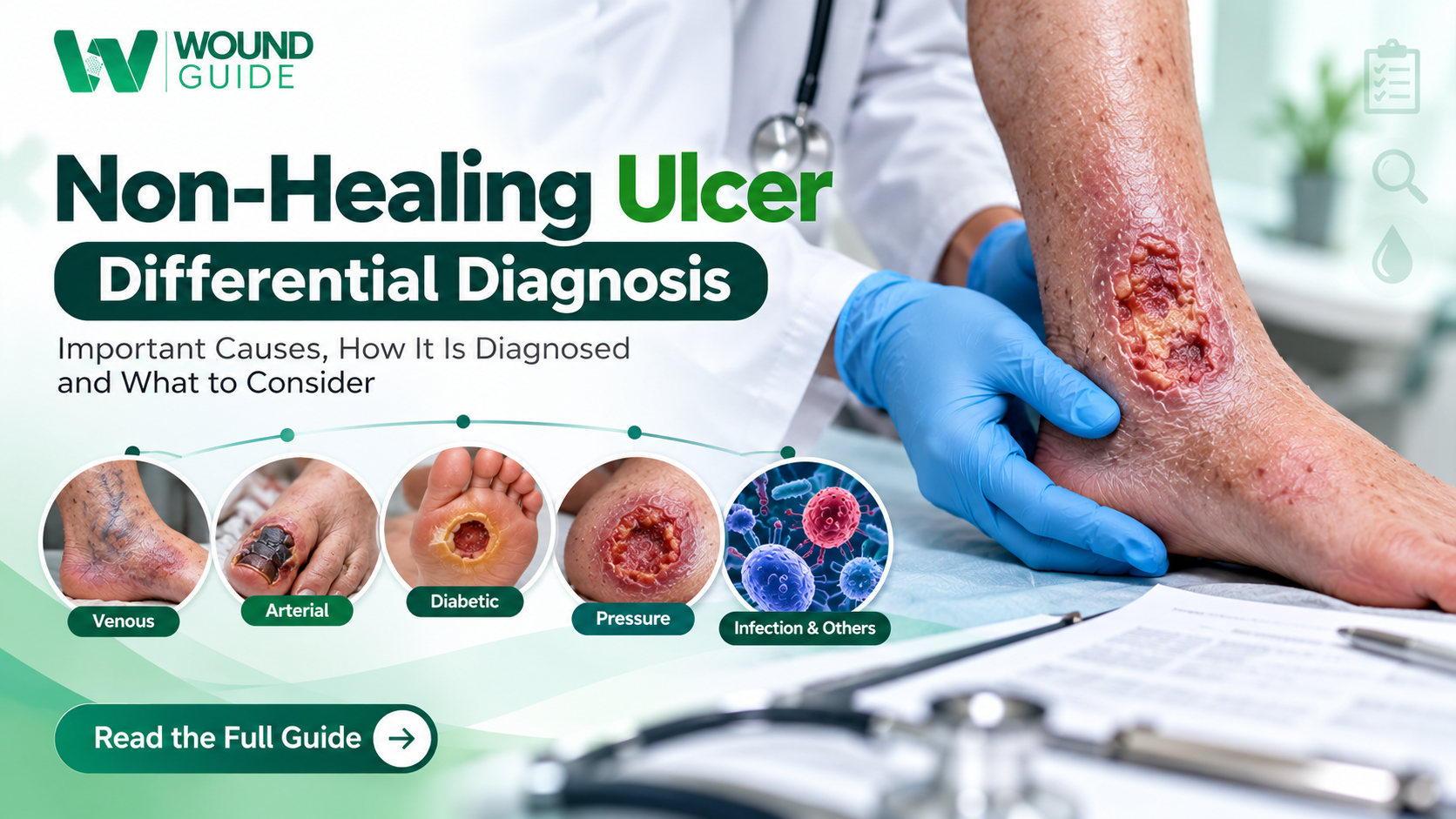
Non-Healing Ulcer Differential Diagnosis is important when a wound does not improve as expected despite appropriate wound care. A persistent ulcer may be linked to poor blood circulation, diabetes, pressure, nerve damage, infection, inflammation, or other underlying conditions. Identifying the actual cause is essential because different types of ulcers require different evaluation and treatment approaches. A wound that continues to enlarge, becomes increasingly painful, develops unusual drainage, bleeds, or shows signs of infection should not be ignored. In some cases, further tests such as vascular assessment, imaging, laboratory investigations, or a biopsy may be needed to determine why the ulcer is not healing.
In this guide, we’ll explore 9 critical causes of non-healing ulcers, their common warning signs, how healthcare professionals approach diagnosis, and when further investigation may be necessary.
What Is a Non-Healing Ulcer?
Understanding the Non-Healing Ulcer Differential Diagnosis can help identify whether the wound is related to circulation problems, diabetes, pressure, infection, inflammation, or another underlying condition.
A chronic ulcer can occur on the leg, foot, heel, ankle, pressure areas or other parts of the body. The cause may be obvious in some patients, while others require a more detailed assessment.
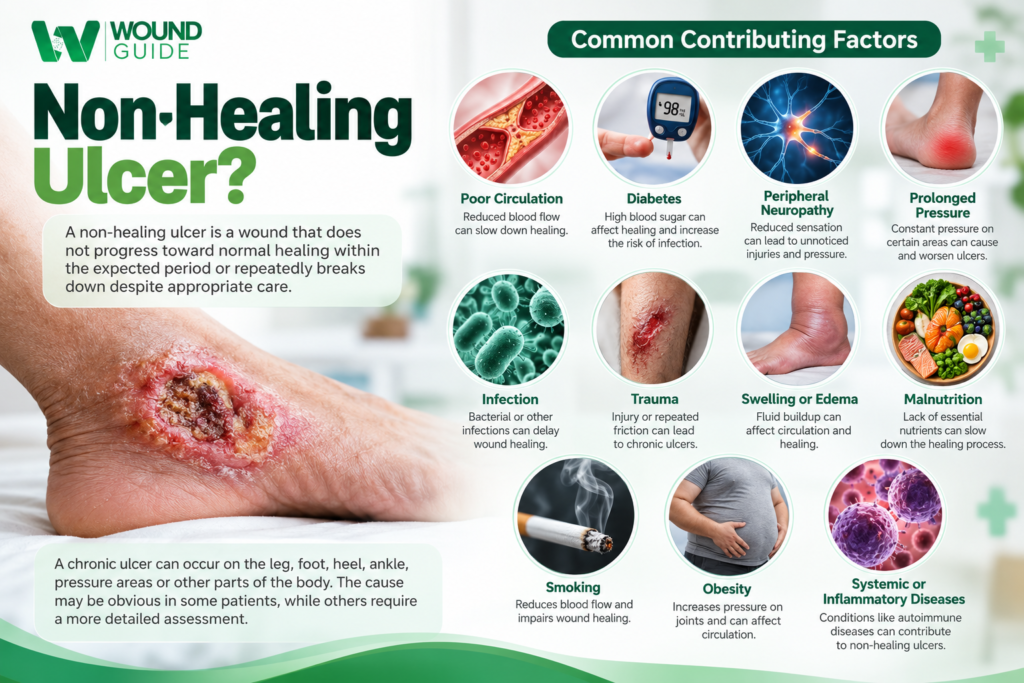
Common contributing factors include:
- Poor circulation
- Diabetes
- Peripheral neuropathy
- Prolonged pressure
- Infection
- Trauma
- Swelling or edema
- Malnutrition
- Smoking
- Obesity
- Certain systemic or inflammatory diseases
Multiple factors can exist at the same time. For example, a person with diabetes may have neuropathy, arterial disease and infection contributing to a foot ulcer.
Why Is a Differential Diagnosis Important?
A wound that does not heal should not automatically be assumed to be a typical venous or diabetic ulcer.
A Non-Healing Ulcer Differential Diagnosis helps healthcare professionals determine why a wound isn’t healing and whether it needs additional testing or specialist assessment.
- Why the ulcer developed
- Why it is not healing
- Whether blood flow is adequate
- Whether infection is present
- Whether pressure or neuropathy is involved
- Whether an inflammatory condition may be responsible
- Whether tissue sampling or imaging is necessary
Research on chronic wounds emphasizes reassessing the diagnosis when a wound fails to respond to appropriate treatment. Atypical wounds may require biopsy and additional laboratory or vascular investigations.
9 Important Causes in a Non-Healing Ulcer Differential Diagnosis
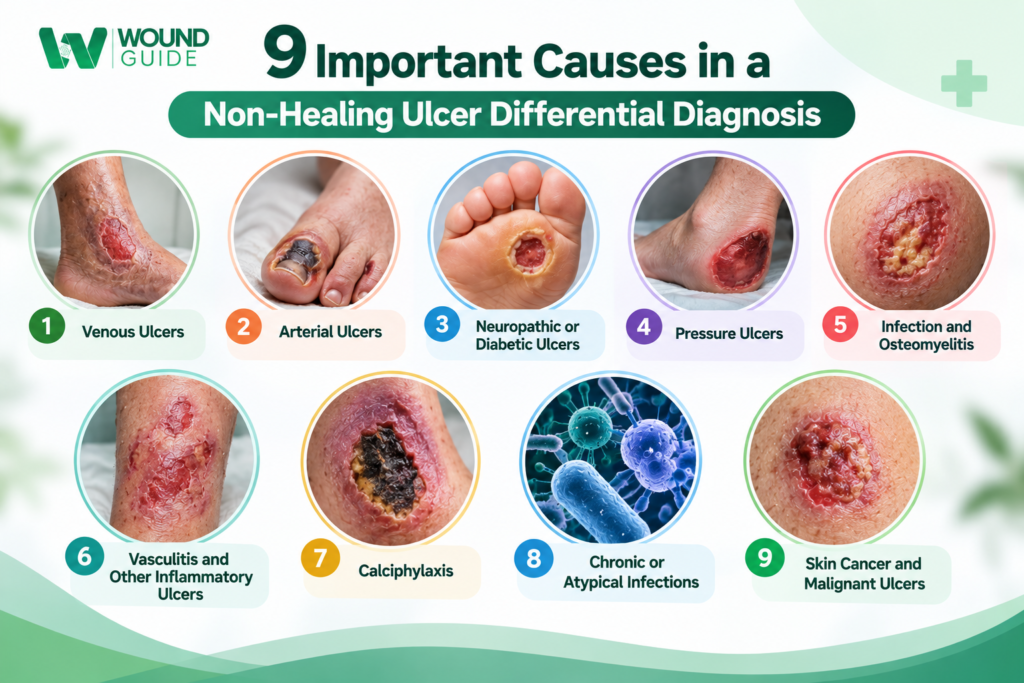
1. Venous Ulcers
Venous disease is one of the most common causes of chronic leg ulceration.
Venous disease should be considered early in the Non-Healing Ulcer Differential Diagnosis, particularly when an ulcer occurs around the lower leg or ankle with swelling and other signs of venous disease.
- Leg swelling
- Venous eczema
- Skin discoloration
- Lipodermatosclerosis
- A history of chronic venous insufficiency
Venous ulcers may be relatively painless, although pain can increase when complications such as infection develop.
Because venous and arterial disease can sometimes occur together, assessment of circulation is important before treatment decisions are made.
2. Arterial Ulcers
Arterial ulcers are another important consideration in the Non-Healing Ulcer Differential Diagnosis, especially when an ulcer is painful and accompanied by signs of reduced blood flow.
They commonly occur on the:
- Toes
- Foot
- Heel
- Other areas exposed to pressure
Typical features can include significant pain, particularly when the limb is elevated, reduced pulses, cool skin and a pale or shiny appearance. Arterial ulcers may have a sharply defined or “punched-out” appearance.
Vascular assessment may include examination of pulses and blood-flow studies such as the ankle-brachial index when clinically appropriate.
3. Neuropathic or Diabetic Ulcers
Diabetes can contribute to ulcer formation through several mechanisms, particularly peripheral neuropathy and vascular disease.
Neuropathy can reduce protective sensation, meaning a person may not notice:
- Minor injuries
- Repeated pressure
- Blisters
- Ill-fitting footwear
- Foreign objects inside footwear
Neuropathic ulcers often occur at pressure points and may initially be relatively painless because sensation is impaired. Diabetes may also coexist with arterial disease or infection, making assessment more complex.
4. Pressure Ulcers
Pressure ulcers develop when prolonged pressure, often combined with shear or friction, damages tissue.
They commonly occur over bony areas such as:
- Heels
- Sacrum
- Hips
- Elbows
- Other pressure points
People with limited mobility are particularly vulnerable.
If pressure continues, the wound may fail to heal even when dressings and other local treatments are appropriate. Therefore, pressure redistribution and assessment of mobility are important parts of evaluation.
5. Infection and Osteomyelitis
Infection can delay wound healing and may sometimes be the primary reason a chronic wound deteriorates.
Possible warning signs include:
- Increasing redness
- Increasing warmth
- Swelling
- Increasing pain
- Pus or abnormal drainage
- Foul odor
- Fever
- General illness
A deeper infection may involve underlying bone, known as osteomyelitis, particularly in some chronic foot wounds.
Chronic wound evaluation may require clinical examination, laboratory testing, microbiological investigations and imaging when a deeper infection is suspected.
6. Vasculitis and Other Inflammatory Ulcers
Inflammatory conditions can produce ulcers that resemble more common chronic wounds.
Vasculitis, for example, involves inflammation of blood vessels and can be associated with skin ulcers, purpura, livedo reticularis and other skin findings.
Another important inflammatory condition is pyoderma gangrenosum, which can present as a painful ulcer and may require specialist assessment.
An inflammatory cause should be considered when the ulcer has an unusual appearance, progresses despite appropriate standard care, or is accompanied by other systemic or skin findings.
7. Calciphylaxis
Calciphylaxis is an uncommon but serious condition associated with vascular calcification and tissue injury. It is particularly associated with advanced kidney disease and certain other risk factors.
It can cause:
- Severe pain
- Skin changes
- Ulceration
- Tissue necrosis
Because its presentation can overlap with other chronic wounds, specialist evaluation may be necessary when the clinical features are unusual or severe.
8. Chronic or Atypical Infections
Not every chronic ulcer is caused by the usual bacterial organisms.
Depending on the patient’s history, location and clinical features, healthcare professionals may consider infections such as:
- Mycobacterial infections
- Deep fungal infections
- Cutaneous tuberculosis
- Leishmaniasis
- Other region-specific infections
DermNet notes that chronic infections can contribute to ulceration and that microbiological testing or biopsy may be required when these conditions are suspected.
Travel history, environmental exposure, immune status and previous treatments can provide important diagnostic clues.
9. Skin Cancer and Malignant Ulcers
Although uncommon, skin cancer should be considered when a chronic ulcer has an atypical appearance or fails to heal despite appropriate treatment.
Squamous cell carcinoma can present as a chronic ulcer or can develop within a longstanding wound or scar, sometimes referred to as a Marjolin ulcer. Other skin cancers can also occasionally resemble chronic wounds.
Warning features may include:
- An unusual or changing wound appearance
- Persistent non-healing
- Bleeding
- Excessive or unusual tissue growth
- Increasing pain
- Abnormal wound edges
- Failure to respond to appropriate treatment
A biopsy may be required when malignancy is suspected.
How Is a Non-Healing Ulcer Diagnosed?
The diagnostic process depends on the location and appearance of the ulcer, the patient’s medical history and suspected underlying cause.
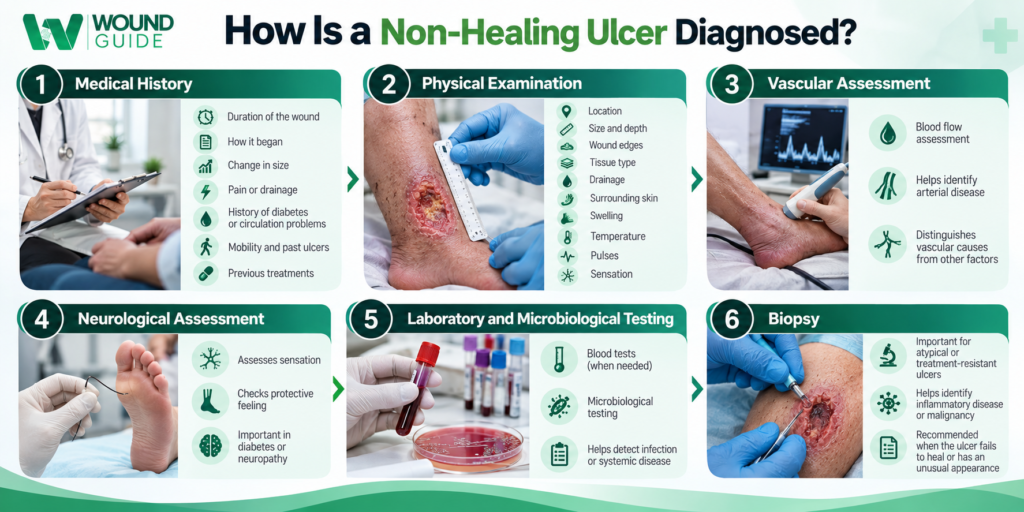
A healthcare professional may assess:
1. Medical History
Important questions may include:
- How long has the wound been present?
- How did it begin?
- Has it changed in size?
- Is there pain?
- Is there drainage?
- Is there a history of diabetes?
- Are there circulation problems?
- Is mobility limited?
- Has the patient had previous ulcers?
- What treatments have already been tried?
2. Physical Examination
The wound may be assessed for:
- Location
- Size and depth
- Wound edges
- Tissue type
- Drainage
- Surrounding skin
- Swelling
- Temperature
- Pulses
- Sensation
3. Vascular Assessment
When poor circulation is suspected, blood-flow assessment may be appropriate. This can help distinguish arterial disease from other causes.
4. Neurological Assessment
Sensation and protective feeling may be evaluated, particularly when diabetes or neuropathy is suspected.
5. Laboratory and Microbiological Testing
Depending on the clinical situation, blood tests or microbiological testing may be considered, especially when infection or systemic disease is suspected.
6. Biopsy
A biopsy can be particularly important for atypical or treatment-resistant ulcers.
Chronic wound literature supports considering biopsy when an ulcer fails to heal despite appropriate management or when an unusual cause, inflammatory disease or malignancy is suspected.
When Should a Non-Healing Ulcer Be Reassessed?
Reassessment is important when a wound:
- Does not show expected improvement
- Becomes larger
- Develops increasing pain
- Starts bleeding
- Develops unusual tissue
- Has persistent or increasing drainage
- Develops signs of infection
- Has an unusual location or appearance
- Fails to respond to appropriate treatment
Atypical or non-responsive wounds may require a broader diagnostic approach rather than simply continuing the same wound treatment.
Venous disease is a major cause of chronic leg ulcers, while arterial disease, diabetes-related neuropathy and mixed causes can also contribute. The exact cause needs to be assessed clinically.
Yes. Diabetes can contribute through neuropathy, pressure-related injury, impaired healing and vascular disease. A diabetic ulcer may also become infected, requiring prompt assessment.
Biopsy may be considered when an ulcer has atypical features, fails to improve with appropriate treatment, or when conditions such as inflammatory disease, unusual infection or malignancy are suspected.
An infected ulcer may heal when the underlying cause and infection are appropriately managed, but treatment depends on the depth and severity of infection and the overall condition of the patient.
No. Most chronic ulcers have non-malignant causes such as venous disease, arterial disease, neuropathy, pressure or diabetes. However, malignancy is an important diagnosis to consider when a wound is atypical or does not respond to appropriate treatment.
Final Thoughts
A Non-Healing Ulcer Differential Diagnosis is important because a wound that does not heal as expected may have an underlying cause that requires specific treatment. Venous disease, arterial problems, diabetes-related neuropathy, pressure, infection, inflammatory conditions, and other less common causes can all contribute to delayed healing.
If an ulcer is getting larger, becoming more painful, bleeding, producing unusual drainage, or showing signs of infection, it should be professionally assessed rather than managed with wound dressings alone. Early evaluation can help identify the underlying problem and guide appropriate care.
Need Help With a Non-Healing Wound?
Don’t ignore a wound that isn’t healing. Get appropriate wound-care guidance and learn more about chronic wound management with WoundGuide.
👉 Explore WoundGuide: Visit WoundGuide
Your wound deserves the right assessment and care.
Leave a Reply