
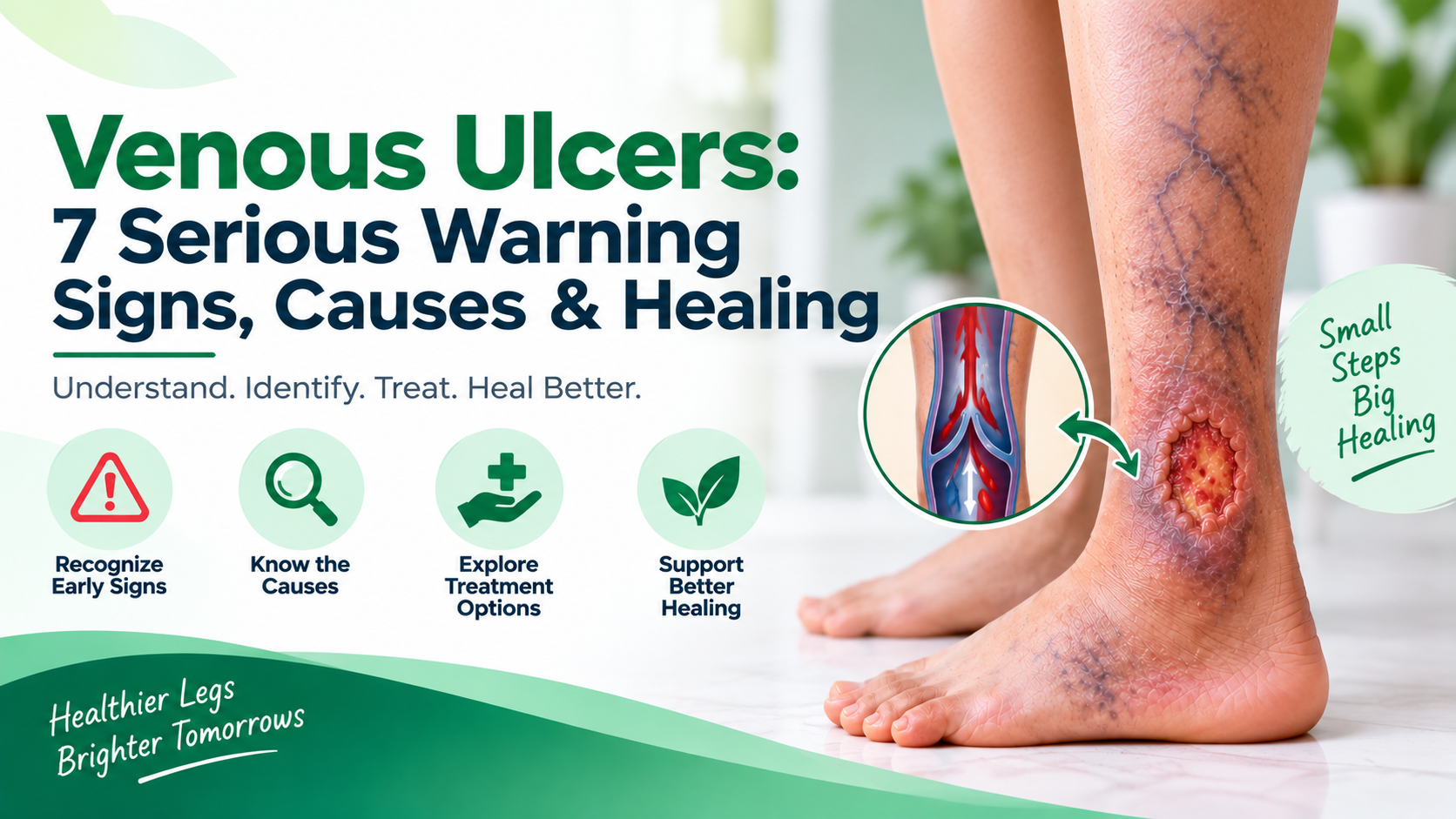
Venous Ulcers are open sores that usually develop on the lower leg when blood does not flow properly back toward the heart. They are commonly associated with chronic venous insufficiency (CVI), a condition in which damaged or weakened vein valves allow blood to pool in the legs. This can increase pressure inside the veins and contribute to skin changes, swelling, and ulcer formation. A venous ulcer may begin after a small injury or skin break, but it can become difficult to heal when the underlying circulation problem is not addressed. Understanding the warning signs, causes, and treatment options can help you seek appropriate medical care earlier.
What Are Venous Ulcers?
Venous Ulcers are chronic open wounds that most often occur on the lower part of the leg, particularly around the ankle area. A leg ulcer is generally considered chronic when it takes more than two weeks to heal.
They are usually linked to problems with the veins rather than a simple skin injury.
When the valves inside the leg veins do not work effectively, blood can collect in the lower legs. The resulting increase in venous pressure can damage the surrounding tissues and make the skin more vulnerable to breakdown.
How Does Chronic Venous Insufficiency Cause Ulcers?
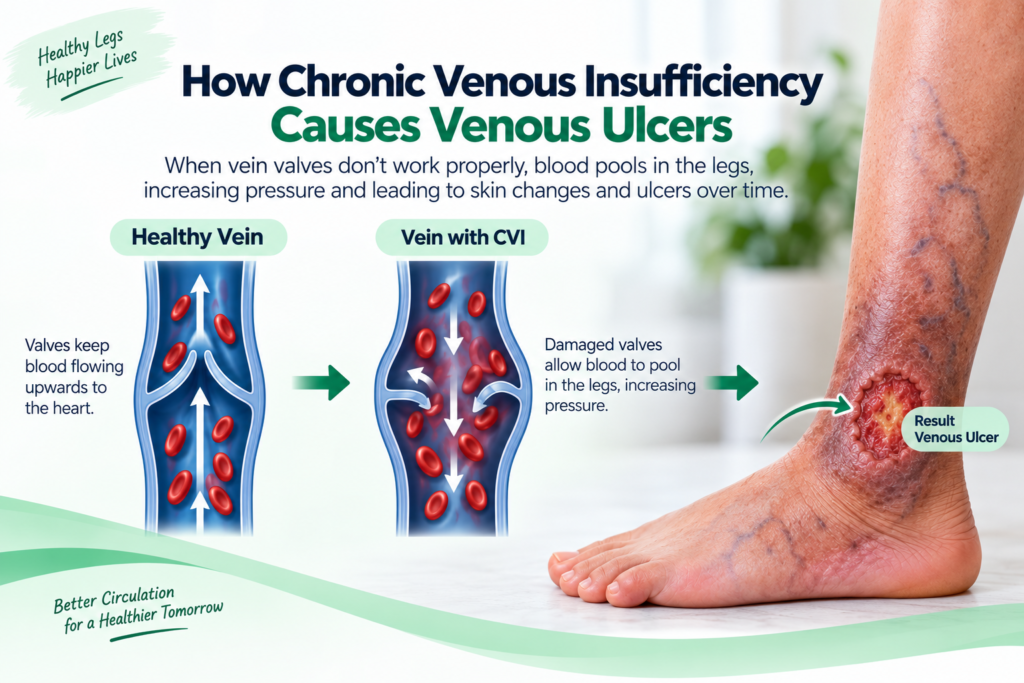
Chronic venous insufficiency can cause blood to pool in the legs, increasing pressure and contributing to venous ulcer formationChronic venous insufficiency, or CVI, affects the ability of blood to travel from the legs back toward the heart.
Normally, vein valves help prevent blood from flowing backward. When these valves become damaged or weakened, blood can pool in the lower legs. Over time, this increased pressure can contribute to swelling, skin changes and tissue damage.
Eventually, even a minor scratch or injury may develop into an ulcer that is slow to heal.
7 Essential Facts About Venous Ulcers
1. Venous Ulcers Usually Develop on the Lower Leg
These ulcers commonly occur between the knee and ankle and are frequently found around the inner ankle area.
The wound may have an irregular shape and can be accompanied by swelling, skin discoloration or hardened skin.
If a wound on your lower leg does not begin improving, professional assessment is important.
2. CVI Is a Major Underlying Cause
One of the most important factors behind Venous Ulcers is chronic venous insufficiency.
CVI causes blood to pool in the legs and increases pressure inside the veins. Over time, this can affect the skin and underlying tissues.
This is why simply covering the wound may not be enough. Treatment often needs to address both the ulcer and the underlying venous problem.
3. Swelling and Skin Changes Can Be Warning Signs
Before or alongside an ulcer, you may notice:
- Swollen ankles or lower legs
- Aching or heavy legs
- Itchy or flaky skin
- Reddish-brown skin discoloration
- Hardened skin
- Varicose veins
These symptoms can occur with chronic venous disease and may accompany a venous ulcer.
4. Venous Ulcers Can Become Infected
An ulcer can become infected, particularly when it remains open for a prolonged period.
Warning signs may include increasing pain, unpleasant or green discharge, worsening redness or swelling, fever and an unpleasant smell.
If these symptoms appear, seek medical attention promptly.
Read about non-healing wounds
5. Compression Is an Important Part of Treatment
Compression therapy is commonly used for venous leg ulcers when adequate arterial blood supply has been confirmed.
Compression helps reduce venous pressure and swelling and supports blood returning upward through the leg veins. Current clinical recommendations include compression as an important treatment approach for venous ulcers with suitable arterial circulation.
However, compression should not be started without appropriate medical assessment, because significant arterial disease can make compression unsafe. Assessment may include checking arterial circulation, such as with a Doppler test.
6. Lifestyle Habits Can Support Healing
Daily habits can complement professional treatment.
Depending on your individual health condition, your healthcare professional may recommend:
- Regular walking or suitable exercise
- Elevating the legs when resting
- Avoiding prolonged sitting or standing
- Maintaining a healthy weight
- Taking care of the skin
- Avoiding smoking
- Following your prescribed compression plan
Regular movement can help support venous circulation, while leg elevation can help reduce swelling.
7. Recurrence Is Possible
Even after an ulcer heals, the underlying venous problem may remain.
This means the wound can return, particularly if chronic venous insufficiency, swelling or other contributing factors are not managed.
Compression stockings may be recommended after healing for people at risk of recurrence, but the appropriate type and pressure should be determined by a healthcare professional.
Common Symptoms of Venous Ulcers
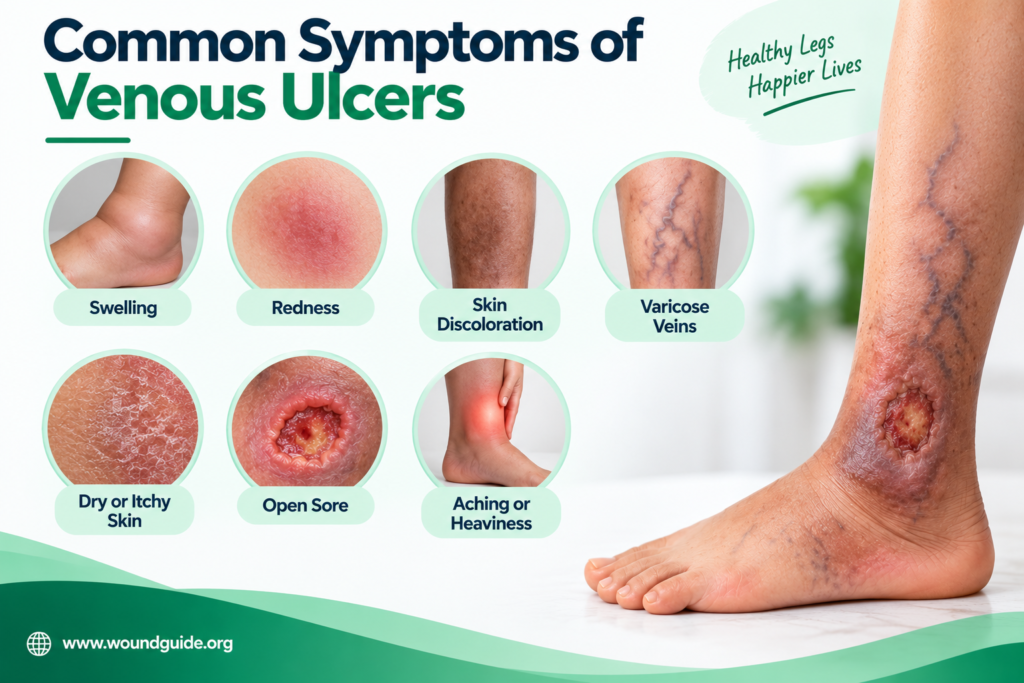
The appearance and symptoms can vary, but common features include:
- An open sore on the lower leg
- Swelling around the ankle
- Aching or heaviness in the leg
- Skin discoloration
- Hardened or thickened skin
- Itching or flaky skin
- Varicose veins
- Wound discharge
- Pain, particularly if infection develops
Not every leg ulcer is caused by venous disease. Arterial ulcers, diabetic ulcers and other conditions can look different and require different treatment.
Who Is at Higher Risk?
The risk of developing a venous ulcer can increase with factors such as:
- Chronic venous insufficiency
- Varicose veins
- Previous deep vein thrombosis (DVT)
- Reduced mobility
- Previous leg injury
- Previous leg surgery
- Obesity or overweight
- Increasing age
- Previous leg ulcers
These factors can affect venous circulation or make it harder for the calf muscles to help return blood toward the heart.
How Are Venous Ulcers Diagnosed?
A healthcare professional will usually examine the wound and the surrounding skin and ask about your medical history.
They may check for:
- Swelling
- Skin discoloration
- Varicose veins
- Previous DVT
- Diabetes
- Previous ulcers
- Leg injuries or surgery
A Doppler assessment may be used to evaluate arterial circulation before compression therapy is recommended.
In some cases, additional vascular testing or referral to a specialist may be required.
Venous Ulcer Treatment Options
Treatment depends on the cause, wound condition and the person’s overall health.
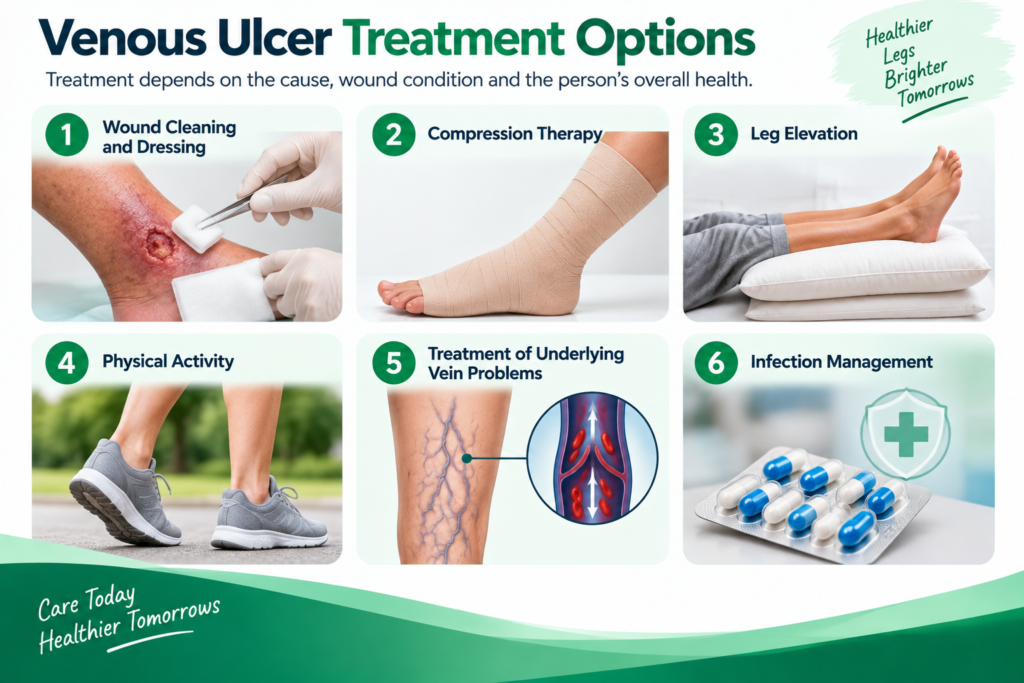
1. Wound Cleaning and Dressing
The wound may need regular cleaning and appropriate dressings. Dead or damaged tissue may also need professional removal when appropriate.
2. Compression Therapy
Compression bandages, stockings or other compression systems may be used to manage swelling and improve venous circulation.
The type and level of compression should be professionally assessed.
3. Leg Elevation
Elevating the affected leg while resting can help reduce swelling.
4. Physical Activity
Appropriate walking and leg exercises can support circulation and reduce prolonged periods of inactivity.
5. Treatment of Underlying Vein Problems
Some people may require treatment for varicose veins or other venous problems. Depending on the condition, specialists may consider procedures such as endovenous treatments or other interventions.
6. Infection Management
Antibiotics may be prescribed when an ulcer is clinically infected. Antibiotics do not themselves heal an uninfected ulcer.
How Can You Help Prevent Venous Ulcers?
If you are at increased risk, prevention should focus on supporting circulation and protecting the skin.
Keep Moving
Avoid sitting or standing still for long periods. Regular movement can help the calf muscles support venous blood flow.
Elevate Your Legs
When resting, elevating your legs can help reduce swelling.
Protect Your Skin
Check your legs regularly for cuts, blisters, irritation or changes in skin color.
Follow Compression Advice
If compression stockings have been recommended by your healthcare professional, use them as directed and ensure they fit correctly.
Manage Your Weight
If you are overweight, working toward a healthy weight may help reduce pressure on the veins.
When Should You See a Doctor?
You should seek medical assessment if you have an open wound on your leg that is not healing normally.
Seek prompt medical attention if you notice:
- Increasing wound pain
- Increasing redness or swelling
- Pus or unusual discharge
- Bad smell
- Fever
- Feeling generally unwell
- Rapid worsening of the wound
Venous leg ulcers usually require specialist assessment and treatment rather than simply waiting for them to heal on their own.
Frequently Asked Questions (FAQs)
Early signs of chronic venous insufficiency (CVI) may include swollen ankles or legs, aching or heavy legs, tiredness after standing, varicose veins, itching or flaky skin, and gradual skin discoloration. Symptoms can become more noticeable after prolonged standing or toward the end of the day
CVI can cause venous ulcers when damaged or weak vein valves allow blood to flow backward and pool in the legs. This increases pressure inside the veins, which can damage surrounding tissues and skin. Over time, the affected skin may break down and develop an ulcer, commonly around the ankle or lower leg
Treatment depends on the cause, ulcer condition, circulation, and overall health. Common approaches include professional wound cleaning and dressing, compression therapy when appropriate, leg elevation, physical activity, and treatment of underlying vein problems. Antibiotics may be prescribed when an ulcer is clinically infected, but they do not help an uninfected ulcer heal. Compression should be professionally assessed because adequate arterial circulation needs to be considered.
CVI and DVT are different conditions. CVI is a chronic problem in which leg veins or their valves do not return blood effectively to the heart, causing blood pooling, swelling, skin changes, and sometimes venous ulcers. DVT (deep vein thrombosis) is a blood clot in a deep vein, usually in the leg. A DVT can damage the veins and later contribute to chronic venous insufficiency, known as post-thrombotic syndrome.
Final Thoughts
Venous Ulcers are often linked to chronic venous insufficiency, where impaired venous blood flow increases pressure in the lower legs. Recognizing symptoms such as persistent wounds, swelling, skin discoloration and leg heaviness can help you seek appropriate care.
Treatment may involve wound care, compression therapy, movement, leg elevation and management of the underlying venous condition. Because compression is not suitable for everyone, professional assessment of circulation is important before starting compression treatment.
If you have a wound that is not healing, don’t ignore it. Early professional assessment can help identify the cause and guide appropriate care.
🩹 Need Help With a Chronic Wound?
Don’t wait for a leg wound to get worse. Get professional wound-care guidance and learn more about your treatment options.
👉 Contact WoundGuide for wound-care guidance.
Leave a Reply