
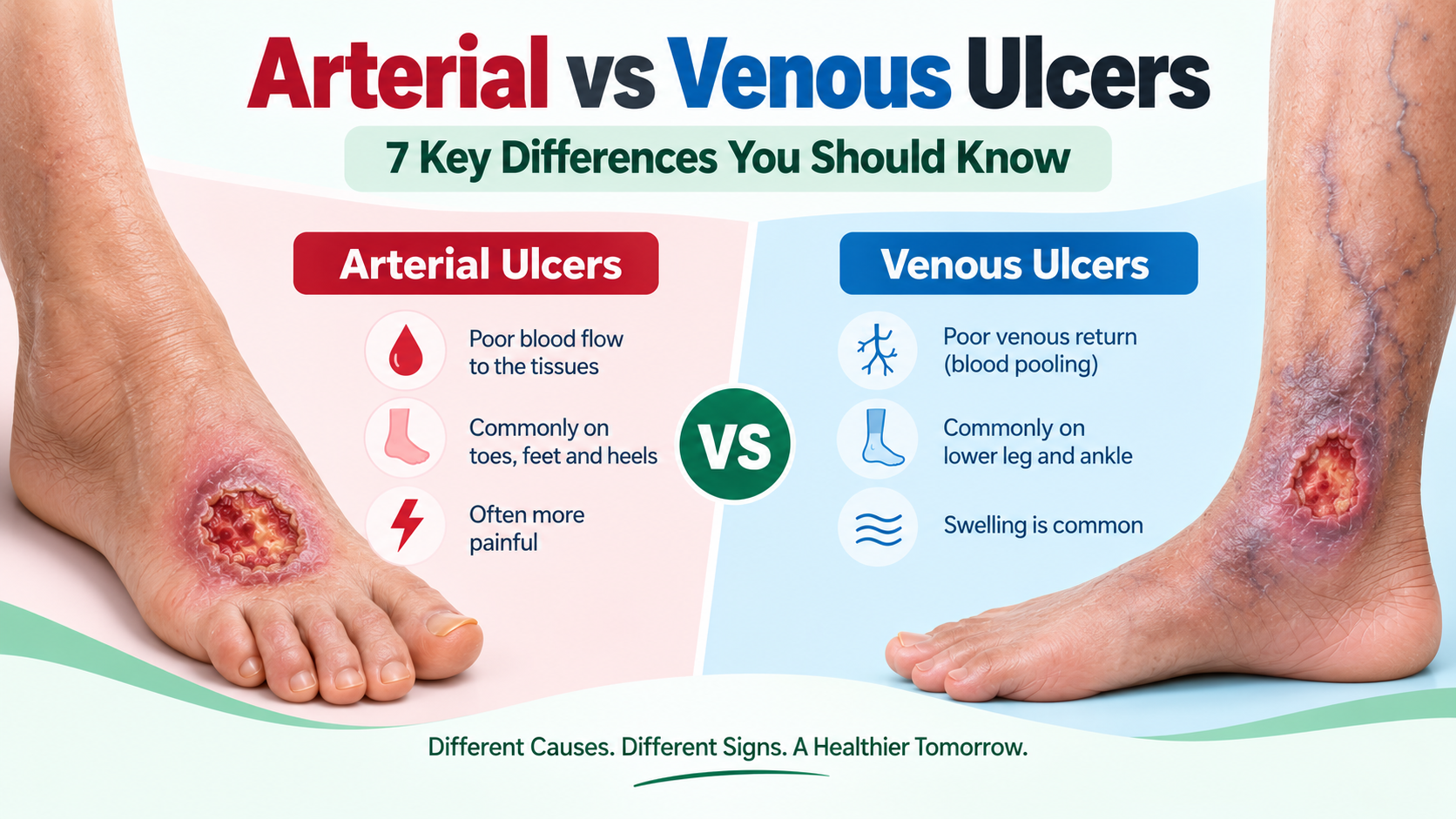
Arterial vs Venous Ulcers can look similar at first, but they develop because of very different circulation problems. Arterial ulcers are usually linked to inadequate blood flow through the arteries, while venous ulcers develop when blood does not return properly through the veins. Understanding these differences can help identify the type of wound and why proper medical assessment is important.
What Are Arterial Ulcers?
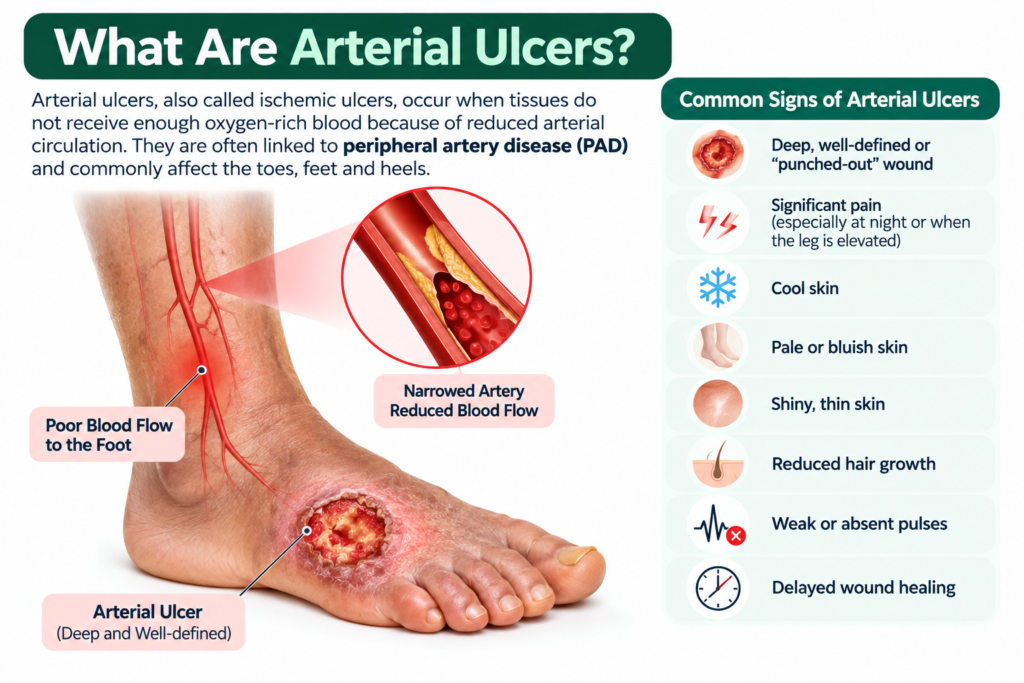
Arterial ulcers, also called ischemic ulcers, occur when tissues do not receive enough oxygen-rich blood because of reduced arterial circulation.
A common underlying cause is peripheral artery disease (PAD), in which arteries become narrowed and blood flow to the legs or feet is reduced. Arterial ulcers commonly occur on the toes, feet and heels and may be particularly painful, especially when the leg is elevated or at night.
Typical signs may include:
- Deep, well-defined or “punched-out” wound
- Significant pain
- Cool skin
- Pale or bluish skin
- Shiny, thin skin
- Reduced hair growth
- Weak or absent pulses
- Delayed wound healing
What Are Venous Ulcers?
Venous ulcers develop because blood has difficulty returning from the legs to the heart. Chronic venous insufficiency (CVI) is a common cause.
When blood pools in the lower legs, pressure inside the veins can increase and contribute to skin and tissue damage. Venous ulcers most commonly occur around the lower leg and ankle, particularly near the inner ankle.
Common features include:
- Shallow, irregular wound
- Leg swelling
- Aching or heaviness
- Brown or reddish skin discoloration
- Itching or irritated skin
- Varicose veins
- Fluid or wound drainage
- Skin thickening around the affected area
Arterial vs Venous Ulcers: 7 Key Differences
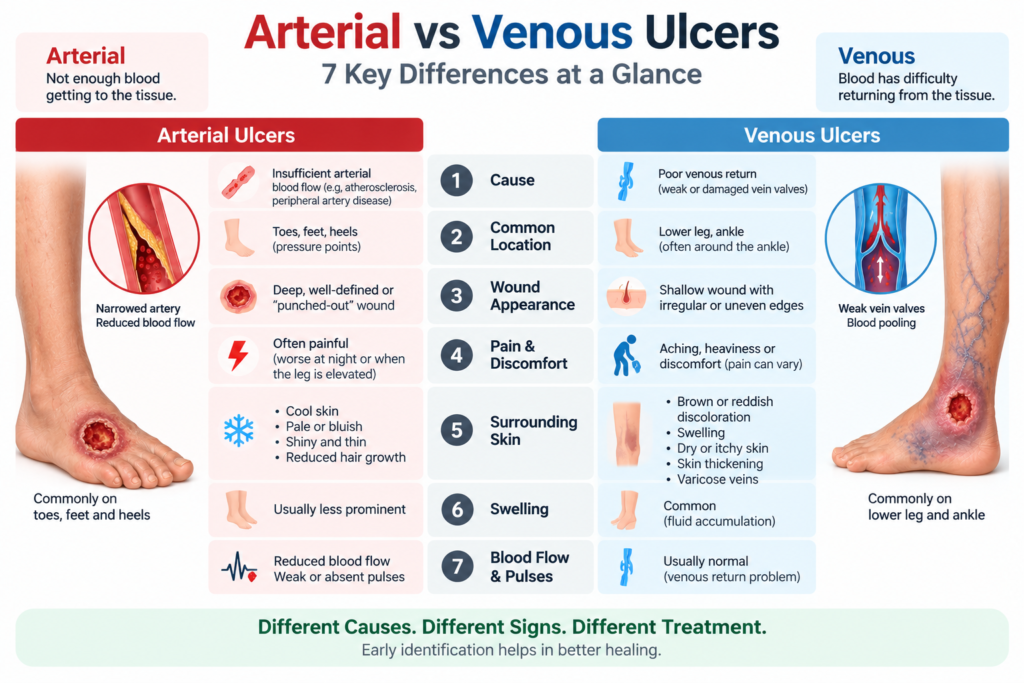
The most important differences are related to cause, location, wound appearance, pain, surrounding skin, swelling and blood flow.
1. Cause
Arterial Ulcers
Arterial ulcers are caused by insufficient arterial blood flow. Conditions such as atherosclerosis and peripheral artery disease can reduce oxygen and nutrient delivery to the tissues.
Venous Ulcers
Venous ulcers are associated with poor venous return. Damaged or weak vein valves can allow blood to pool in the legs, increasing venous pressure and contributing to ulcer formation.
Simple difference:
Arterial = not enough blood getting to the tissue.
Venous = blood has difficulty returning from the tissue.
2. Common Location
Location is another useful clue when comparing Arterial vs Venous Ulcers.
| Feature | Arterial Ulcers | Venous Ulcers |
| Common location | Toes, feet, heels | Lower leg, ankle |
| Typical area | Pressure points and areas farther from the heart | Often around the ankle |
| Circulation problem | Reduced arterial blood flow | Impaired venous return |
Arterial ulcers commonly affect the feet, heels or toes, while venous ulcers are frequently found around the ankle and lower leg. DermNet®
3. Wound Appearance
Arterial ulcers often have a well-defined or “punched-out” appearance and may be deeper.
Venous ulcers are commonly more shallow and have irregular or uneven edges.
Quick comparison:
Arterial ulcer:
Deep + defined edges + punched-out appearance
Venous ulcer:
Shallow + irregular shape + uneven edges
4. Pain and Discomfort
Pain can also help distinguish the two types.
Arterial ulcers are often painful, with pain potentially becoming worse at night or when the leg is elevated. Some people may experience relief when the foot is lowered.
Venous ulcers may cause aching, heaviness or discomfort, although pain can vary and may become worse if the ulcer becomes infected.
5. Surrounding Skin
The skin around an arterial ulcer may appear:
- Cool
- Pale or bluish
- Shiny
- Thin
- Hairless
These changes can occur because of reduced arterial blood supply.
With venous ulcers, surrounding skin may show:
- Brown or reddish discoloration
- Swelling
- Dry or itchy skin
- Venous eczema
- Skin thickening
- Varicose veins
These findings are associated with chronic venous disease and increased venous pressure.
6. Swelling and Leg Changes
Swelling is much more commonly associated with venous ulcers.
Venous problems can cause fluid accumulation and swelling in the lower legs. The legs may also feel heavy or achy.
With arterial ulcers, swelling is generally less characteristic. Instead, clinicians may look for signs such as cool skin, color changes and reduced pulses.
7. Blood Flow and Pulses
One of the most important differences between Arterial vs Venous Ulcers is the type of circulation problem.
With arterial disease, blood flow to the affected limb can be reduced, and ankle or foot pulses may be weak or absent. An ankle-brachial index (ABI/ABPI) is commonly used as part of arterial assessment.
Venous ulcers are related to problems with blood returning toward the heart. Assessment may include physical examination and vascular testing when needed.
Arterial vs Venous Ulcers: Quick Comparison
| Feature | Arterial Ulcers | Venous Ulcers |
| Main problem | Reduced arterial blood flow | Poor venous return |
| Common cause | PAD/atherosclerosis | Chronic venous insufficiency |
| Common location | Toes, feet, heels | Lower leg/ankle |
| Appearance | Deep, punched-out | Shallow, irregular |
| Pain | Often significant | Variable; aching/heaviness common |
| Skin | Cool, pale/bluish, shiny | Discolored, swollen, itchy |
| Swelling | Less typical | Common |
| Pulses | May be weak/absent | Usually less affected by the venous problem |
| Main circulation issue | Blood going to the tissue | Blood returning from the tissue |
These features can help clinicians distinguish the two types, but appearance alone is not enough to diagnose an ulcer.
How Are Arterial and Venous Ulcers Diagnosed?
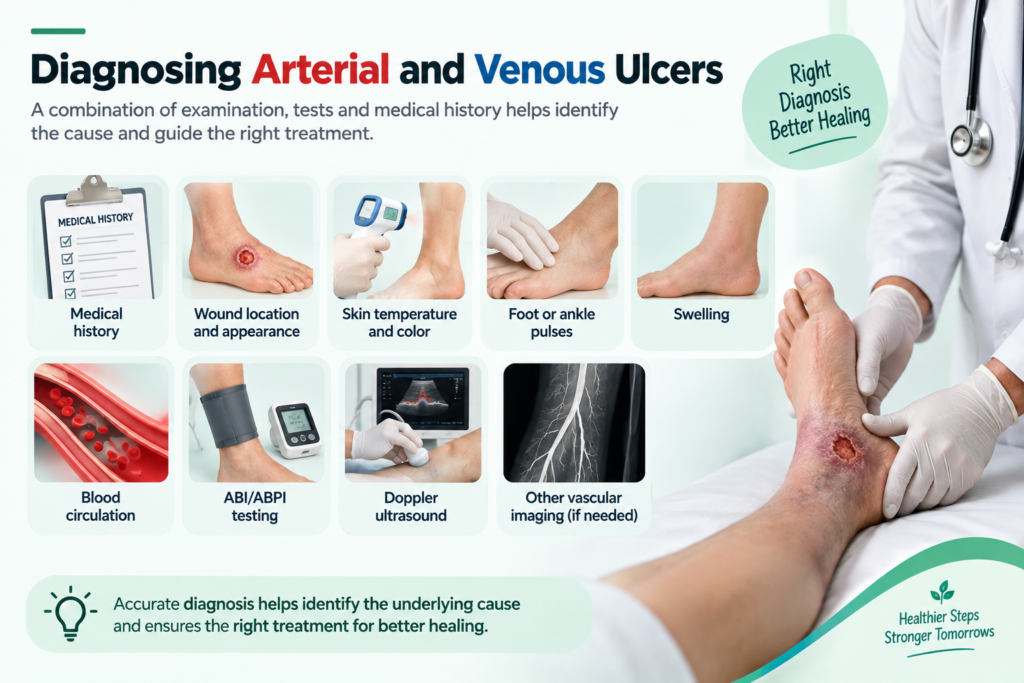
Healthcare professionals may evaluate:
- Medical history
- Wound location and appearance
- Skin temperature and color
- Foot or ankle pulses
- Swelling
- Blood circulation
- ABI/ABPI testing
- Doppler ultrasound
- Other vascular imaging when required
For arterial ulcers, ABI/ABPI and vascular assessment can help determine whether inadequate arterial circulation is contributing to the wound.
How Are Arterial Ulcers Treated?
Treatment depends on the underlying circulation problem and severity of the wound.
Possible approaches include:
- Improving blood flow through vascular treatment
- Appropriate wound dressings
- Protecting the wound from further trauma
- Managing infection when clinically present
- Managing diabetes, blood pressure and cholesterol
- Smoking cessation
- Vascular specialist assessment
In significant arterial disease, restoring blood flow may be an important part of treatment.
How Are Venous Ulcers Treated?
Treatment of venous ulcers focuses on wound care and improving venous circulation.
Depending on the person’s condition, treatment may include:
- Appropriate wound dressings
- Compression therapy when clinically appropriate
- Managing leg swelling
- Leg elevation
- Physical activity as advised
- Treatment of underlying venous disease
- Infection management when necessary
Compression should not be started without appropriate assessment when arterial disease is possible, because significant arterial insufficiency can change whether compression is suitable.
When Should You See a Doctor?
Seek medical assessment for a wound that:
- Does not heal as expected
- Becomes deeper or larger
- Causes significant or increasing pain
- Develops redness, warmth or swelling
- Produces pus or has a bad smell
- Develops dark or dead-looking tissue
- Occurs in someone with diabetes or known circulation problems
A suddenly cold, pale/blue, severely painful or numb foot can indicate a serious circulation problem and requires urgent medical attention.
Frequently Asked Question
Arterial ulcers are associated with inadequate blood flow through the arteries, while venous ulcers are associated with poor blood return through the veins.
Arterial ulcers are often significantly painful, particularly at night or when the leg is elevated. Venous ulcers can also hurt, but symptoms often include aching, heaviness, and swelling
They commonly occur on the toes, feet and heels
They commonly develop around the lower leg and ankle, particularly near the inner ankle.
Yes. Some leg ulcers can have more than one contributing cause, so professional assessment is important when the cause is unclear
Final Thoughts
Understanding Arterial vs. venous ulcers is important because the underlying circulation problem is different.
Arterial ulcers are associated with reduced blood flow to the tissues, while venous ulcers are associated with difficulty returning blood from the legs to the heart. Location, wound appearance, pain, skin changes, swelling and circulation findings can provide important clues, but proper diagnosis requires medical assessment.
If you have a persistent foot or leg ulcer, particularly with diabetes or known circulation problems, don’t ignore it.
Not sure whether a wound is an arterial ulcer or venous ulcer? The right diagnosis can make a major difference in wound care and healing.
If you have a non-healing wound, increasing pain, swelling, skin color changes, or signs of poor circulation, seek professional wound care guidance.
👉 Get Expert Wound Care Guidance with WoundGuide
Learn more about wound conditions, treatment options, and professional wound care support.
Visit WoundGuide today and take the right step toward better wound care.
🌐 woundguide.org
Leave a Reply