
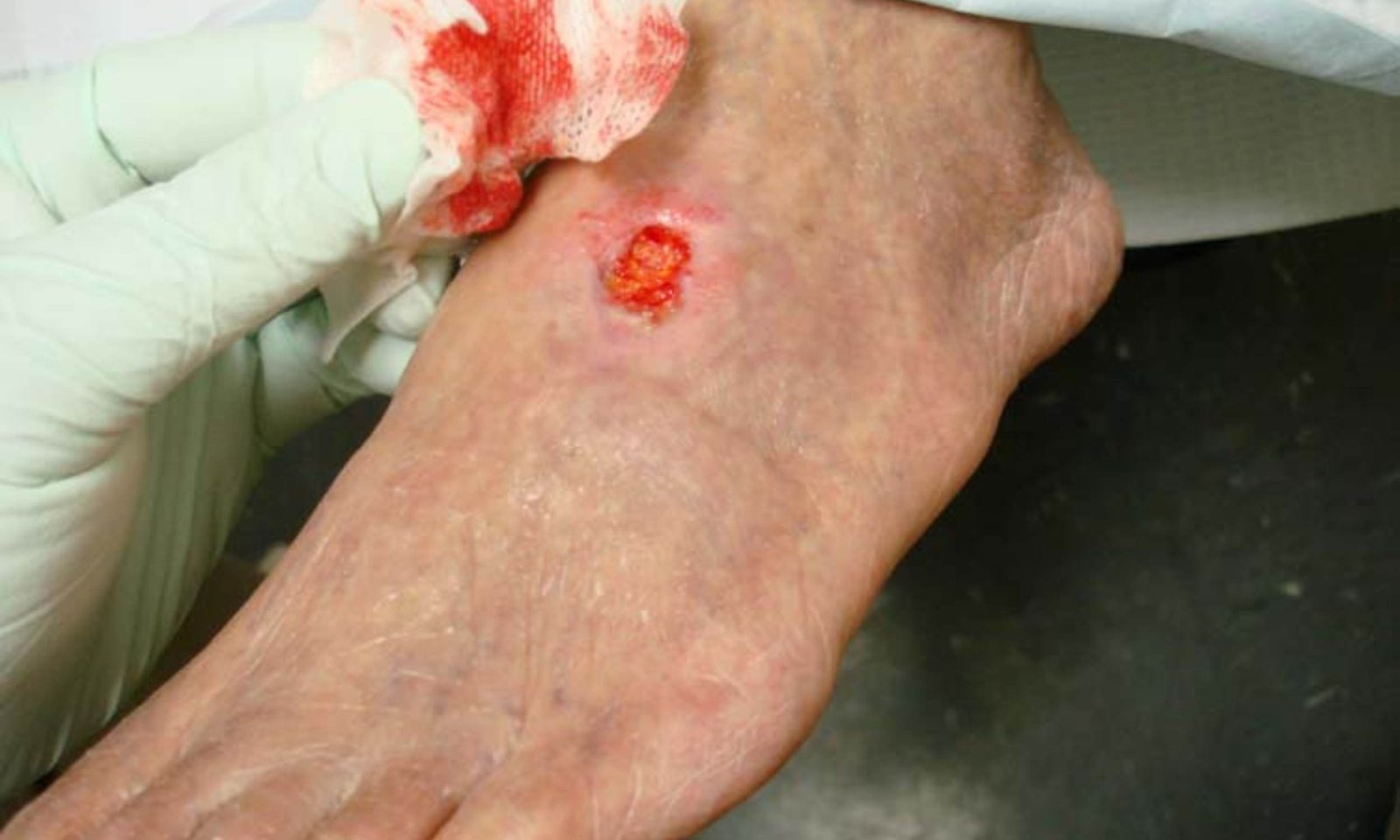
Arterial ulcers are painful wounds that develop when blood flow to the tissues is significantly reduced. They most commonly affect the feet, toes, heels, and lower legs and are often associated with peripheral artery disease (PAD).
Because healthy blood circulation delivers oxygen and nutrients needed for tissue repair, poor circulation can make these ulcers difficult to heal. Without timely treatment, an arterial ulcer may become infected and, in severe cases, lead to tissue death or gangrene.
In this guide, we’ll cover the causes, symptoms, treatment options, and prevention of arterial ulcers plus how they differ from other types of chronic wounds.
What Are Arterial Ulcers?
Arterial ulcers, also called ischemic ulcers, occur when arteries cannot deliver enough oxygen-rich blood to the skin and underlying tissues.
The most common underlying condition is peripheral artery disease (PAD), which causes arteries to become narrowed or blocked. Arterial ulcers typically have a well-defined, “punched-out” appearance and may occur on areas exposed to pressure or trauma, such as the toes or heels.
Important: An arterial ulcer is not simply a wound that heals slowly. Reduced blood flow can prevent normal healing, so identifying and treating the circulation problem is essential.
What Causes Arterial Ulcers?
The main cause is insufficient blood flow to the affected limb. Several conditions and lifestyle factors can increase the risk.
Common Causes and Risk Factors
- Peripheral Artery Disease (PAD): Narrowed or blocked arteries reduce blood supply to the legs and feet.
- Atherosclerosis: Plaque buildup inside arteries can restrict circulation.
- Diabetes: Long-term high blood sugar can damage blood vessels and increase the risk of foot problems.
- Smoking: Tobacco use damages blood vessels and significantly increases vascular disease risk.
- High blood pressure: Chronic hypertension can contribute to artery damage and cardiovascular disease.
- High cholesterol: Excess cholesterol can contribute to plaque formation in the arteries.
- Age: The risk of peripheral artery disease generally increases with age.
- History of cardiovascular disease: Conditions affecting the heart and blood vessels can increase the likelihood of poor circulation.
Understanding these risk factors can help with earlier detection and prevention. For more information, see our guide to risk factors for arterial ulcers and how to reduce them.
What Do Arterial Ulcers Look and Feel Like?
Recognizing the warning signs can help you seek medical attention sooner.
Common Symptoms
- Deep, sharply defined wound
The ulcer may look like a small, deep crater with clearly defined edges. - Severe or persistent pain
Pain may become worse at night or when the leg is elevated. Some people experience relief when the leg is placed in a dependent position. - Pale, gray, or dark wound tissue
The wound bed may appear pale or contain dead tissue (necrosis). - Cold skin
The affected foot or leg may feel noticeably cooler than the other side. - Shiny or thin skin
Poor circulation can cause changes in the skin, including a smooth, shiny appearance and reduced hair growth. - Weak or absent pulses
Blood flow to the foot may be reduced, resulting in weak or difficult-to-detect pulses. - Slow healing
Even a small cut or wound may take much longer than expected to heal.
Arterial vs. Venous Ulcers: What’s the Difference?
Not all leg ulcers have the same cause, and treatment depends heavily on the underlying problem.
| Feature | Arterial Ulcers | Venous Ulcers |
| Main cause | Reduced arterial blood flow | Poor venous return |
| Common location | Toes, feet, heels, pressure areas | Lower leg, often around the ankle |
| Appearance | Deep, punched-out edges | Irregular, shallow edges |
| Pain | Often significant | Can vary |
| Skin temperature | Often cool | Often warm |
| Leg swelling | Usually less prominent | Common |
| Pulses | May be reduced | Usually present |
If you’re unsure what type of wound you have, learn more about the difference between arterial and venous ulcers.
How Are Arterial Ulcers Diagnosed?
A healthcare professional will usually examine the wound and assess circulation in the affected limb.
Depending on the situation, evaluation may include:
- Ankle-Brachial Index (ABI) to assess blood flow to the legs
- Doppler ultrasound to evaluate blood movement through the arteries
- Vascular imaging when a blockage needs further investigation
- Assessment of the wound, skin, pulses, temperature, and other circulation-related signs
Accurate diagnosis is important because treatments suitable for one type of ulcer may not be appropriate for another.
Treatment Options for Arterial Ulcers
The primary goal is to restore or improve blood flow while protecting the wound and preventing complications.
1. Restore Blood Flow
If significant arterial blockage is present, a vascular specialist may consider procedures such as:
- Angioplasty, sometimes with stent placement
- Bypass surgery
- Other vascular procedures based on the location and severity of the blockage
Improving circulation can provide the oxygen and nutrients needed for wound healing.
2. Wound Care
Wound care should be individualized according to the wound’s condition and the patient’s blood supply. It may include:
- Appropriate wound dressings
- Protection from further trauma or pressure
- Careful removal of dead tissue when appropriate
- Monitoring for signs of infection
- Pain management
Debridement should be performed only when clinically appropriate, particularly when blood flow to the wound is severely compromised.
3. Treat Infection When Present
Arterial ulcers can become infected. Signs may include increasing redness, warmth, swelling, drainage, foul odor, worsening pain, or fever.
Antibiotics are generally used when there is a diagnosed or strongly suspected infection, rather than simply because an ulcer is present.
4. Manage Underlying Health Conditions
Long-term management may include controlling:
- Blood pressure
- Cholesterol
- Blood glucose
- Body weight
- Cardiovascular risk factors
Medications such as antiplatelet or cholesterol-lowering therapy may be prescribed by a healthcare professional based on the individual’s condition.
5. Lifestyle Changes
Small but consistent changes can support vascular health:
- Stop smoking
- Follow a heart-healthy, balanced diet
- Stay physically active as recommended by your healthcare provider
- Manage diabetes and blood sugar levels
- Follow prescribed medications
- Attend regular vascular and wound-care appointments
Can Arterial Ulcers Be Prevented?
Not every arterial ulcer can be prevented, but reducing vascular risk can lower the likelihood of developing one.
Simple Prevention Tips
Check your feet regularly. Look for cuts, blisters, discoloration, or changes in temperature.
Protect your feet. Wear properly fitting footwear and avoid walking barefoot if you have circulation problems.
Avoid smoking. Smoking is one of the most important modifiable risk factors for peripheral artery disease.
Control cardiovascular risk factors. Work with your healthcare professional to manage blood pressure, cholesterol, blood sugar, and other conditions.
Don’t ignore persistent foot pain. Pain that repeatedly occurs while walking or becomes worse at rest can be a warning sign of reduced circulation.
When Should You Seek Medical Help?
Seek prompt medical evaluation if you notice a wound on your foot or leg that is not healing, particularly if you also have poor circulation, diabetes, or known PAD.
Seek urgent medical attention if the affected limb suddenly becomes very cold, pale or blue, severely painful, numb, or weak, as these can indicate a serious reduction in blood flow.
Conclusion
Arterial ulcers are serious wounds caused by inadequate blood supply, most commonly related to peripheral artery disease and other vascular problems. Typical warning signs include severe pain, a punched-out wound, cool or shiny skin, weak pulses, and delayed healing.
The most important step in treatment is addressing the underlying circulation problem. Wound care, infection management, risk-factor control, and vascular treatment may all play a role depending on the individual case.
If you notice a persistent or painful wound on your foot or leg, don’t wait for it to heal on its own. Early assessment can help identify poor circulation and reduce the risk of serious complications.
Need Help With a Difficult Wound?
A wound that isn’t healing may be a sign of an underlying circulation problem. Don’t ignore persistent foot or leg ulcers.
👉 Get professional wound-care guidance and learn the right next steps with WoundGuide.
Early assessment can help identify potential complications and support timely wound care.
Leave a Reply