
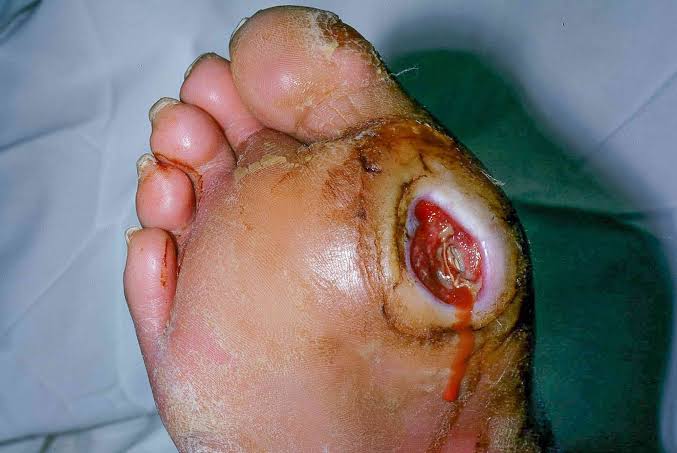
Diabetic foot ulcer is an open sore or wound that develops on the foot of a person with diabetes. It can begin with something as minor as a blister, cut, pressure spot, or small injury. However, diabetes can affect nerve sensation and blood circulation, making these wounds harder to notice and slower to heal. Without appropriate treatment, a diabetic foot ulcer can become infected and may eventually damage deeper tissues, including bone.
Effective diabetic foot ulcer treatment is not simply about covering the wound with a dressing. Treatment usually requires assessment of the ulcer, control of infection when present, pressure relief, appropriate wound care, management of circulation problems, and good diabetes management. The International Working Group on the Diabetic Foot (IWGDF) emphasizes that several components may be required together to promote healing.
If you or someone you care for has an open wound on the foot and diabetes, professional assessment should not be delayed.
What Is a Diabetic Foot Ulcer?
A diabetic foot ulcer is a break in the skin of the foot that may extend into deeper tissue. It commonly develops in areas exposed to repeated pressure or friction, although ulcers can occur in different locations on the foot.
People with diabetes are particularly vulnerable because long-term diabetes can contribute to:
- Peripheral neuropathy or reduced sensation
- Poor circulation
- Changes in foot structure
- Dry or cracked skin
- Calluses
- Increased risk of infection
- Slower wound healing
Peripheral neuropathy can make it difficult for a person to feel pain from a blister, cut, burn, or pressure injury. As a result, a small wound may continue to experience pressure and become larger before it is noticed. Reduced blood flow can also make it more difficult for the body to deliver oxygen and other resources needed for healing.
Why Is Diabetic Foot Ulcer Treatment Important?
A diabetic foot ulcer should never be considered an ordinary skin wound.
An untreated or poorly managed ulcer can become infected and may extend into deeper tissues. Severe infections and circulation problems can increase the risk of hospitalization and amputation. Prompt assessment and appropriate treatment are therefore important.
The goal of diabetic foot ulcer treatment is to:
1. Protect the wound from further trauma
2. Control or prevent infection
3. Remove unhealthy or dead tissue when clinically appropriate
4. Reduce pressure on the ulcer
5. Support a suitable wound-healing environment
6. Address poor circulation when present
7. Manage blood glucose and other health factors
8. Monitor the wound regularly until it heals
Main Diabetic Foot Ulcer Treatment Options
Treatment depends on the ulcer’s size, depth, location, infection status, circulation, sensation, and the person’s overall health. A healthcare professional should determine the appropriate treatment plan.
1. Professional Wound Assessment
The first step in diabetic foot ulcer treatment is a proper assessment.
A healthcare professional may evaluate:
- Location and size of the ulcer
- Depth of the wound
- Presence of dead tissue
- Signs of infection
- Blood circulation
- Nerve sensation
- Pressure and friction around the wound
- Foot deformities
- Blood glucose control
- History of previous ulcers
Some ulcers may appear small on the surface while extending deeper into the tissue. This is one reason professional assessment is important.
2. Wound Cleaning and Local Wound Care
Appropriate local wound care helps protect the ulcer and create conditions that support healing.
Depending on the wound, a healthcare professional may clean the ulcer and select an appropriate dressing to manage wound fluid and protect the wound.
The IWGDF recommends dressings that help control excess exudate and maintain a moist wound-healing environment as part of standard wound care.
The dressing should be selected according to the condition of the wound rather than simply choosing a product because it is marketed as a “best” diabetic dressing.
Patients should also avoid changing or manipulating a professional dressing unless they have been properly instructed to do so.
3. Debridement
Debridement involves removing dead or unhealthy tissue and, when appropriate, surrounding callus that may interfere with healing.
For some diabetic foot ulcers, regular sharp debridement by a trained healthcare professional is an important component of standard care. The frequency depends on the clinical condition of the wound.
Do not attempt to cut away dead tissue, calluses, or parts of the ulcer yourself. People with diabetes may have reduced sensation and impaired healing, making self-treatment potentially dangerous.
Professional wound assessment can determine whether debridement is appropriate and how it should be performed.
4. Offloading: Reducing Pressure on the Ulcer
One of the most important aspects of diabetic foot ulcer treatment is reducing mechanical pressure on the wound.
Repeated walking or standing can place pressure and shear forces on an ulcer, particularly when the ulcer is located on the sole of the foot. If this pressure continues, the wound may struggle to heal.
IWGDF guidance identifies offloading as a key component of treatment for diabetic foot ulcers, particularly neuropathic ulcers. For appropriate plantar forefoot ulcers, specific non-removable offloading devices are recommended as an important treatment approach.
Depending on the ulcer’s location and severity, a healthcare professional may recommend:
- Offloading devices
- Specialized footwear
- Insoles
- Padding
- Casts
- Other pressure-relieving approaches
Simply reducing walking may not be enough for every ulcer. The appropriate offloading method should be selected by a qualified professional.
5. Treating Infection
Not every diabetic foot ulcer is infected, but infection can become a serious complication.
Possible warning signs include:
- Increasing redness
- Warmth around the wound
- Swelling
- Pus or unusual discharge
- Increasing pain
- Bad smell
- Worsening wound appearance
- Fever or feeling generally unwell
Antibiotics are generally used when a diabetic foot ulcer has a clinical infection; they are not automatically required for every ulcer. NHS guidance similarly notes that antibiotics may be prescribed when there are signs of infection.
If infection is spreading or severe, hospital treatment may be required. In some cases, surgical treatment may be necessary to remove infected tissue or control the infection.
6. Managing Poor Circulation
Blood circulation is an important factor in diabetic foot ulcer healing.
Diabetes can contribute to blood-vessel disease, reducing blood supply to the feet. When circulation is significantly impaired, an ulcer may not heal normally even when wound care is appropriate.
Healthcare professionals may therefore assess circulation when evaluating a diabetic foot ulcer. If significant ischemia or peripheral artery disease is identified, vascular assessment and treatment may be required.
The IWGDF emphasizes that local wound care alone cannot compensate for inadequately treated ischemia or infection.
7. Managing Blood Sugar and Other Health Factors
Good diabetes management is an important part of protecting the feet and reducing complications.
High blood glucose can contribute to nerve and blood-vessel damage, both of which can increase the risk of foot problems and impaired healing. Managing blood glucose according to the treatment plan provided by a healthcare professional is therefore important.
Other factors that may influence foot health include:
- Blood pressure
- Cholesterol
- Smoking
- Body weight
- Physical activity
- Kidney health
- Previous foot ulcers
A comprehensive treatment approach considers these factors rather than treating the wound in isolation.
8. Advanced Treatments for Difficult-to-Heal Ulcers
Some diabetic foot ulcers do not heal despite appropriate standard care.
In selected cases, healthcare professionals may consider additional treatments after evaluating the wound and underlying causes. Examples discussed in IWGDF guidance include certain specialized dressings, topical oxygen, hyperbaric oxygen in selected ischemic ulcers, and other adjunctive approaches.
These treatments are not suitable for every diabetic foot ulcer. They should only be considered after appropriate assessment and alongside appropriate standard wound care.
Can a Diabetic Foot Ulcer Be Treated at Home?
Some aspects of wound care can be performed at home when a healthcare professional has provided clear instructions. However, a diabetic foot ulcer should not be treated as a routine wound that can simply be managed without professional evaluation.
At home, a person may be instructed to:
- Keep the wound protected
- Follow the prescribed dressing schedule
- Keep the dressing appropriately dry
- Avoid unnecessary pressure on the affected foot
- Use recommended offloading equipment
- Monitor the wound for changes
- Check the other foot every day
- Follow their diabetes treatment plan
- Attend scheduled wound-care appointments
NHS guidance specifically advises people with diabetic foot ulcers to follow professional dressing instructions and avoid unnecessary standing or walking on the affected foot.
What Should You Avoid During Diabetic Foot Ulcer Treatment?
Trying unverified home remedies or self-treatment can delay appropriate care.
Avoid:
- Cutting the ulcer yourself
- Removing calluses yourself
- Walking barefoot
- Applying unapproved substances to the wound
- Ignoring changes in wound appearance
- Continuing activities that place pressure on the ulcer
- Using antibiotics without professional advice
- Delaying assessment because the wound is painless
The absence of pain does not necessarily mean that a diabetic foot ulcer is minor. Neuropathy can reduce sensation in the feet, allowing a wound to worsen without significant pain.
When Should You See a Wound Specialist?
Prompt professional assessment is particularly important if you notice:
- A new open wound
- A blister that is not healing
- Increasing redness or swelling
- Pus or discharge
- Bad odor
- Increasing warmth
- Skin discoloration
- A wound becoming larger or deeper
- Exposed tendon or bone
- Fever or feeling unwell
- A wound that is not showing improvement
Mayo Clinic recommends contacting a healthcare professional for an open foot sore and highlights warning signs such as swelling, warmth, skin-color changes, bad smell, wounds that are slow to heal, or wounds that become larger or deep.
A diabetic foot wound should receive professional attention rather than being monitored indefinitely at home.
How Long Does Diabetic Foot Ulcer Treatment Take?
There is no single healing time for every diabetic foot ulcer.
Healing depends on factors such as:
- Ulcer size
- Ulcer depth
- Infection
- Blood circulation
- Nerve damage
- Pressure on the wound
- Blood glucose management
- Overall health
- Treatment adherence
- Previous ulcers
A small, uncomplicated ulcer may heal more quickly than a deep or infected ulcer with poor circulation.
Regular monitoring helps healthcare professionals determine whether the wound is improving and whether the treatment plan needs to change.
How to Prevent Future Diabetic Foot Ulcers
Prevention is an important part of long-term diabetic foot care.
Check Your Feet Every Day
Look for:
- Cuts
- Blisters
- Redness
- Swelling
- Cracks
- Calluses
- Changes in skin color
- New wounds
If you cannot easily see the bottom of your feet, use a mirror or ask someone to help.
Wear Appropriate Footwear
Avoid walking barefoot. Shoes should fit properly and should not create excessive pressure or friction.
Keep Your Feet Clean and Dry
Wash your feet regularly and dry them carefully, particularly between the toes. Avoid soaking your feet for prolonged periods.
Do Not Treat Calluses Yourself
If you have diabetes, avoid cutting or chemically removing calluses yourself. Ask a healthcare professional to assess and manage them safely.
Attend Regular Foot Assessments
People at increased risk of diabetic foot complications may need regular professional foot examinations. Early identification of pressure areas, neuropathy, circulation problems, and skin changes can help prevent ulcers from becoming severe.
Final Thoughts
Effective diabetic foot ulcertreatment requires more than simply applying a dressing. The wound should be assessed properly, pressure should be controlled, infection should be identified and treated when present, circulation should be considered, and diabetes should be managed as part of the overall treatment plan.
Early professional attention can be especially important because diabetic neuropathy may reduce pain and make a serious wound easier to overlook. If you have diabetes and notice an open wound, blister, redness, swelling, discharge, or a sore that is not healing, seek professional wound-care advice promptly.
For people struggling with diabetic foot ulcers or other difficult-to-heal wounds, getting an appropriate assessment from a wound-care professional can help determine the right treatment pathway.
Leave a Reply