
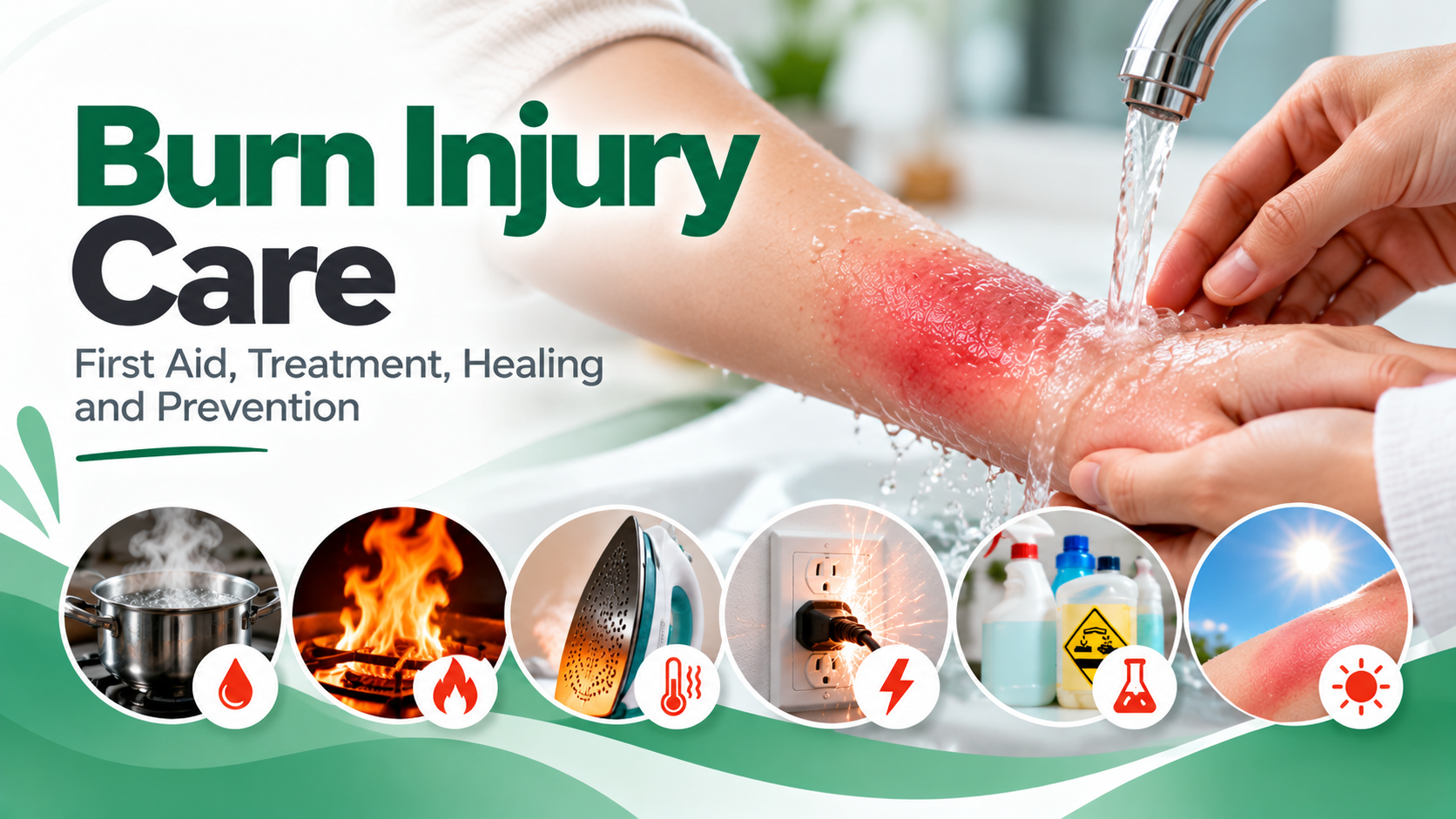
Burn Injury Care is important after any burn because knowing what to do immediately can help protect the damaged skin and support the healing process. Burns can result from hot liquids, steam, flames, hot surfaces, chemicals, electricity, radiation, or friction. While some minor burns may heal with basic first aid, deeper or more extensive burns can cause infection, delayed healing, scarring, and other complications. This guide explains what to do after a burn, how burns heal, how to protect the wound, signs of infection to watch for, and when medical attention may be needed
What Is Burn Injury Care?
Burn Injury Care refers to the appropriate first aid, wound protection, monitoring, and professional treatment used after a burn damages the skin or deeper tissues.
A burn can affect the body’s protective skin barrier and may lead to pain, swelling, fluid loss, infection, delayed healing, scarring, and reduced movement depending on its severity and location. Pasted markdown
The appearance of a burn does not always show the full extent of tissue damage. Some injuries can initially look less serious and later develop additional damage or complications.
Common Causes of Burn Injuries
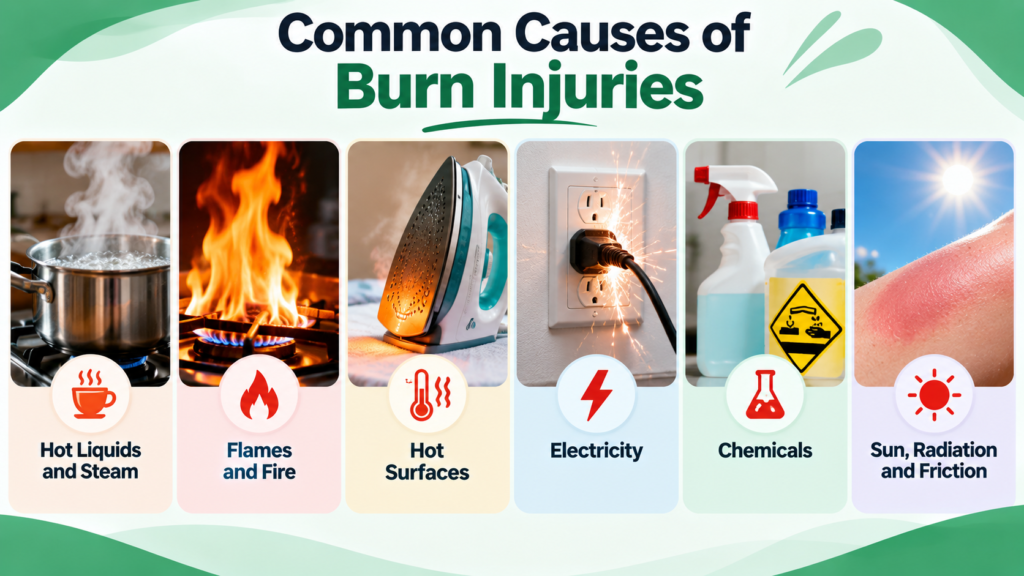
Understanding how a burn occurred is an important part of Burn Injury Care. Burns can happen at home, at work, outdoors, or during accidents. Pasted markdown
Hot Liquids and Steam
Scald burns can occur when the skin comes into contact with hot liquids or steam. Common examples include hot tea or coffee, boiling water, cooking steam, hot bath water, and hot cooking oil. Pasted markdown
Flames and Fire
Flame burns can result from house fires, gas fires, cooking accidents, workplace incidents, and other exposure to open flames.
Hot Surfaces
Stoves, ovens, irons, heaters, and heated machinery can cause contact burns when they come into direct contact with the skin.
Electricity
Electrical burns can cause damage beneath the skin even when the visible injury appears small. Electrical injuries should receive medical assessment. Pasted markdown
Chemicals
Strong acids, alkalis, cleaning products, and industrial chemicals can cause chemical burns. Tissue damage may continue until the exposure is appropriately managed. Pasted markdown
Sun, Radiation and Friction
Excessive ultraviolet exposure can cause sunburn, while friction burns can occur when skin repeatedly rubs against another surface.
Types and Degrees of Burns
Recognizing the type and depth of a burn helps determine appropriate Burn Injury Care. Burn severity is commonly described according to how deeply the skin and underlying tissues are affected. Pasted markdown
First-Degree Burn
A first-degree or superficial burn affects the outer layer of skin. Common symptoms include redness, mild swelling, tenderness, and pain. These burns generally heal without significant scarring. Pasted markdown
Second-Degree Burn
A second-degree or partial-thickness burn affects deeper layers of skin. It may cause blisters, red or pink skin, a moist wound surface, swelling, and significant pain. These burns may require careful wound management and monitoring. Pasted markdown
Third-Degree Burn
A third-degree or full-thickness burn damages the full thickness of the skin. The affected area may appear white, brown, charred, dry, or leathery. These burns require urgent medical treatment. Pasted markdown
Fourth-Degree Burn
A fourth-degree burn extends beyond the skin into deeper structures such as muscle, tendons, or bone. This is a life-threatening injury requiring immediate emergency treatment. Pasted markdown
7 Essential Steps for Burn Injury Care
These seven principles provide a simple framework for Burn Injury Care after a burn occurs.
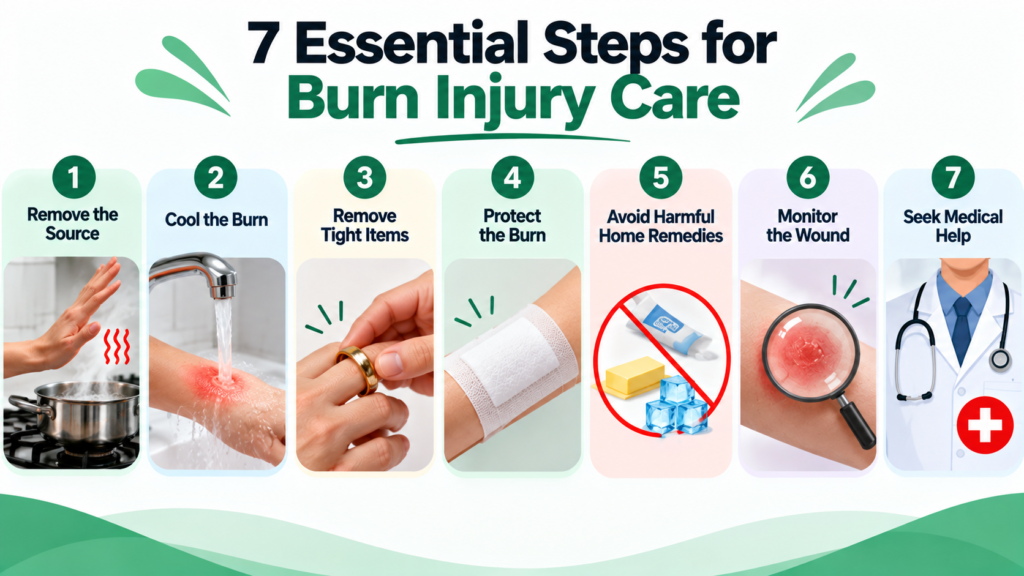
1. Remove the Source of the Burn
First, move away from the source of heat or danger and make sure the environment is safe.
2. Cool the Burn
For many thermal burns, cool the affected area under cool running water for around 20 minutes. Avoid applying ice or extremely cold water directly to the burn because this may cause additional tissue damage. Pasted markdown
3. Remove Tight Items
Remove rings, watches, jewellery, and tight clothing near the injured area before swelling increases.
Do not forcefully remove clothing that has become stuck to burned skin. Pasted markdown
4. Protect the Burn
Cover the affected area with a clean, non-stick dressing or suitable clean material. This can help protect the wound from contamination and friction. Pasted markdown
5. Avoid Harmful Home Remedies
Avoid putting ice directly on the burn, butter, toothpaste, oils, powders, or unknown creams and chemicals on the wound.
Do not intentionally break blisters because damaged skin may increase the risk of infection. Pasted markdown
6. Monitor the Wound
Monitor changes in pain, redness, swelling, drainage, odor, and healing. Increasing symptoms may require professional assessment.
7. Know When to Seek Medical Help
Seek professional care when a burn appears deep, covers an extensive area, causes severe or widespread blistering, affects the face, hands, feet, or major joints, or results from electricity or chemicals. Pasted markdown
When Does Burn Injury Care Require Medical Attention?
Professional medical attention is important when a burn is deep, extensive, increasingly painful, showing signs of infection, or not healing as expected.
Medical assessment is particularly important for electrical and chemical burns. Children, older adults, and people who may have difficulty healing can also require additional attention after a burn. Pasted markdown
How Does Burn Injury Care Support Healing?
Burn healing is gradual and depends on the depth, size, location, and condition of the injury.
Inflammation
Immediately after injury, the body responds with redness, swelling, and pain. This is part of the natural healing response.
Tissue Repair
New tissue and skin cells begin to form. Protecting the wound and maintaining appropriate wound care are important during this stage.
Remodeling
As healing continues, new skin and scar tissue gradually mature and strengthen. This process can continue for weeks or months. Deeper burns generally take longer to heal and have a greater risk of scarring and complications. Pasted markdown
Burn Injury Care: Important Wound Care Principles
Proper Burn Injury Care focuses on protecting damaged skin and supporting the healing process.
Gentle Cleaning
Keep the wound clean. Depending on the injury and medical advice, cleaning may involve clean water or saline. Avoid harsh antiseptics unless recommended by a healthcare professional. Pasted markdown
Protecting the Wound
Burned skin can be vulnerable to contamination and friction. Appropriate dressings can help protect the wound while supporting a suitable healing environment.
Managing Moisture and Drainage
Different burns can have different levels of moisture and drainage. Dressing selection should depend on factors such as burn depth, drainage, location, and infection risk.
Possible dressing categories include non-adherent dressings, foam dressings, hydrogel dressings, and antimicrobial dressings when clinically appropriate. Pasted markdown
Signs of Infection to Watch For
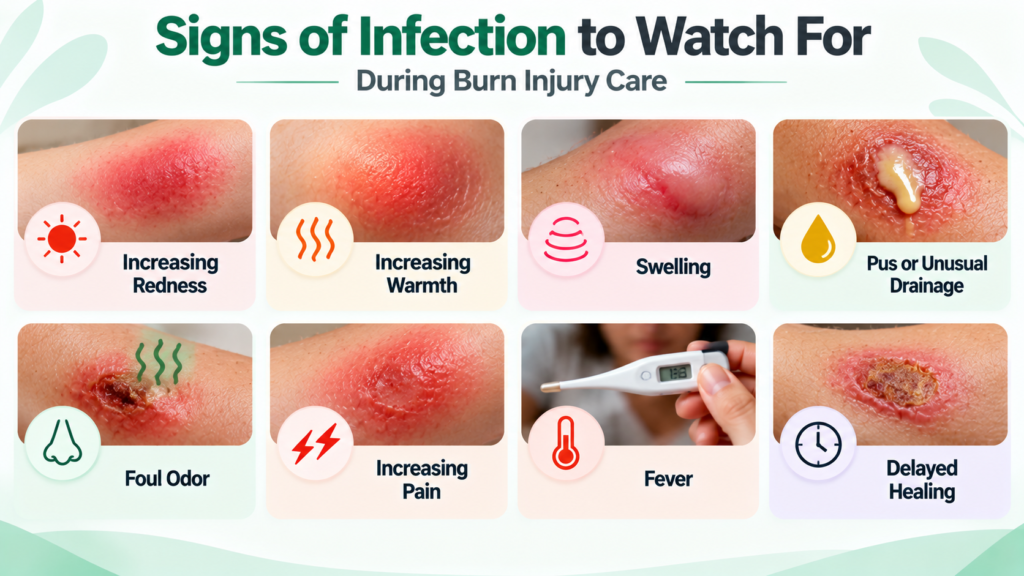
Because burns damage the skin’s protective barrier, infection can delay healing and increase complications.
During Burn Injury Care, watch for:
- Increasing redness
- Increasing warmth
- Swelling
- Pus or unusual drainage
- Foul odor
- Increasing pain
- Fever
- Delayed healing
If these symptoms develop, professional medical assessment is important. Pasted markdown
Can Burns Cause Scarring?
Not every burn causes permanent scarring. Superficial burns may heal without significant scars, while deeper burns have a greater risk of scar formation.
Factors that may influence scarring include burn depth, healing time, infection, genetics, and repeated injury to healing skin. Pasted markdown
After the wound has healed, scar management may include appropriate moisturizing, sun protection, silicone-based products when suitable, and professional advice for significant scars.
Emotional Recovery After a Burn
Burn Injury Care is not limited to the physical wound. Burn injuries can also affect emotional well-being.
Some people may experience anxiety, stress, sleep problems, frustration during slow healing, or body-image concerns. Support, education, and appropriate medical care can help throughout recovery. Pasted markdown
Burns in Children and Older Adults
Children and older adults can be more vulnerable to burn injuries and complications.
Children may have thinner skin and may not recognize dangers around hot liquids or surfaces. Older adults may have thinner skin, reduced mobility, slower reaction times, or reduced sensation. Pasted markdown
Extra supervision and appropriate home safety measures can help reduce the risk.
How to Prevent Burn Injuries
Prevention is another important part of Burn Injury Care.
Kitchen Safety
- Keep hot liquids away from edges.
- Turn pot handles inward.
- Use protective gloves or oven mitts.
- Keep children away from hot cooking areas.
Bathroom Safety
- Test water temperature before bathing.
- Take extra care when bathing children and older adults.
- Avoid excessively hot water.
Chemical Safety
- Store chemicals safely.
- Keep products in their original containers.
- Use appropriate protective equipment.
- Avoid mixing cleaning products unless specifically instructed.
Fire Safety
Maintain smoke detectors, keep exits clear, and follow basic fire-safety practices.
Sun Protection
Limit prolonged sun exposure and use appropriate sun protection. Pasted markdown
When Is Ongoing Burn Injury Care Needed?
Ongoing wound care may be necessary when healing slows or stops, pain increases, infection develops, drainage increases, the wound appears to worsen, or scarring limits movement. Pasted markdown
Early assessment can help identify complications and guide appropriate treatment.
Learn More About Burn Injury Care With WoundGuide
Understanding how wounds heal can help individuals and caregivers make more informed decisions about everyday wound care.
WoundGuide provides educational information about wound cleaning, infection prevention, pressure ulcers, diabetic wounds, dressings, wound protection, healing, and scar care. Pasted markdown
Frequently Asked Questions
Burn injuries are damage to the skin or deeper tissues caused by heat, hot liquids or steam, flames, chemicals, electricity, radiation, friction, or extreme cold. Depending on how deeply the skin is damaged, burn injuries can range from minor superficial burns to serious full-thickness injuries requiring urgent medical care
Treatment for burn injuries depends on their cause and severity. For many minor thermal burns, safely remove the heat source and cool the affected area under cool running water for about 20 minutes. Remove tight jewellery or clothing near the burn if it is not stuck to the skin, then protect the area with a clean, non-stick dressing.
Avoid applying ice, butter, toothpaste, or other unproven home remedies. Deep, large, chemical, electrical, or severe burn injuries should be assessed by a healthcare professional
Minor burn injuries may often be managed with basic first aid and careful monitoring. Cool the affected area under cool running water, keep the skin clean, and protect the burn from friction with a suitable clean, non-stick dressing.
Do not intentionally break blisters. Seek medical advice if the burn becomes more painful, appears deep, shows signs of infection, affects the face, hands, feet, or major joints, or does not appear to be healing as expected
The best ointment for burn injuries depends on the depth, size, location, and condition of the burn. Not every burn requires an ointment, and using the wrong product may irritate the skin or interfere with appropriate wound care.
For minor burn injuries, immediate cooling and suitable wound protection are important first steps. For deeper burns, widespread blistering, or burns showing signs of infection, seek advice from a qualified healthcare professional before applying medicated ointments or other products
Final Thoughts
Burn Injury Care can range from simple first aid for minor injuries to urgent medical treatment for deeper or more extensive burns.
Recognizing burn severity, cooling appropriate thermal burns, protecting damaged skin, monitoring for infection, and seeking timely professional care are important parts of recovery. Pasted markdown
A burn can range from a minor skin injury to a deeper wound that needs professional attention. Proper first aid, wound protection, infection monitoring, and timely medical care can support safer healing.
Have a burn that is not healing as expected or showing concerning changes?
👉 Get Expert Wound Care Guidance with WoundGuide
Learn more about burn wounds, wound healing, infection awareness, and practical wound-care guidance.
🌐 Visit WoundGuide to learn more about wound care and healing.
Leave a Reply